

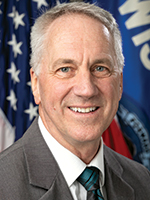
Photo of Dan Knodl
R Wisconsin Assembly · District 24 On the 2026 ballot

Rep. Dan Knodl

Compare
Total votes
876
all sessions
Attendance
100%
of floor votes
Near the chamber average
With party
99%
of cast votes
Near the chamber average
Bipartisan score
1%
crosses aisle rarely
Near the chamber average
Sponsored
1,110
bills & resolutions
Near the chamber average
Committees
5
assignments
1,110 bills and resolutions

Sponsored bills

Total
1,110
Primary
1,110
Co-sponsor
0
This page
1,110
matching current filters
Primary AJR 128
Failed · Wisconsin Assembly · Lead sponsor
Relating to: congratulating the University of Wisconsin–Oshkosh women’s volleyball team for winning the 2025 NCAA Division III National Championship.

Maddy summaryAJR 128 is a symbolic joint resolution congratulating the University of Wisconsin-Oshkosh women’s volleyball team for winning the 2025 NCAA Division III National Championship. It directly recognizes the team, coaches, and university community for their undefeated tournament performance (6-0, no sets dropped), 34-3 overall record, and academic achievements. The resolution formally expresses the Wisconsin Legislature’s praise for their athletic excellence, sportsmanship, and academic dedication, extending gratitude to the university for bringing pride to Oshkosh, the Fox Valley region, and Wisconsin. As a non-binding resolution, it has no policy impact beyond ceremonial recognition.

Failed Mar 23, 2026 0 co-sponsors
Primary AJR 127
Failed · Wisconsin Assembly · Lead sponsor
Relating to: prohibiting the governor from using the partial veto to create or increase any tax or fee (second consideration).

Maddy summaryAJR 127 is a proposed constitutional amendment that would prohibit the governor from using a partial veto to create or increase any tax or fee. If approved by voters, it would amend the state constitution to restrict the governor's partial veto power specifically regarding tax or fee increases. This change would directly affect the governor's authority when reviewing budget bills containing tax or fee provisions. The amendment is currently moving toward a voter referendum in November 2026, following legislative approval. It does not change current law but would require voter ratification to become effective.

Failed Mar 23, 2026 0 co-sponsors
Primary AB 861
Failed · Wisconsin Assembly · Lead sponsor
Relating to: the civil causes of action for human trafficking and trafficking a child.

Maddy summaryAB 861 extends the statute of limitations for civil lawsuits related to child trafficking. It allows victims to file lawsuits for damages before reaching age 35, instead of the previous deadline. The bill specifically creates new legal provisions (895.439(2) and 893.586) to clarify this timeline for child trafficking cases. It does not change criminal penalties but ensures victims have more time to pursue civil claims, regardless of whether criminal charges were filed. The law directly affects minors who were trafficked and now have until their 35th birthday to seek legal remedies.

Failed Mar 23, 2026 0 co-sponsors
Primary AJR 129
Failed · Wisconsin Assembly · Lead sponsor
Relating to: recognizing February 6 as Ronald Reagan Day in Wisconsin.

Maddy summaryAJR 129 is a symbolic resolution designating February 6 as "Ronald Reagan Day" in Wisconsin. It does not create new laws or affect specific groups; instead, it urges Wisconsin citizens to recognize this day in observance of Ronald Reagan's birthday (February 6, 1911). The resolution highlights Reagan's roles as a governor, president, and his historical impact, including economic policies and Cold War contributions. As a commemorative measure, it has no binding effect beyond encouraging public acknowledgment of Reagan's legacy.

Failed Mar 23, 2026 0 co-sponsors
Primary AB 841
Failed · Wisconsin Assembly · Lead sponsor
Relating to: sex offender registration for certain crimes.

Maddy summaryAB 841 expands Wisconsin's sex offender registration requirements by adding specific sexual assault and child abuse crimes to the list of offenses triggering registration. It updates the legal definition of "sex offense" to include violations of statutes covering crimes like sexual assault of minors, certain predatory acts, and offenses against children under 14. People convicted of these specific crimes will now be required to register as sex offenders, with the exception that the rule applies only when the victim was a minor and the offender was not the victim’s parent. This change directly affects individuals convicted of the newly listed offenses under Wisconsin law.

Failed Mar 23, 2026 0 co-sponsors
Primary AB 878
Passed · Wisconsin Assembly · Lead sponsor
Relating to: a tax credit for certain sales and use taxes paid on services sold through an amusement device. (FE)

Maddy summaryAB 878 creates a tax credit for businesses that pay certain sales and use taxes on services sold through amusement devices (like arcade games or interactive machines). Specifically, it allows businesses to claim a credit equal to the county and municipal sales taxes paid on those services, reducing their Wisconsin income or franchise tax liability. The credit cannot be claimed directly by partnerships, LLCs, or tax-option corporations, but must be passed through to their owners based on ownership share. Unused credit can be carried forward for up to 20 years to offset future tax bills.

Passed Mar 23, 2026 0 co-sponsors
Primary AB 895
Failed · Wisconsin Assembly · Lead sponsor
Relating to: sentencing for crimes committed by a person who is under the age of 18.

Maddy summaryAB 895 modifies sentencing and parole procedures for individuals under 18 convicted of crimes. It requires courts to consider youth-specific mitigating factors and relevant information when determining eligibility for release to extended supervision or parole. The bill creates new provisions (e.g., § 302.114(5)(cs), § 304.06(1)(bc)) that apply specifically to "youthful offenders" as defined in § 973.014(3)(a). These changes directly affect minors in the state’s criminal justice system by mandating more individualized review of their cases during sentencing and parole decisions.

Failed Mar 23, 2026 0 co-sponsors
Primary AB 842
Failed · Wisconsin Assembly · Lead sponsor
Relating to: remote dispensing sites under the pharmacy practice law.

Maddy summaryThis bill creates a new regulatory category for pharmacies operating without a pharmacist physically present ("remote dispensing sites" or "remotely supervised pharmacies"). It allows the pharmacy board to establish specific rules for these sites, potentially exempting them from standard pharmacy requirements that apply to traditional locations. The law clarifies that such sites will not be classified as community or institutional pharmacies under existing rules. These changes streamline oversight for remote pharmacy operations while maintaining separate regulatory treatment.

Failed Mar 23, 2026 0 co-sponsors
Primary AB 840
Passed · Wisconsin Assembly · Lead sponsor
Relating to: certain requirements related to data centers.

Maddy summaryAB 840 regulates data centers in the state by requiring specific operational and environmental standards. It mandates that data centers use closed-loop cooling systems (recycling water instead of using fresh water) and report annual water usage to the department. The bill also requires renewable energy facilities serving data centers to be located on-site and prohibits utility customers from paying for data center infrastructure costs. Additionally, operators must provide financial bonds for construction and restore land if projects are abandoned. These provisions directly affect all data center operators and developers in the state.

Passed Mar 23, 2026 0 co-sponsors
Primary AB 901
Failed · Wisconsin Assembly · Lead sponsor
Relating to: net metering for rooftop solar energy systems.

Maddy summaryAB 901 establishes rules for net metering of rooftop solar energy systems in Wisconsin. It directly affects homeowners and businesses with solar installations by setting capacity limits (30 kW for residential, 500 kW for commercial) and requiring advanced metering for grid interconnection. The bill mandates that electric providers credit customers 100% of the retail electricity rate for excess power sent to the grid, with credits expiring March 31 annually and transferring to new property owners upon sale. It also allows providers to reduce credits to 90% if solar adoption exceeds 10% in their service area, while maintaining minimum billing standards for solar customers.

Failed Mar 23, 2026 0 co-sponsors
Showing 101 to 110 of 1,110 bills
Previous 1 … 10 11 12 … 111 Next