

Maddy summaryAB 578 ensures Wisconsin continues providing WIC (Women, Infants, and Children) food benefits during federal government shutdowns. It requires the state to fund these benefits at pre-shutdown levels until federal funding is restored under federal law. The bill directly affects WIC participants - mothers, infants, and young children - who rely on these nutrition services. It creates a state funding mechanism to prevent benefit disruptions during federal funding lapses, such as the October 2025 shutdown referenced in the bill. The policy change takes effect immediately but includes a repeal provision for October 2026.
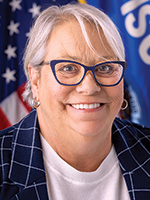
Rep. Christine Sinicki
Sponsored bills
Maddy summaryAB 478 repeals two existing statutes (66.0134 and 947.21) that previously prohibited state and local governments from regulating labor matters. This bill directly affects state and local government entities by removing a legal barrier that prevented them from creating their own labor regulations. The key mechanism is the simple repeal of these specific statutes, allowing governments to establish rules on issues like wages, working conditions, or union practices without violating the repealed restrictions. The bill does not create new regulations but enables governments to develop their own labor policies where they previously could not.
Maddy summaryAB 381 requires the state department to partner with healthcare providers (like OB/GYNs) and community health centers to educate women about perimenopause and menopause. It directs the department to create accessible informational materials covering symptoms, treatments, biological processes, when to seek care, and communication tips - distributed through healthcare providers to women identified as experiencing or nearing these stages. The materials must be available both online and in print. This bill directly affects women navigating perimenopause and menopause by providing standardized educational resources through existing healthcare channels.
Maddy summaryAB 508 repeals two sections of state law (108.04 (2) (h) and 108.04 (12) (f)) that previously prevented Social Security Disability Insurance (SSDI) recipients from receiving unemployment insurance benefits at the same time. This bill directly affects individuals who qualify for SSDI but are currently unemployed and seeking unemployment benefits. The key provision removes the legal barrier forcing these individuals to choose between disability and unemployment benefits. The change would allow them to receive both types of benefits simultaneously, effective for weeks of unemployment beginning after the bill's publication.
Maddy summaryAB 571 creates a statewide Parkinson’s disease registry to collect and track health data on Parkinson’s disease and related conditions (like multiple system atrophy). Health care providers must report anonymized patient data - including diagnosis, treatment, outcomes, and demographics - to the University of Wisconsin-Madison for storage and analysis. The registry will generate annual public reports on disease incidence, prevalence, and trends via a dedicated website, with strict privacy safeguards (e.g., coded data, IRB-approved research access). This affects health care facilities, providers, and patients, but does not impose new costs or treatment requirements.
Maddy summaryAB 598 allows patient representatives to consent to health care facility admissions for incapacitated individuals without requiring a court-appointed guardian or protective placement petition. The bill creates a defined "patient representative" role, requiring two medical professionals (e.g., two physicians or one physician plus an advanced practice clinician) to certify incapacity based on medical need - not age, disability, or eccentricity. Patient representatives gain authority to make health care decisions, enroll individuals in Medical Assistance, and authorize health care expenses similar to a guardian, but only for non-developmental disability and non-mental illness cases. This change streamlines admissions for incapacitated patients while mandating 72-hour notifications to county agencies about the certification.
Maddy summaryAB 61 increases penalties for harming police or fire department animals used in official duties. It creates three penalty tiers: a Class A misdemeanor for negligent harm, a Class I H felony for intentional injury, and a Class H G felony for intentional killing. The law applies specifically to animals working for law enforcement or fire departments during their duties. Penalties depend on the perpetrator's intent (intentional vs. negligent) and the outcome (injury vs. death). This bill, enacted as 2025 Wisconsin Act 28, directly affects individuals who intentionally or negligently injure or kill such animals.
Maddy summaryAJR 95 designates October as Domestic Violence Awareness Month in Wisconsin. This symbolic resolution does not create new laws or funding but formally recognizes the importance of addressing domestic violence. It aims to honor survivors, remember those lost to domestic violence, and acknowledge the work of advocates and service providers across the state. The bill passed unanimously and is now official, aligning Wisconsin with national observances to promote awareness.
Maddy summaryAJR 96 is a symbolic resolution designating October 2025 and October 2026 as "Breast Cancer Awareness Months" in Wisconsin. It does not create new laws, funding, or obligations; it is a ceremonial proclamation to promote public awareness of breast cancer. The resolution cites Wisconsin-specific breast cancer statistics and screening recommendations to justify the designation. As a procedural joint resolution, it has no direct policy impact but serves to highlight this public health issue.
Maddy summaryThis is a symbolic commemorative resolution (not a policy bill) that recognizes July 21-27, 2025, as "Probation and Parole Agent Appreciation Week" in Wisconsin. It honors probation and parole agents (who supervise over 63,000 clients statewide) for their role in public safety and reentry support, citing their work managing complex caseloads and collaborating with communities. The resolution has no direct effect on laws, funding, or services - it is purely a ceremonial acknowledgment with no concrete policy changes. It was adopted by the Wisconsin Assembly on June 18, 2025.