

Maddy summaryAB 745 creates a new eligibility category for state reimbursement of military funeral honors costs, specifically for individuals who were naturalized under the federal Hmong Veterans’ Naturalization Act of 2000 and were residing in the state at the time of death. It requires the state department to reimburse certified veteran organizations for providing military funeral honors, with a maximum payment of $85 per funeral (adjusted annually for inflation based on the U.S. consumer price index). The bill directly affects families of qualifying Hmong veterans who served in the U.S. military and were naturalized under the 2000 federal law. This establishes a clear reimbursement mechanism for organizations providing these honors, replacing the previous $50 limit with an inflation-adjusted $85 cap.
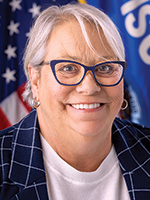
Rep. Christine Sinicki
Sponsored bills
Maddy summaryAB 780 replaces Wisconsin's dry cleaner environmental response program with the "Revitalize Wisconsin program," which provides $3 million annually to help clean up contaminated properties. The program directly assists property owners (called "innocent landowners") who didn't cause pollution at sites known as "brownfields" (abandoned or underused properties with environmental risks). It funds cleanup costs, waste removal, and sampling to address health and environmental threats, with funds drawn from the environmental fund. The bill also repeals outdated provisions and creates new rules for administering these cleanup grants.
Maddy summaryAB 771 increases annual funding by $5 million for the University of Wisconsin System's freshwater collaborative for fiscal years 2025-26 and 2026-27. This bill directly affects the University of Wisconsin System's freshwater collaborative research program by providing new state funding. The key mechanism is a specific budget appropriation added to existing funding under Section 20.285 (1) (ar). The bill does not change program requirements or create new regulations, only adjusting the financial allocation. The funding supports collaborative research on freshwater resources across the UW System.
Maddy summaryAB 772 requires companies that sell packaged products (called "producers") to pay fees to fund recycling programs. It creates a "producer responsibility program" where businesses must cover costs for reducing packaging waste and ensuring packaging is recyclable or made with post-consumer recycled materials. The bill defines key terms like "recyclable" (must sort easily and have market demand) and "post-consumer recycled material" (recovered from consumer waste, excluding advanced recycling methods). This directly affects manufacturers, brands, importers, and retailers selling packaged goods in the state, with fees collected by a nonprofit organization to support statewide recycling infrastructure.
Maddy summaryAB 765 creates a state bonding program to fund lead service line replacement for private water users connected to public water systems. It authorizes up to $274.95 million in state bonds (increasing previous limits) and allocates $200 million from bond proceeds to provide forgivable loans covering up to 50% of replacement costs for homeowners. The bill directly affects private residents with lead pipes by reducing their financial burden for replacing hazardous infrastructure. Key provisions include the new bonding authority and the specific allocation for forgivable loans to address public health concerns related to lead in drinking water.
Maddy summaryAB 782 bans restaurants and food vendors from serving food or beverages in foam polystyrene containers, directly affecting retail food businesses like restaurants, cafes, and vending machine operators. The bill includes exemptions for containers pre-sealed outside the state and raw meat/fish packaging for off-premise consumption. Businesses violating the ban after receiving written notice face fines up to $250 for the first offense and $500 for repeated violations. A waiver may be granted for undue hardship, but it cannot extend beyond 13 months after the effective date. The law aims to reduce single-use plastic waste while allowing limited exceptions for practical food handling needs.
Maddy summaryAB 753 creates a state program to provide matching grants to Wisconsin counties for investments they make in their healthcare, public health, and care provider workforce. Counties can receive state funds equal to their previous fiscal year's spending on recruitment, retention, mental health, trauma care, and wellness programs for workers in health care, public health, child care, and long-term care. The grant amount for each county is capped at $1.11 multiplied by the county's population. This bill establishes the funding mechanism and sets the maximum grant level, requiring the state to appropriate funds for these matching grants annually.
Maddy summaryAB 781 allocates $3.525 million annually (for 2025-26 and 2026-27) to fund wolf monitoring and nonlethal management programs under the Department of Natural Resources. It creates a new budget line item (20.370 js) specifically for these purposes, continuing existing funding without introducing new regulations or policy changes. The bill directly affects the state's wildlife management operations and does not target specific communities or landowners. This is a procedural budget appropriation, not a substantive legislative change.
Maddy summaryAB 769 creates a new grant program to fund food waste reduction pilot projects, allocating $100,000 annually for fiscal years 2025-26 and 2026-27. The grants support projects focused on preventing food waste, redirecting surplus food to hunger relief organizations, and composting food waste. The Department of Agriculture must prioritize proposals serving low-income census tracts (below statewide median income) without grocery stores. The bill also authorizes the department to create rules for administering the program. This directly affects local pilot projects and hunger relief organizations in underserved communities.
Maddy summaryAB 777 designates the week containing November 11 (Veterans Day) as "Veterans Benefits Education Week" each year. The bill requires the governor to issue an annual proclamation highlighting veterans' entitlements during this week. This procedural measure directly informs veterans about available benefits and establishes an annual observance, with no changes to actual benefit programs. (AB 777, introduced December 17, 2025)