

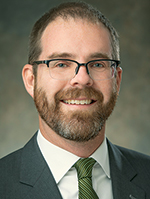
Photo of Ryan Clancy
D Wisconsin Assembly · District 19 On the 2026 ballot

Rep. Ryan Clancy

Compare
Total votes
416
all sessions
Attendance
98%
10 missed
Near the chamber average
With party
85%
of cast votes
Near the chamber average
Bipartisan score
7%
crosses aisle rarely
Near the chamber average
Sponsored
764
bills & resolutions
Near the chamber average
Committees
4
assignments
764 bills and resolutions

Sponsored bills

Total
764
Primary
764
Co-sponsor
0
This page
764
matching current filters
Primary AB 654
Failed · Wisconsin Assembly · Lead sponsor
Relating to: a public information campaign related to aggressive driving and making an appropriation. (FE)

Maddy summaryAB 654 creates a public information campaign to reduce aggressive driving behaviors like excessive speeding, illegal racing, and fleeing police. The bill allocates $500,000 over two fiscal years ($250,000 annually) for the campaign, which must run for 1-2 years and prioritize areas with the highest incidents of such driving. It requires using billboards, radio, TV, and digital ads, while prioritizing local contractors and featuring stories from affected individuals like young drivers and families. The campaign targets high-risk drivers and must partner with community organizations to influence behavior, without making specific policy changes to traffic laws.

Failed Mar 23, 2026 0 co-sponsors
Primary AB 408
Failed · Wisconsin Assembly · Lead sponsor
Relating to: designating the bacterium Lactococcus lactis as the Wisconsin state microbe.

Maddy summaryAB 408 designates the bacterium *Lactococcus lactis* as Wisconsin's official state microbe. This ceremonial bill has no regulatory or policy impact; it solely recognizes a specific microbe for symbolic representation. The bill passed committee recommendation with unanimous support and is now pending before the Rules committee. (Note: As a purely symbolic designation, it directly affects no individuals or entities through policy changes.)

Failed Mar 23, 2026 0 co-sponsors
Primary AB 106
Failed · Wisconsin Assembly · Lead sponsor
Relating to: exempting certain electric vehicle charging stations located at a residence from the electric vehicle charging tax. (FE)

Maddy summaryAB 106 exempts electricity delivered to Level 3 electric vehicle (EV) charging stations installed at residences from the existing EV charging tax. This directly affects homeowners who own or operate Level 3 chargers at their primary residence. The bill removes the tax on electricity used for charging EVs at these residential stations, effective retroactively from January 1, 2025. The exemption applies specifically to Level 3 chargers at homes, not to commercial or public charging locations.

Failed Mar 23, 2026 0 co-sponsors
Primary AB 622
Failed · Wisconsin Assembly · Lead sponsor
Relating to: various changes to the unemployment insurance law. (FE)

Maddy summaryAB 622 amends Wisconsin's unemployment insurance law to extend the period during which job seekers may refuse work without losing benefits from 6 to 10 weeks after becoming unemployed. It clarifies that workers who quit jobs they could have refused (e.g., due to unsafe conditions) may still qualify for benefits within this 10-week window, regardless of their stated reason for leaving. The bill also updates the definition for "suitable work" in the 7th-11th week of unemployment to require wages above the lowest wage quartile for similar jobs in the area. These changes directly affect unemployed workers applying for benefits and the Department of Workforce Development’s eligibility determinations.

Failed Mar 23, 2026 0 co-sponsors
Primary AB 667
Failed · Wisconsin Assembly · Lead sponsor
Relating to: prohibiting a law enforcement agency from accessing personal data in exchange for payment without a warrant.

Maddy summaryAB 667 prohibits law enforcement agencies from paying third parties or government entities for access to an individual's personal data without a warrant. The bill defines "personal data" broadly to include names, location, financial records, health information, browsing history, and device identifiers. It allows exceptions only when a warrant is obtained, during emergencies involving immediate danger, if data is already public, or with the individual's explicit consent. This law directly affects law enforcement agencies and data-sharing companies by restricting how personal information can be acquired for investigations.

Failed Mar 23, 2026 0 co-sponsors
Primary AB 553
Failed · Wisconsin Assembly · Lead sponsor
Relating to: deer carcass disposal sites, chronic wasting disease education, and making an appropriation. (FE)

Maddy summaryAB 553 requires Wisconsin's Department of Natural Resources to install and maintain metal containers for hunters to dispose of deer carcasses at state-designated locations, with regular carcass removal. It increases annual funding by $500,000 for these disposal sites and $250,000 for hunter education about chronic wasting disease (CWD) and proper carcass disposal. The bill directly affects hunters who must use these disposal sites and the Department of Natural Resources, which implements the program. Funding applies to fiscal years 2025-26 and 2026-27 as specified in the appropriations schedule.

Failed Mar 23, 2026 0 co-sponsors
Primary AB 653
Failed · Wisconsin Assembly · Lead sponsor
Relating to: a local intersection safety program and making an appropriation. (FE)

Maddy summaryAB 653 creates a state-funded program to improve safety at high-risk intersections. It directs the Department of Transportation to provide local governments (cities and counties) with funding for safety upgrades at signalized and stop-sign intersections with excessive crash rates. The program prioritizes intersections in the 10% of counties with the worst crash records from 2019-2024 data, using $6 million in new annual funding. This directly affects local governments managing highways by enabling them to apply for grants or reimbursements for intersection safety improvements.

Failed Mar 23, 2026 0 co-sponsors
Primary AB 637
Failed · Wisconsin Assembly · Lead sponsor
Relating to: funding sources for certain private postsecondary schools and granting rule-making authority.

Maddy summaryAB 637 requires private postsecondary schools in the state to derive at least 20% of their annual revenue from non-federal sources in two out of their three most recent fiscal years to enroll state residents. This applies directly to private colleges and universities seeking to admit students who live in the state. The bill defines "annual revenue" and "federal funds" specifically and grants the state education department authority to create implementing rules. The requirement will take effect for the 2028-29 academic year.

Failed Mar 23, 2026 0 co-sponsors
Primary AJR 115
Failed · Wisconsin Assembly · Lead sponsor
Relating to: recognizing October 26 in 2025 and 2026, as Intersex Awareness Day in Wisconsin.

Maddy summaryAJR 115 is a non-binding resolution recognizing October 26, 2025, and 2026, as Intersex Awareness Day in Wisconsin. It honors the 1996 first public demonstration by intersex people at a medical conference and acknowledges intersex individuals - those born with variations in physical sex characteristics - as part of Wisconsin's diverse community. The resolution highlights ongoing challenges like discrimination and unnecessary medical procedures on intersex children, while affirming the importance of bodily autonomy and dignity. This symbolic gesture does not create new laws but formally supports awareness and respect for intersex people.

Failed Mar 23, 2026 0 co-sponsors
Primary AB 638
Failed · Wisconsin Assembly · Lead sponsor
Relating to: student financial protection at certain private postsecondary schools. (FE)

Maddy summaryAB 638 requires private postsecondary schools seeking state approval (or renewal) to maintain a reserve fund equal to 25% of their highest annual revenue over the past five years (or projected first-year revenue for new schools). This fund protects students if schools commit fraud, fail to deliver promised education services, or close unexpectedly. Schools must also pay a $3 student protection fee for every $1,000 of their annual revenue, with fee collection stopping once the fund exceeds $5 million. The bill directly affects private colleges operating in the state, creating a financial safety net for students through mandatory reserves and a fee-based fund.

Failed Mar 23, 2026 0 co-sponsors
Showing 391 to 400 of 764 bills
Previous 1 … 39 40 41 … 77 Next