

Maddy summaryAB 860 requires state and county correctional facilities to provide written guides detailing inmates' and juveniles' rights, updated annually or after legal changes. These guides must account for individual circumstances like confinement status and location, and be posted throughout facilities, provided upon entry or transfer, and explained by staff to all affected individuals. The bill appropriates $200,000 for the Department of Administration to contract with legal organizations - including formerly incarcerated individuals - to develop these guides by June 2027. The law takes effect July 1, 2027, directly affecting all inmates in state prisons, county jails, and juveniles in youth facilities across Wisconsin.
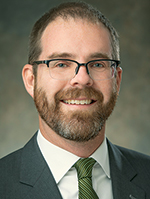
Rep. Ryan Clancy
Sponsored bills
Maddy summaryAB 850 sets specific annual spending limits for Wisconsin's agricultural exports program, requiring the Center for International Agribusiness Marketing to allocate $2.5 million toward export promotion (sub. (2)(a)) and $1.25 million each toward two other export objectives (sub. (2)(b) and (c)), while capping total annual spending at $1 million. The bill increases funding by $1.07 million for fiscal year 2025-26 and $1.10 million for 2026-27 under the program's appropriation, and adds one full-time administrative position to manage the program. This legislation directly affects Wisconsin agricultural exporters benefiting from the program and the Department of Agriculture, Trade and Consumer Protection responsible for administering it.
Maddy summaryAB 851 authorizes $25 million from the capital improvement fund to purchase agricultural conservation easements, which are agreements that limit development on farmland to preserve agricultural use. The bill creates new funding mechanisms (20.115 (7) (br) and (tb)) to reimburse costs for these easements and specifies payment procedures for the Department of Agriculture, Trade and Consumer Protection. It directly affects landowners selling conservation easements and state agencies administering the program. The appropriation supports farmland conservation by enabling the state to acquire easements under Section 93.73. The bill repeals an outdated statute (23.197 (15)) and amends related sections to implement these funding changes.
Maddy summaryAB 852 establishes new grants for local governments to implement farmland preservation plans, including activities like updating zoning, creating farmland agreements, and monitoring compliance. It also requires the state to automatically adjust the farmland preservation tax credit for inflation annually using agricultural price data, ensuring the credit keeps pace with rising costs. These changes directly affect Wisconsin farmers who claim the tax credit and local governments (counties, cities, tribes) that receive implementation grants. The bill creates specific funding mechanisms through the working lands fund and sets eligibility criteria for grant recipients based on plan alignment and project effectiveness.
Maddy summaryAB 871 allows Milwaukee’s city government to install water, gas, sewer, and heat utility pipes (laterals/service pipes) on private property without the landowner’s permission under specific conditions. It applies only to absentee owners (non-residents) after the city makes at least three documented contact attempts, and with tenant consent for the property. Crucially, the city cannot charge property owners for these installations - the costs remain with the city. This change affects Milwaukee homeowners with vacant properties and tenants, streamlining utility upgrades while shifting financial responsibility from residents to the city.
Maddy summaryAB 868 requires Wisconsin's energy utility programs to dedicate at least 25% of annual energy efficiency funding toward initiatives specifically serving low-income households. The bill defines "low-income household" using an existing state definition and mandates programs that reduce energy costs and improve efficiency for these households. It also requires the Public Service Commission to evaluate these programs every four years, setting goals to prioritize reducing energy burdens and environmental impacts for low-income residents. The law directly affects low-income households by ensuring their energy needs are addressed through utility-funded programs.
Maddy summaryAB 869 increases the required funding for Wisconsin's Focus on Energy program from 1.2% to 2.4% of energy utilities' annual retail sales revenue. It specifically adds residential energy storage systems (like home battery systems) to the list of eligible programs under the "energy efficiency program" definition. This means utilities must now dedicate more funding toward programs that help residential customers adopt energy storage, alongside traditional efficiency measures. The bill directly affects energy utilities (requiring higher spending) and residential customers (expanding access to storage incentives).
Maddy summaryAB 889 establishes the Wisconsin Climate Corps program to create climate-focused job opportunities for workers aged 16-30, with at least 50% from underserved communities. The program funds projects like restoring natural lands, weatherizing homes for energy efficiency, and building community gardens, administered by a board overseeing contracts with nonprofit managers. Key requirements include paying workers $15/hour, providing housing stipends ($100/week), and gold-level health insurance. Sponsors (local governments, tribes, or nonprofits) must submit annual reports, and completed projects require permanent plaques identifying them as Wisconsin Climate Corps initiatives. The bill appropriates state funds for grants to approved projects under this framework.
Maddy summaryAB 895 modifies sentencing and parole procedures for individuals under 18 convicted of crimes. It requires courts to consider youth-specific mitigating factors and relevant information when determining eligibility for release to extended supervision or parole. The bill creates new provisions (e.g., § 302.114(5)(cs), § 304.06(1)(bc)) that apply specifically to "youthful offenders" as defined in § 973.014(3)(a). These changes directly affect minors in the state’s criminal justice system by mandating more individualized review of their cases during sentencing and parole decisions.
Maddy summaryAB 821 creates a $2.5 million biennial grant program to help health care facilities recruit and retain staff who perform forensic exams on crime victims. It requires facilities to establish new positions, recruitment programs, or training for providers conducting exams related to domestic abuse or strangulation cases. The bill also revises reimbursement rules to ensure health care providers receive payment for exam costs (including STD testing/treatment) regardless of whether victims cooperate with law enforcement. This directly affects health care facilities and providers who conduct these forensic examinations for victims of specific offenses.