

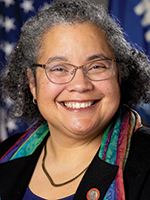
Photo of Margaret Arney
D Wisconsin Assembly · District 18 On the 2026 ballot

Rep. Margaret Arney

Compare
Total votes
243
all sessions
Attendance
99%
2 missed
Near the chamber average
With party
96%
of cast votes
Near the chamber average
Bipartisan score
2%
crosses aisle rarely
Near the chamber average
Sponsored
373
bills & resolutions
Near the chamber average
Committees
4
assignments
373 bills and resolutions

Sponsored bills

Total
373
Primary
373
Co-sponsor
0
This page
373
matching current filters
Primary AB 1200
Failed · Wisconsin Assembly · Lead sponsor
Relating to: contributions by corporations, cooperative associations, labor organizations, and federally recognized American Indian Tribes.

Maddy summaryThis bill would allow corporations, cooperatives, labor organizations, and federally recognized American Indian Tribes to make contributions to segregated political funds, but only up to a total of $12,000 per calendar year. The law currently prohibits these entities from contributing to most political committees, with this change creating a specific exception for segregated funds. The bill does not permit these groups to contribute to independent expenditure committees or referendum committees. This provision would apply to both foreign and domestic corporations as well as the other specified organizations.

Failed Mar 23, 2026 0 co-sponsors
Primary AB 1186
Failed · Wisconsin Assembly · Lead sponsor
Relating to: prohibiting retail dynamic price gouging of consumer goods and providing a penalty.

Maddy summaryThis bill prohibits retail sellers from using artificial intelligence or automated systems to set personalized prices for consumer goods based on individual customer data. It defines consumer goods as packaged items for personal use and dynamic price gouging as customized pricing generated through computational models that process consumer information. Retailers who violate this rule could face warnings, civil forfeiture of up to $10,000, or legal injunctions from state authorities. The law applies to both online and in-person sales of everyday products like groceries and household items.

Failed Mar 23, 2026 0 co-sponsors
Primary AB 1219
Failed · Wisconsin Assembly · Lead sponsor
Relating to: campaign contribution limits.

Maddy summaryThis bill amends Wisconsin campaign finance laws to establish specific contribution limits for individuals, committees, and political parties supporting candidates for various state offices. It sets maximum donation amounts that differ based on the office being sought, ranging from $500 for state representatives to $43,000 for governor, while also defining contribution caps for political action committees and other persons not subject to individual limits. The legislation creates new statutory sections to organize these limits and adjusts the calculation method for local office contributions based on population size, capping donations at $2,500 per jurisdiction.

Failed Mar 23, 2026 0 co-sponsors
Primary AB 1195
Failed · Wisconsin Assembly · Lead sponsor
Relating to: creating an Office of Civil Legal Aid to be overseen by a Civil Legal Aid Board, providing a right to the appointment of counsel at state expense for residential tenants in eviction actions, and making an appropriation. (FE)

Maddy summaryThis bill creates a new Office of Civil Legal Aid overseen by a nine-member Civil Legal Aid Board to provide legal representation for residential tenants facing eviction. The legislation establishes a right to appointed counsel at state expense for tenants in eviction actions, requiring landlords to include notices about this right in rental agreements and eviction notices. A nine-member board, appointed by the state supreme court with at least five being licensed attorneys, would oversee program operations, manage budgets, and appoint lawyers to represent tenants who request assistance. The bill also authorizes funding for the office and sets up procedures for tenants to request appointed counsel by appearing in court or contacting the clerk before the eviction hearing date.

Failed Mar 23, 2026 0 co-sponsors
Primary AB 1176
Failed · Wisconsin Assembly · Lead sponsor
Relating to: general equalization aids, the reimbursement rate for special education costs, excluding special education reimbursement from certain per pupil payments, and making an appropriation. (FE)

Maddy summaryThis bill adjusts how Wisconsin calculates and distributes state funding for special education costs and general school aid. It modifies the reimbursement rate for special education expenses, allowing the state to distribute up to 100 percent of eligible costs rather than a lower fixed percentage. The legislation also increases the general school aid appropriation for the 2026-27 fiscal year by approximately $446 million to support public school districts. These changes directly affect school districts and the state Department of Public Instruction by altering how funds are allocated and calculated for educational programs.

Failed Mar 23, 2026 0 co-sponsors
Primary AB 1235
Failed · Wisconsin Assembly · Lead sponsor
Relating to: reporting of mass communications.

Maddy summaryThis bill updates Wisconsin election laws to require political committees to report specific spending details when they make mass communications, such as sending 500 or more identical emails, making 500 or more identical phone calls, or distributing 500 or more identical printed materials. It defines mass communications as messages sent during the 60 days before an election that clearly reference a certified candidate and are intended to appeal for or against their vote. Committees including political action committees, independent expenditure committees, and legislative campaign committees must file registration statements and detailed reports about these expenditures within 10 business days of making the communication or exceeding spending thresholds. The changes apply to any group supporting or opposing candidates in elections and aim to increase transparency around campaign spending on large-scale outreach efforts.

Failed Mar 23, 2026 0 co-sponsors
Primary AB 1202
Failed · Wisconsin Assembly · Lead sponsor
Relating to: reporting a contributor’s place of employment.

Maddy summaryThis bill modifies state election law to require disclosure of a donor's job and employer address when they contribute more than $100 to various political committees during a calendar year. The change applies to contributions made to candidates, political parties, legislative committees, action committees, independent expenditure groups, recipients, referendum committees, and recall committees. Under current rules, this information is only required for contributions exceeding $200, so the bill lowers that threshold to increase transparency in political fundraising. The amendment affects individuals who make these contributions and the committees that receive them by mandating additional reporting details.

Failed Mar 23, 2026 0 co-sponsors
Primary AB 1220
Failed · Wisconsin Assembly · Lead sponsor
Relating to: coordination of mass communications.

Maddy summaryThis bill updates Wisconsin's campaign finance laws by creating new definitions for mass communications, including mass distribution, mass electronic communication, and mass telephoning, each requiring at least 500 pieces of substantially identical material or messages. It modifies how coordinated expenditures are defined for express advocacy and mass communications, specifying that coordination occurs when a candidate or their party exercises control over or engages in substantial discussions regarding the content, timing, or other aspects of a communication. The legislation also establishes reporting requirements for coordinated mass communications made during the 60-day period before an election, requiring political committees to report expenditures and candidate committees to report them as contributions. These changes directly affect political action committees, independent expenditure committees, and candidates by clarifying what constitutes coordinated spending and how such spending must be reported under existing contribution limits and source restrictions.

Failed Mar 23, 2026 0 co-sponsors
Primary AB 1131
Failed · Wisconsin Assembly · Lead sponsor
Relating to: penalties for certain offenses related to operating a motor vehicle while intoxicated, restrictions related to ignition interlock devices, and providing a penalty. (FE)

Maddy summaryThis bill amends Wisconsin statutes to increase penalties for repeat offenders convicted of operating a motor vehicle while intoxicated. It directly affects individuals with two or more prior DWI convictions within a 10-year period, as well as those with a lifetime history of alcohol-related driving offenses. The key changes include mandating longer license revocations ranging from one to two years, adjusting fine amounts, and establishing specific eligibility timelines for obtaining occupational licenses after revocation periods. The legislation also clarifies how prior convictions and suspensions are counted toward triggering these enhanced penalties, while allowing counties to offer reduced minimum jail sentences if offenders successfully complete alcohol and drug treatment programs.

Failed Mar 23, 2026 0 co-sponsors
Primary AB 1178
Failed · Wisconsin Assembly · Lead sponsor
Relating to: regional transit authorities and making an appropriation. (FE)

Maddy summaryAB 1178 amends Wisconsin statutes to update definitions and procedures for regional transit authorities, ensuring they are recognized as eligible entities for various state programs including highway relocation orders, right-of-way applications, and employer classifications for employee benefits. The bill creates new funding mechanisms by establishing appropriation accounts to collect and distribute taxes imposed by transit authorities that choose to levy them, with a portion of those revenues retained for administrative costs. Additionally, the legislation clarifies which organizations qualify as municipalities and employers under existing laws, explicitly including transit authorities created under the specified chapter while excluding cultural arts districts from certain employer definitions. This bill does not mandate tax collection but provides the legal framework for transit authorities to adopt resolutions imposing taxes if they choose to do so.

Failed Mar 23, 2026 0 co-sponsors
Showing 41 to 50 of 373 bills
Previous 1 … 4 5 6 … 38 Next