

Maddy summaryAB 538 requires state elected officials (such as governors, state senators, and representatives) to serve as election officials during their first full term and every three years thereafter. These officials must work at least eight hours on election day at a polling location, attend required training, and provide no compensation for this service. Officials with medical limitations may be exempt if they submit a physician's sworn statement verifying their inability to serve. The bill ensures their appointment doesn't count toward municipal staffing limits for elections. This applies to all general elections where they are not candidates on the ballot.
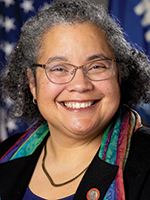
Rep. Margaret Arney
Sponsored bills
Maddy summaryAB 544 establishes a statewide food safety grading system for retail food establishments (like restaurants and grocery stores), requiring annual unannounced inspections based on a 100-point scale. Businesses must display their current grade (A, B, C, or "Grade Pending") at all public entrances within 48 hours, with penalties of $500 for a second violation and $1,000 for subsequent violations within 12 months of non-compliance. The system categorizes violations by public health risk, assigns negative points, and determines grades (e.g., A for 90-100 points), with "Grade Pending" triggering immediate corrective actions and reinspection. The department must maintain a public online database showing inspection results, grades, and assigned points for all businesses.
Maddy summaryAJR 105 is a commemorative resolution proposing to recognize September 25, 2025, as "First Amendment Day" in Wisconsin. It honors the First Amendment's protections of free speech, religion, press, assembly, and petition rights, referencing its historical role in movements like civil rights and women's suffrage. As a symbolic resolution, it has no legal effect or policy changes - it does not create new laws or alter existing rights. The resolution was introduced by multiple legislators and referred to committee for further consideration.
Maddy summaryAB 441 requires law enforcement officers to clearly identify themselves during arrests or detentions. Specifically, officers must state their name, display their badge number and agency insignia (with specified visibility standards), and state the legal authority for the action. The bill prohibits concealing identity except for medical masks, tactical gear, or during imminent danger. Violating these rules is a Class D felony, though courts cannot impose jail time. This directly affects officers employed by state or local law enforcement agencies during enforcement actions.
Maddy summaryAB 512 prohibits employers from asking about a job applicant’s previous salary before making a job offer or using that information to set pay. It also allows employees to discuss or disclose their own pay with coworkers without retaliation. Employees who face discrimination for discussing pay can file complaints with the state labor department or sue in court, with damages limited by company size (ranging from $50,000 to $300,000). The law directly affects all employers and employees in the state, aiming to increase pay transparency and reduce wage discrimination.
Maddy summaryAJR 103 designates the last full week of September as Frontotemporal Dementia (FTD) Awareness Week in Wisconsin. This symbolic resolution aims to raise public awareness about FTD - a progressive brain disorder affecting behavior, personality, or language - highlighting its challenges, misdiagnosis rates, and economic impact on families, without creating new policies or funding. It aligns with existing global awareness efforts but does not alter laws or provide resources.
Maddy summaryAB 517 prohibits foreign nationals from contributing to referendum committees and bans referendum committees from accepting such contributions. The bill directly affects foreign nationals (defined using federal campaign finance rules) and referendum committees organizing ballot initiatives. It adds a new provision to state law stating: "No foreign national may make a contribution to a referendum committee, and no referendum committee may accept a contribution from a foreign national." This clarifies existing federal restrictions apply to state-level referendum committees. The bill is currently in committee for review after its October 2025 introduction.
Maddy summaryAB 145 requires the state legislature to create and pass a plan to reduce carbon emissions by 52% by 2030 and achieve net-zero emissions by 2050. The bill mandates that any legislative plan developed must prioritize improving both economic and racial equity alongside emission reductions. It directly affects the legislature, which must finalize this plan during the 2025-26 session. The key provision is establishing legally binding emission reduction targets with an explicit requirement to address equity impacts in the implementation strategy.
Maddy summaryAB 527 removes restrictions on county advisory referendums in Wisconsin. It eliminates a specific exception that previously barred counties from holding advisory votes on most issues, except for capital projects funded by property taxes. The bill amends statute 59.52(25) to allow county boards to conduct advisory referendums on any topic without prior restrictions. This directly affects county governments seeking to gather public input on local policy decisions through non-binding votes. The change removes barriers to community engagement on a broader range of local issues.
Maddy summaryAB 541 requires election officials to mark the poll list number on the back of each absentee ballot after verifying its validity. This affects local election boards handling absentee ballots, specifically the "board of absentee ballot canvassers" during the ballot processing step. The bill amends a statute to mandate that officials record the elector's poll list number on the ballot's back before depositing it into the ballot box. This is a procedural change to standardize ballot tracking, not a policy shift affecting voters or election outcomes.