

Maddy summaryAB 1067 requires broadband providers to advertise and sell services based on consistent, verifiable speeds - minimum 100 Mbps download and 20 Mbps upload - matching federal standards. It mandates standardized broadband labels using FCC templates for all consumers before sale, preventing misleading speed claims. Providers violating these rules face consumer refunds if they fail to correct misrepresentations within a month of written notice. The bill directly affects broadband companies and protects consumers by ensuring accurate speed disclosures.
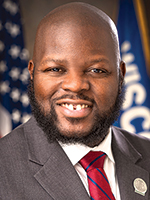
Rep. Supreme Moore Omokunde
Sponsored bills
Maddy summaryAB 1069 establishes a legislative study committee to examine requirements for a "Dig Once Law," which would mandate installing empty underground pipes (conduit) during infrastructure projects to prepare for future fiber-optic internet expansion. The committee will study key details like communication protocols between municipalities and contractors, ownership of unused conduit, maintenance cost responsibilities, conduit sizing for multiple providers, and optimal installation timing (e.g., during road construction). This bill does not enact new law but prepares recommendations for potential future legislation. It directly affects municipalities, construction firms, and future internet service providers by identifying implementation challenges. The committee must submit findings by January 1, 2027.
Maddy summaryAB 1048 repeals statute 66.0104, which governed local regulations of landlords. This procedural bill removes an existing legal provision without creating new rules or directly affecting landlords, tenants, or local governments. It was introduced by multiple legislators and referred to the Housing Committee. The bill's sole action is eliminating the referenced statute from the code.
Maddy summaryThis bill requires Wisconsin's Medicaid program (Medical Assistance) to reimburse providers for maternal mental health screenings during pregnancy. It also mandates that all health insurance plans covering maternity must include these screenings as a standard benefit, with no cost to the patient. The law specifies that screenings can be provided by licensed midwives, nurse-midwives, or other qualified healthcare providers. It includes a requirement for the state to develop screening standards in consultation with organizations led by Black, Indigenous, and other people of color. Coverage requirements will take effect for most plans starting September 1, 2026.
Maddy summaryAB 1087 creates a special enrollment period for pregnancy, requiring health benefit plans and self-insured health plans to allow pregnant individuals and their eligible family members to enroll at any time during pregnancy. Coverage must begin no later than the first day of the calendar month following medical verification of pregnancy, with individuals able to choose an earlier start date. The bill mandates that insurers provide clear notice of this special enrollment option during initial enrollment. This policy directly affects pregnant people seeking health coverage and the health plans that must implement this new enrollment window.
Maddy summaryAB 1088 requires Wisconsin hospitals to schedule a free postpartum home visit within 14 days for new mothers who request it, covering physical recovery, breastfeeding support, and mental health screening. The visit must be provided by trained doulas, midwives, or other licensed health providers. Insurance plans - including government-run health programs - must cover this service without deductibles, copays, or other patient costs. The bill directly affects new mothers, hospitals, and health insurers across Wisconsin.
Maddy summaryAB 1050 repeals restrictions that previously limited local governments' ability to regulate short-term residential rentals (like Airbnb). It removes specific provisions that capped the number of days a property could be rented annually and eliminated other barriers to local rulemaking. This bill directly affects cities, towns, and counties (political subdivisions), allowing them to establish their own rules for short-term rentals without these state-imposed limits. The key change is enabling local governments to create comprehensive regulations for short-term rental operations without state-mandated restrictions.
Maddy summaryAB 823 creates a program to provide electronic benefit transfer (EBT) and credit/debit card processing equipment and services to farmers' markets and farmers who sell directly to consumers. It allocates $367,500 biennially for this payment processing program and increases funding by $1 million annually for the healthy food incentive program. The bill requires participating vendors to process local purchasing incentives (even if funded by third parties) and adds 0.625 FTE positions to administer the program. This directly affects farmers' markets and farmers selling directly to consumers who participate in EBT or incentive programs.
Maddy summaryAB 835 establishes $10 million annually in grants for students enrolled in approved teacher education programs, requiring recipients to work as teachers in Wisconsin public or tribal schools for at least four years after graduation. It adjusts the reimbursement rate for special education costs to 90% of eligible expenses for school districts. The bill also modifies school district revenue limits by adding specific dollar amounts ($325 for 2023-24, $146 for 2023-24-2025-26) to calculate annual funding caps. These changes directly affect education students, school districts, and special education programs through concrete funding adjustments.
Maddy summaryAB 875 creates a new funding line for county conservation staff focused on climate change resiliency. It directly affects counties that have approved land and water conservation plans and choose to allocate matching funds. The bill adds "climate change personnel" as a specific budget item under soil and water management, requiring counties to specifically request funding for these roles in their annual grant applications to the Department of Agriculture. This changes how counties can use state grants by mandating explicit requests for climate-focused staff positions within their conservation planning process. The bill appropriates $1.8 million for the 2026-27 fiscal year for this purpose.