

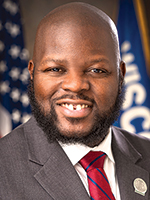
Photo of Supreme Moore Omokunde
D Wisconsin Assembly · District 17 On the 2026 ballot

Rep. Supreme Moore Omokunde

Compare
Total votes
418
all sessions
Attendance
98%
8 missed
Near the chamber average
With party
91%
of cast votes
Near the chamber average
Bipartisan score
4%
crosses aisle rarely
Near the chamber average
Sponsored
606
bills & resolutions
Near the chamber average
Committees
3
assignments
606 bills and resolutions

Sponsored bills

Total
606
Primary
606
Co-sponsor
0
This page
606
matching current filters
Primary AB 634
Failed · Wisconsin Assembly · Lead sponsor
Relating to: release of audio and video footage following officer-involved deaths or other critical incidents involving a law enforcement officer. (FE)

Maddy summaryAB 634 requires law enforcement agencies to publicly release bodycam, vehicle camera, and relevant audio/video footage within 15 days of specific incidents, including officer-involved deaths, critical incidents (like great bodily harm or death in custody), or firearm discharges by officers. This applies to footage showing actions leading to the incident, though agencies may redact sensitive information like victim identities, medical details, or confidential investigative strategies under defined exemptions. Affected parties, such as identified officers, victims, or families, must be notified 48 hours before release to review the footage. The bill aims to increase transparency while balancing privacy and investigative needs.

Failed Mar 23, 2026 0 co-sponsors
Primary AB 567
Failed · Wisconsin Assembly · Lead sponsor
Relating to: covenants not to compete in employment contracts.

Maddy summaryAB 567 bans most post-employment non-compete agreements in the state, making them illegal and unenforceable for employees after their job ends. The bill specifically allows exceptions only for protecting a customer list or intellectual property (like trade secrets or proprietary data). Employers must post clear notices about this ban in visible locations and on their websites. The law applies only to new non-compete clauses entered into, renewed, or modified after the bill’s effective date.

Failed Mar 23, 2026 0 co-sponsors
Primary AB 469
Failed · Wisconsin Assembly · Lead sponsor
Relating to: the unemployment insurance waiting period.

Maddy summaryAB 469 modifies Wisconsin's unemployment insurance rules for claimants who concealed work. It repeals outdated provisions and amends Section 108.04(11)(bm) to clarify that claimants who hid work (triggering ineligibility) will not earn "waiting period credit" during their ineligibility period. Instead, if no benefit rate applies to their claim week, the department will use their next benefit year's rate to calculate any reduction. This directly affects unemployed workers who previously concealed employment when filing for benefits.

Failed Mar 23, 2026 0 co-sponsors
Primary AB 482
Failed · Wisconsin Assembly · Lead sponsor
Relating to: allowing the enactment of family and medical leave ordinances. (FE)

Maddy summaryAB 482 repeals provisions that allowed cities, towns, and counties to create local family and medical leave ordinances. It directly affects local governments (like cities and counties) that previously could require employers to provide such leave, and employers in those jurisdictions. The bill amends statutes to prohibit local governments from enacting or enforcing any ordinance requiring employers to provide family or medical leave benefits, including existing ordinances in effect as of April 18, 2018. This shifts authority away from local governments to the state level for family leave policies.

Failed Mar 23, 2026 0 co-sponsors
Primary AB 465
Failed · Wisconsin Assembly · Lead sponsor
Relating to: permits authorizing the employment of minors. (FE)

Maddy summaryAB 465 revises state law to require permits for most employment of minors under 16 years old, with specific exemptions for home-based work not tied to the employer's business, nonprofit work for elderly or disabled individuals (e.g., snow shoveling), and election inspector roles. Employers must obtain and maintain these permits, and failure to produce them during inspections is considered evidence of unlawful employment. The bill also prohibits advertising for minor employment during school hours without stating the required minimum age and bans soliciting minors to leave school for work. Additionally, it removes an exception allowing minors to work during school hours with a permit, making such employment illegal.

Failed Mar 23, 2026 0 co-sponsors
Primary AB 532
Failed · Wisconsin Assembly · Lead sponsor
Relating to: unemployment insurance benefits. (FE)

Maddy summaryAB 532 updates Wisconsin's unemployment insurance benefit structure. It sets new maximum weekly benefit amounts: $370 for claims starting before January 4, 2026; $497 for claims starting January 4, 2026, through January 2, 2027; and establishes an annual inflation adjustment (using CPI data) for future years. The bill also raises the earnings threshold that reduces benefits from $500 to $672 for claims starting January 4, 2026, with future adjustments tied to inflation. These changes directly affect unemployed workers qualifying for state unemployment benefits by modifying benefit caps and the income level at which benefits decrease.

Failed Mar 23, 2026 0 co-sponsors
Primary AB 474
Failed · Wisconsin Assembly · Lead sponsor
Relating to: state preemption of local employment regulations. (FE)

Maddy summaryAB 474 repeals two existing statutes (103.007 and 109.09(3)) that prevented local governments from creating their own employment regulations. This change would allow cities and counties to establish their own rules on issues like minimum wage, scheduling, or workplace safety, rather than being restricted by state law. The bill directly affects local governments and employers operating within municipalities that wish to implement stricter or different employment standards than the state currently permits. It is a procedural repeal with no new provisions or funding mechanisms.

Failed Mar 23, 2026 0 co-sponsors
Primary AB 467
Failed · Wisconsin Assembly · Lead sponsor
Relating to: unemployment insurance work search and registration and granting rule-making authority. (FE)

Maddy summaryAB 467 modifies unemployment insurance requirements for claimants. It mandates that individuals seeking benefits must complete at least four documented work search activities weekly (with the department able to set higher standards via rules), unless they have a verified expectation of reemployment with their former employer. The bill also establishes a process for the department to waive work search requirements through rulemaking and requires employers to verify reemployment prospects for exemptions. This directly affects unemployed workers filing for state unemployment benefits in Wisconsin.

Failed Mar 23, 2026 0 co-sponsors
Primary AB 468
Failed · Wisconsin Assembly · Lead sponsor
Relating to: various changes to the unemployment insurance and worker’s compensation laws. (FE)

Maddy summaryAB 468 modifies unemployment insurance eligibility rules for workers terminated due to misconduct. It creates a new definition of "misconduct" that includes deliberate violations of workplace policies, excessive absenteeism without valid reasons, and willful violations of government regulations. The bill requires workers terminated for misconduct to wait 7 weeks and earn wages equal to 14 times their weekly benefit rate before requalifying for benefits. These changes directly affect workers who lose jobs for specific workplace conduct and employers who pay into unemployment insurance funds.

Failed Mar 23, 2026 0 co-sponsors
Primary AB 593
Failed · Wisconsin Assembly · Lead sponsor
Relating to: collective bargaining for employees of the University of Wisconsin System, granting rule-making authority, and making an appropriation. (FE)

Maddy summaryAB 593 amends Wisconsin statutes to clarify and strengthen collective bargaining processes for University of Wisconsin System employees covered by union contracts. It requires pay increases to align with existing compensation plans or collective bargaining agreements, prohibits closed-session negotiations for finalizing agreements, and updates funding mechanisms for grievance arbitrations and training. The bill directly affects UW System employees in unionized positions and their bargaining representatives. Key provisions include revised rules for pay adjustments, transparency in negotiation procedures, and specific appropriations for dispute resolution services under existing labor laws.

Failed Mar 23, 2026 0 co-sponsors
Showing 271 to 280 of 606 bills
Previous 1 … 27 28 29 … 61 Next