

Maddy summaryAB 586 amends Wisconsin statutes to clarify and strengthen shared governance at University of Wisconsin System institutions by defining the roles of faculty, academic staff, and students in institutional decision-making. The bill requires faculty to ensure STEM disciplines are represented in governance structures, gives academic staff the right to organize and advise on policies affecting them, and ensures students actively participate in policies related to student life and fee management. Key provisions specify that faculty have primary responsibility for academic matters, academic staff for their own policies, and students for advising on campus life and fee use. These changes directly affect all faculty, academic staff, and students across UW System campuses by formalizing their participation in governance and policy development.
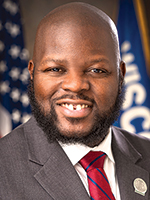
Rep. Supreme Moore Omokunde
Sponsored bills
Maddy summaryAB 495 adjusts Wisconsin's school funding system to protect districts from funding cuts between 2024 and 2025. It creates a "supplemental hold harmless aid" provision (20.255(2)(ab)) to ensure districts receiving higher state aid in 2024 retain that level in 2025-26. The bill also modifies per-pupil revenue limits, adding $325 for the 2023-24 and 2024-25 school years, and increases state funding appropriations by $493.8 million for 2025-26 and $699.9 million for 2026-27. These changes directly affect public school districts receiving state equalization aid.
Maddy summaryAB 507 amends state civil service laws to adjust veteran preference policies for state government hiring. It repeals outdated sections and revises provisions related to veteran eligibility, removing age restrictions for veterans applying for positions and clarifying how preference points are calculated and applied. Specifically, it modifies rules so veterans and their spouses receive preference points without age limits, and updates procedures for adding qualified veterans to certification lists after initial hiring. These changes directly affect veterans seeking state civil service jobs and state hiring boards managing employment eligibility. The bill updates statutory language to align with current veteran preference practices under sections like 230.16 (7).
Maddy summaryAB 325 modifies Wisconsin's firearm transfer rules to require most sales or transfers to go through a licensed firearms dealer, with exceptions for direct family gifts, bequests, or inheritances (if the recipient is at least 18 and not prohibited from owning firearms). It adds a $10 fee for background checks conducted by dealers and mandates new forms requiring transferees to confirm they aren’t transferring to prohibited individuals. Violating these rules carries a misdemeanor penalty of fines ($500-$10,000) or up to 9 months in jail, plus a 2-year firearm possession ban. The bill directly affects gun sellers, buyers, and family members transferring firearms without a dealer.
Maddy summaryAB 539 allows 16- and 17-year-olds to preregister to vote in the state. This preregistration becomes active when they turn 18, enabling them to vote in future elections without needing to re-register. The bill amends voter registration rules to require that preregistered 16-17 year olds only appear on voter lists once they reach age 18 on election day. It does not permit their names to appear on election lists before they turn 18.
Maddy summaryAB 529 requires school boards to provide eligible high school students with voter registration forms, eligibility information, and nonpartisan materials explaining voting importance and civic roles. It directly affects high school students who become eligible to register to vote (typically 16-18 year olds in most states). The bill mandates schools to distribute these resources as part of student enrollment or transition processes, ensuring access to nonpartisan voting information. It creates a new statute (6.31) specifying these requirements without altering voting eligibility rules. The measure aims to streamline voter registration access for young adults through educational institutions.
Maddy summaryAB 536 requires election officials to complete one-hour accessibility training sessions focused on meeting voter accessibility requirements under sections 5.25(4) and 6.82. Specifically, chief inspectors must attend this training under new section 7.31(6), while municipal clerks, inspectors, special deputies, and registration officials must complete it under new section 7.315(5). All training must be provided before the 2027 spring election. The bill directly affects local election staff responsible for polling place operations and voter assistance.
Maddy summaryAB 535 requires all polling places to be accessible to voters with disabilities by mandating election workers to use a standardized accessibility checklist on election day to identify and immediately report barriers. It also requires the election commission to submit annual reports (by June 30 in odd years) on voting impediments faced by elderly and disabled voters, consulting with relevant advocacy groups. Additionally, the bill creates uniform signage guidelines to notify disabled voters about ballot assistance options at polling place entrances. These changes apply to all polling places and take effect before the 2027 spring election.
Maddy summaryAJR 111 is a symbolic resolution recognizing September 23, 2025, and September 23, 2026, as "Celebrate Bisexuality Day" in Wisconsin. It formally acknowledges the bisexual community's resilience and contributions without creating new laws, funding, or requirements. The resolution aims to increase visibility and respect for bisexual individuals within Wisconsin, aligning with an internationally observed day. It directly affects Wisconsin's bisexual community by affirming their inclusion through legislative recognition. The bill is procedural, focusing solely on symbolic support rather than policy changes.
Maddy summaryAB 434 creates a new $60 million annual state grant program to fund local traffic calming projects. It directly affects counties, cities, villages, towns, and federally recognized tribes by providing funding for infrastructure projects designed to reduce vehicle speeds. The program, administered by the Department of Transportation, will award grants for projects eligible under federal transportation alternatives programs. Grants require applications with specified details, and the department will set evaluation criteria for funding decisions. This is a concrete policy change establishing ongoing state funding for community safety improvements.