

Maddy summaryAB 916 creates a state-funded home repair program to address habitability issues and improve energy efficiency in affordable housing. It provides grants of up to $25,000 per unit to eligible homeowners (income ≤100% of area median income who own or occupy their homes) and interest-free loans of up to $25,000 to eligible landlords (owning ≤5 properties/15 units of affordable housing). The program prioritizes repairs for homes with health/safety hazards, energy efficiency upgrades, and accessibility improvements for individuals with disabilities or young children. Properties must be between 10 and 40 years old to qualify, and funds are administered by the state authority or contracted counties/nonprofits with strict reporting requirements.
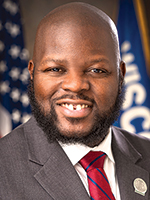
Rep. Supreme Moore Omokunde
Sponsored bills
Maddy summaryThis bill modifies how the Wisconsin Blue Book and highway maps are distributed to state legislators, changing from automatic distribution to a request-based system. Under the new rules, legislative offices must request copies of the Blue Book before printing, with each Senator allowed up to 600 copies and each Assembly Representative up to 350 copies. Highway service maps will be provided free of charge to each legislator and officer, with a limit of 50 copies per person, while folded highway maps will be distributed without charge to each legislator and officer with a limit of 500 copies per person. The bill also requires the department to contact legislators to determine their specific needs before distributing these documents, ensuring that distribution matches actual demand rather than being automatically sent to all members.
Maddy summaryAB 1044 creates a state grant program allocating $300,000 for the 2025-26 fiscal year to help adult family homes, community-based residential facilities, nursing homes, and residential care apartment complexes purchase patient lift devices. These devices must be state-approved, allow independent or staff-assisted operation, and mechanically lift a person. Facilities receiving grants must report usage data, with up to $100,000 of the appropriation reserved for collecting and analyzing this information.
Maddy summaryAB 722 imposes annual fees on large energy customers in Wisconsin based on their peak electricity demand, starting at $2 million for those using 100-250 megawatts and increasing by $1 million for each additional 250-megawatt increment. Fifty percent of these fees will fund the Green Innovation Fund, managed by the Wisconsin Economic Development Corporation. The bill also requires data centers to report annual water usage to local governments, certify adherence to sustainable building standards (like LEED or BREEAM) within three years of operation, and pay workers the prevailing wage rate for large-scale construction projects exceeding $250 million in cost. These provisions directly affect large energy users, data center operators, and local governments managing water reporting.
Maddy summaryAB 785 establishes a program to cap electricity and gas costs at 2% of a household's annual income for energy burdened households (spending 2-4% of income on utilities) and severely energy burdened households (spending 4% or more, or having no income with utility bills). It prohibits utility disconnections for residential customers with income up to 300% of the federal poverty level due to nonpayment and creates an "energy burden relief fund" to finance the program. The bill requires automatic enrollment for eligible households, an online application portal, and annual reporting by the Public Service Commission on program administration and barriers to participation.
Maddy summaryThis bill prohibits cosmetic manufacturers from conducting or contracting for animal testing on cosmetics within the state after December 31, 2026, and restricts the sale of products developed using such testing after July 1, 2027. It applies to any person whose name appears on a cosmetic label and bans the import or sale of cosmetics or ingredients known to have been tested on live nonhuman vertebrates after the specified date. Exceptions allow testing required by federal or state regulatory agencies under specific conditions, including when no alternative testing methods exist, or for compliance with foreign jurisdiction requirements where test results are not used to substantiate product safety in the state. Violations of the prohibition carry a penalty of $5,000 for each offense plus an additional $1,000 for each day the violation continues.
Maddy summaryThis bill would allow Wisconsin school districts to increase their revenue limits when they spend money on energy efficiency projects. The adjustment applies to districts that adopt a resolution authorizing the increase and meet specific requirements, including using performance contracts for the project and financing it with bonds or loans of 20 years or less. Eligible projects must reduce energy or operational costs, conserve water, or improve metering accuracy, and the revenue limit increase would last for each school year the district pays debt service on the financing. The bill updates existing statutes to clarify how these adjustments are calculated and applies to resolutions adopted on the effective date of the law.
Maddy summaryAB 1068 modifies Wisconsin's broadband expansion grant program to better support local governments. It repeals outdated sections and updates rules to allow cities, villages, towns, and counties to apply for grants covering broadband infrastructure construction in unserved areas and related planning costs. Key changes include enabling grants for project planning (like feasibility studies) and permitting up to 50% of a broadband director's salary to be covered by grant funds. The bill directly affects local governments seeking to expand high-speed internet access in underserved communities.
Maddy summaryAB 1075 changes the age threshold for juvenile court jurisdiction by reclassifying 17-year-olds as adults for criminal prosecution purposes. It amends definitions to define "adult" as 17 years or older (instead of 18) for investigating and prosecuting criminal violations, while keeping 17-year-olds under juvenile court jurisdiction for specific cases. The bill also creates a new funding mechanism to reimburse counties for costs related to 17-year-olds accused of crimes starting in 2026. This directly affects 17-year-olds facing criminal charges and county juvenile justice systems managing their cases.
Maddy summaryThis bill establishes new funding and administrative provisions for Wisconsin's Medical Assistance program, including grants for community primary care and outreach services. It allocates $41.75 million for 2025-26 and $66.75 million for 2026-27 to support community health centers in hiring health workers, nurses, and social workers to provide care coordination services, particularly for individuals facing barriers like mental illness or homelessness. The legislation also creates a stabilization fund of $20 million for the BadgerCare Direct program, which pays providers directly for services rather than through insurance intermediaries. Additionally, the bill adds requirements for the state to maintain a 24/7 nurse consultation helpline, improve provider recruitment, and explore ways to reduce healthcare costs while ensuring timely access to medically necessary services.