

Maddy summaryAB 735 creates a centralized online clearinghouse for Wisconsin small businesses, requiring the state Department to compile and publish key information on a single website. The clearinghouse will include details on government contract bidding opportunities, economic development programs, business training/events, licensing/permit requirements, and tax/fee obligations from state and local agencies. This bill directly affects Wisconsin small businesses by making it easier to access government resources and compliance information in one place. The clearinghouse will be coordinated with agencies like the Wisconsin Economic Development Corporation and the Department of Revenue.
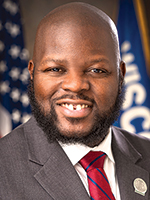
Rep. Supreme Moore Omokunde
Sponsored bills
Maddy summaryAB 797 creates a $2.5 million grant program to help counties, cities, and towns test privately owned wells for water quality and map well locations. It provides up to $10,000 per grant for well testing, groundwater assessment, and geologic studies, plus separate grants for county health departments to offer well-testing education. The bill also requires municipalities with private wells to inform residents about testing importance and exempts the department from standard emergency rule procedures for implementing this program. The law appropriates funds for fiscal years 2025-26 and 2026-27 to support these concrete actions.
Maddy summaryAB 804 establishes two new grant programs: a $200,000 annual "Farm to Fork" grant for non-school entities (like businesses, hospitals, or universities with cafeterias) to connect local farms with food service operations, and a $250,000 annual "Farm to School" grant for school districts to expand local food sourcing. The bill prioritizes innovative proposals, high-need schools (where many students qualify for free/reduced meals), and projects supporting value-added agricultural products. It requires the Agriculture Department to administer the grants, provide annual legislative reports, and create rules for implementation. The legislation also adds one dedicated staff position to manage the Farm to Fork program.
Maddy summaryAB 754 requires most health insurance plans and disability policies covering preventive care to cover home test kits for sexually transmitted diseases (STIs), including HIV. It mandates coverage when a healthcare provider deems the test medically necessary and orders it directly or through a standing order. The law defines "home test kits" as products meeting CDC or FDA guidelines, allowing self-collection outside clinical settings. This applies to plans covering primary care or preventive services, including laboratory processing costs for approved kits.
Maddy summaryAB 62 establishes a Prescription Drug Affordability Review Board to address prescription drug costs. The board, with members representing pharmaceutical companies, health insurers, healthcare providers, and the public, must meet quarterly and avoid conflicts of interest. Key provisions include creating a $500,000 annual grant program for healthcare providers to develop tools showing patients the cost of prescriptions (Section 601.415), launching a diabetes medication pilot project (Section 601.41), and repealing a section requiring copayments for certain Medicaid services (Section 7). This bill directly affects insurers, pharmacies, drug manufacturers, and healthcare providers who must disclose drug costs to patients.
Maddy summaryAB 57 prohibits state and local officials, including law enforcement, from aiding in the detention of individuals solely because they are or are alleged to be not lawfully present in the U.S. The bill specifically bans assistance in facilities like schools, hospitals, places of worship, or childcare centers. It also prohibits using state funds for such detentions and exempts actions required by a valid judicial warrant. The law directly affects state agencies, local governments, and their employees who operate these facilities.
Maddy summaryAB 48 creates a state program to reimburse public and private schools for the cost of providing free meals to all students, including lunch and breakfast. Schools must participate in federal meal programs and offer free meals to every student without charge. The state will pay schools an amount equal to the federal reimbursement rate for free meals (minus any federal funds received), based on meals served in the prior school year. This applies to public, private, charter, tribal, and specialized schools meeting eligibility requirements.
Maddy summaryAB 52 expands the homestead income tax credit for homeowners with low to moderate income. It establishes new income-based limits: households earning $8,060 or less get credit covering 80% of property taxes, while higher earners get credit on taxes exceeding 5.614% of income over $8,060. The credit is unavailable if household income exceeds $35,000. The law also adds automatic inflation adjustments to these thresholds starting in 2026.
Maddy summaryAB 125 designates February 18 as a special observance day in Wisconsin public schools to honor Vel R. Phillips' birthday. The bill adds this date to school calendar requirements, directing schools to recognize Vel R. Phillips' contributions during the school year following the law's effective date. This applies directly to all Wisconsin public schools.
Maddy summaryAJR 9 is a Wisconsin Assembly Joint Resolution honoring Bob Uecker, the longtime Milwaukee Brewers radio broadcaster and entertainer, for his 69-year career in baseball. The resolution recognizes his contributions as a broadcaster, actor (including "Mr. Belvedere" and "Major League"), philanthropist, and community figure, citing his 54-year tenure with the Brewers and his cultural impact. It does not create new laws or affect any policies - it is a symbolic tribute passed by the Wisconsin Legislature to memorialize his legacy. The resolution extends condolences to his family and acknowledges his widespread influence on baseball fans and Wisconsin.