

Maddy summaryThis bill honors the life and public service of Rev. Jesse L. Jackson, a civil rights activist and politician who passed away in February 2026. It formally recognizes his contributions to the American civil rights movement, his work with the Southern Christian Leadership Conference, and his role as a presidential candidate who built a diverse coalition of underserved Americans. The resolution expresses the Wisconsin Legislature's condolences to his family and community while acknowledging his legacy of advocacy for racial equity, economic justice, and voting rights.
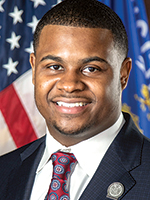
Rep. Kalan Haywood
Sponsored bills
Maddy summaryThis bill proposes to amend the Wisconsin Constitution to remove an exception that currently allows slavery or involuntary servitude as punishment for a crime. If passed, it would prohibit all forms of slavery and involuntary servitude without exception, regardless of criminal conviction. The measure requires approval by two successive legislatures and ratification by voters before it becomes law. It directly affects the state's constitutional framework regarding human rights and criminal punishment.
Maddy summaryThis bill creates a new Office of the Ombudsperson for Corrections within the Department of Administration to investigate complaints from prisoners, staff, contractors, and their families regarding abuse, unfair treatment, or rights violations in state correctional facilities and community-based correctional services. The ombudsperson, appointed by the governor with Senate approval, will receive complaints at no cost to the complainant after internal processes are exhausted, investigate facility policies and practices, and make recommendations to facility operators, the governor, or the legislature. The office will have authority to subpoena records and witnesses, require facility operators to cooperate with investigations, and publish annual reports with statistics on complaints and recommendations on a public website. The bill also authorizes funding for the new position and establishes the ombudsperson's role within the state's correctional oversight structure.
Maddy summaryThis bill formally declares February 2026 as Black History Month in Wisconsin. It directly affects state government officials and the public by establishing an official recognition of the month. The resolution includes historical context about African American contributions to the state and specifically honors eight individuals for their achievements in civil rights, public service, education, and community leadership. The bill does not create new laws or funding but serves as a commemorative proclamation to acknowledge and celebrate the heritage and contributions of people of African descent.
Maddy summaryThis bill establishes a state minimum wage schedule that gradually increases from $15 per hour in 2026 to $20 per hour by 2030, with slightly lower rates for small employers defined as those with 50 or fewer employees. It also sets specific minimum wage rates for tipped employees, which increase more slowly over the same period. Beginning in 2031, the state department of labor gains authority to adjust the minimum wage annually based on changes in the consumer price index. The bill also grants the department power to create rules for special categories of workers, including agricultural employees, students, and those with disabilities, while exempting certain types of casual employment from minimum wage requirements.
Maddy summaryThis bill establishes a new basic health plan for individuals with household incomes below 200 percent of the poverty line and creates a purchase option program allowing eligible people with higher incomes to buy coverage through the state program instead of private insurance. The program would offer benefits similar to existing state coverage, include tax credits for eligible participants, and set premium rates comparable to managed care plans while requiring federal waivers to implement. It also directs the creation of a state-based insurance exchange where individuals can access these purchase options and grants officials authority to create rules needed for implementation. The bill requires a report on federal waiver status and economic analyses by March 2027 before the program can be fully launched.
Maddy summaryThis bill adjusts how Wisconsin calculates and distributes state funding for special education costs and general school aid. It modifies the reimbursement rate for special education expenses, allowing the state to distribute up to 100 percent of eligible costs rather than a lower fixed percentage. The legislation also increases the general school aid appropriation for the 2026-27 fiscal year by approximately $446 million to support public school districts. These changes directly affect school districts and the state Department of Public Instruction by altering how funds are allocated and calculated for educational programs.
Maddy summaryAB 1178 amends Wisconsin statutes to update definitions and procedures for regional transit authorities, ensuring they are recognized as eligible entities for various state programs including highway relocation orders, right-of-way applications, and employer classifications for employee benefits. The bill creates new funding mechanisms by establishing appropriation accounts to collect and distribute taxes imposed by transit authorities that choose to levy them, with a portion of those revenues retained for administrative costs. Additionally, the legislation clarifies which organizations qualify as municipalities and employers under existing laws, explicitly including transit authorities created under the specified chapter while excluding cultural arts districts from certain employer definitions. This bill does not mandate tax collection but provides the legal framework for transit authorities to adopt resolutions imposing taxes if they choose to do so.
Maddy summaryThis bill requires operators of licensed runaway homes to notify child welfare agencies and a child's parents, guardians, or legal custodians when a child is sheltered there without consent. The law mandates that intake workers inform parents within 72 hours, while home operators must attempt contact every six hours until successful if the child's safety is deemed best served by notification. Additionally, if parents do not consent to the child's placement, a court hearing must be held within 24 hours to determine whether the child can remain in the home. These provisions apply specifically to licensed facilities sheltering runaway children and aim to establish clearer communication protocols between operators, welfare agencies, and families.
Maddy summaryAB 999 clarifies that employees of the University of Wisconsin Hospitals and Clinics Authority (UWHCA) are covered under collective bargaining agreements. The bill amends specific statutes (including 40.02, 40.05, and 111.02) to explicitly include UWHCA employees in provisions governing union dues, sick leave conversion, and bargaining unit structures. This ensures UWHCA staff have the same collective bargaining rights as other state employees covered under Chapter 111. The changes directly affect UWHCA employees by integrating them into existing labor frameworks without creating new rights. The bill focuses on administrative alignment within current state labor laws.