

Maddy summaryThis bill establishes a one-year cooling-off period preventing former state legislators from working as lobbyists immediately after leaving office. It applies to any individual who served as a member of the legislature and prohibits their employment in lobbying roles for 12 months following the end of their term. The provision is designed to prevent potential conflicts of interest by ensuring a separation between legislative duties and lobbying activities.
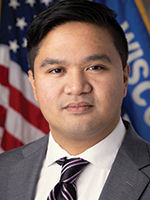
Rep. Angelito Tenorio
Sponsored bills
Maddy summaryThis bill establishes a state minimum wage schedule that gradually increases from $15 per hour in 2026 to $20 per hour by 2030, with slightly lower rates for small employers defined as those with 50 or fewer employees. It also sets specific minimum wage rates for tipped employees, which increase more slowly over the same period. Beginning in 2031, the state department of labor gains authority to adjust the minimum wage annually based on changes in the consumer price index. The bill also grants the department power to create rules for special categories of workers, including agricultural employees, students, and those with disabilities, while exempting certain types of casual employment from minimum wage requirements.
Maddy summaryThis bill modifies Wisconsin's residential tenancy laws to strengthen protections for tenants facing unsafe living conditions and retaliatory actions by landlords. It requires landlords to provide a rent abatement schedule when repairs for health or safety issues cause tenants to lose full use of their homes, while also clarifying that tenants cannot withhold all rent if they stay in the property. The legislation creates a legal presumption that certain landlord actions, such as rent increases or lease nonrenewals, are retaliatory if they occur within 12 months of a tenant exercising their rights. Additionally, it grants the Department of Agriculture, Trade and Consumer Protection the authority to establish specific rules for calculating rent reductions based on various conditions.
Maddy summaryThis bill establishes a pilot program to provide grants to small dairy farms with fewer than 1,000 milking cows, aiming to help them improve operational efficiency and resilience. The program would be funded by a $1.5 million appropriation and administered by the Department of Agriculture, which would have the authority to create rules for managing the grants. Eligible dairy producers could use the funding for projects designed to strengthen their farms against economic or environmental challenges. The legislation creates two new sections in the state statutes to outline the program's structure and funding.
Maddy summaryThis bill requires prescription drug manufacturers to report price increases and new drug introductions to state health officials, affecting pharmaceutical companies selling drugs in the state. Manufacturers must notify the department and insurance office at least 30 days before raising drug prices by more than 25% over two years or introducing high-cost brand-name drugs, providing justification including cost-effectiveness data and comparisons to similar medications. The law also mandates annual reports on manufacturer-sponsored patient assistance programs and price concessions given to pharmacy benefit managers, with penalties of up to $10,000 per day for noncompliance. State health officials will publish the justification documents and conduct public hearings to analyze drug pricing trends.
Maddy summaryThis bill congratulates the U.S. Olympic Women's Ice Hockey Team for winning the gold medal at the 2026 Winter Olympics. It specifically recognizes the team's achievements and highlights the contributions of Wisconsin athletes and staff who were part of the squad. The resolution expresses appreciation from the Wisconsin State Legislature to the players, coaches, and support staff for their success. As a ceremonial measure, the bill does not create new laws or policies but serves to honor the team's accomplishment.
Maddy summaryThis bill establishes minimum nurse-to-patient staffing ratios across various hospital units, requiring hospitals to submit annual staffing plans that specify the maximum number of patients each registered nurse can care for during a shift. It also grants registered nurses the right to refuse work assignments that violate these staffing standards and prohibits mandatory overtime for nurses. Hospitals must create staffing committees with a majority of frontline nurses, post their staffing plans publicly, and maintain detailed records of actual staffing levels for at least three years. The bill includes penalties for non-compliance, including fines for failing to submit plans or follow corrective actions after violations are confirmed.
Maddy summaryThis bill prohibits discrimination based on gender identity and gender expression in Wisconsin public schools and private schools that receive state funding through parental choice or scholarship programs. It requires these schools to adopt written policies for handling discrimination complaints and mandates that schools admitting only one sex must still allow students whose gender identity aligns with that sex. The legislation also adds gender identity and gender expression to the list of protected characteristics for hiring teachers and administrative staff, while allowing religious schools to decline instruction in religions other than their own. Additionally, the bill establishes penalties of up to $1,000 for officials who intentionally discriminate against students or staff in violation of these provisions.
Maddy summaryThis bill requires school districts in Wisconsin to ensure teachers have at least 45 minutes of daily self-directed preparation time, equivalent to one full class period. The provision applies to teachers covered by collective bargaining agreements or contracts, taking effect when those agreements expire or are modified. The legislation amends existing state statutes to mandate this preparation time as part of teachers' daily schedules.
Maddy summaryThis bill would authorize Wisconsin to join an interstate compact that implements a national popular vote system for electing the president and vice president, but it only takes effect once enough states have joined to control a majority of electoral votes. Under the agreement, member states would still hold traditional statewide elections, but they would award all their electoral votes to the presidential candidate who wins the most total votes nationwide rather than the winner of their individual state. The bill also includes provisions for handling ties, certifying results, and allowing states to withdraw from the compact with certain restrictions. This legislation does not change the current Electoral College system itself but creates a legal framework for states to participate in an alternative election method if sufficient states agree to join the compact.