

Maddy summaryAB 667 prohibits law enforcement agencies from paying third parties or government entities for access to an individual's personal data without a warrant. The bill defines "personal data" broadly to include names, location, financial records, health information, browsing history, and device identifiers. It allows exceptions only when a warrant is obtained, during emergencies involving immediate danger, if data is already public, or with the individual's explicit consent. This law directly affects law enforcement agencies and data-sharing companies by restricting how personal information can be acquired for investigations.
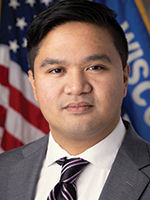
Rep. Angelito Tenorio
Sponsored bills
Maddy summaryAB 637 requires private postsecondary schools in the state to derive at least 20% of their annual revenue from non-federal sources in two out of their three most recent fiscal years to enroll state residents. This applies directly to private colleges and universities seeking to admit students who live in the state. The bill defines "annual revenue" and "federal funds" specifically and grants the state education department authority to create implementing rules. The requirement will take effect for the 2028-29 academic year.
Maddy summaryAB 638 requires private postsecondary schools seeking state approval (or renewal) to maintain a reserve fund equal to 25% of their highest annual revenue over the past five years (or projected first-year revenue for new schools). This fund protects students if schools commit fraud, fail to deliver promised education services, or close unexpectedly. Schools must also pay a $3 student protection fee for every $1,000 of their annual revenue, with fee collection stopping once the fund exceeds $5 million. The bill directly affects private colleges operating in the state, creating a financial safety net for students through mandatory reserves and a fee-based fund.
Maddy summaryAB 632 imposes a moratorium on issuing permits for mining sulfide ore bodies (mineral deposits where metals mix with sulfide minerals) until two conditions are verified. Specifically, the department must confirm that similar mining operations in the U.S. or Canada have operated for at least 10 years without polluting groundwater or surface water from acid drainage or heavy metals, and that similar closed mines have remained pollution-free for 10 years. This applies to all permit applications, regardless of when they were submitted, and remains in effect until the verification requirements are met. The bill directly affects mining companies seeking permits for sulfide ore mining projects in the state.
Maddy summaryAB 626 allows drivers and ID card holders to obtain electronic copies of their licenses and identification cards from the state department. It permits displaying these electronic copies on phones or devices during traffic stops, while ensuring officers cannot view other phone content. The bill adds a $10 fee for electronic copies (separate from standard card fees) and clarifies that physical copies remain subject to different fee rules. This directly affects drivers who choose electronic formats and the state department managing license issuance.
Maddy summaryAB 642 allows students to sue private postsecondary schools that violate enrollment rules or provide false/misleading information about their programs. Students who paid fees to such schools can recover those fees plus costs and reasonable attorney fees through civil court. The bill directly affects students enrolled in private schools that engage in deceptive practices, creating a clear legal remedy for financial harm. It amends Wisconsin Statute 440.52(10)(f) to establish this specific civil action as an additional remedy. The law applies to violations occurring on or after its effective date.
Maddy summaryAB 577 increases annual funding for Wisconsin's birth defect prevention and monitoring system from $95,000 to $500,000, plus adds 3.3 full-time staff positions for the Department of Health Services to maintain the system. The bill allocates an additional $405,000 for fiscal years 2025-26 and 2026-27 to support this program. It directly affects the Department of Health Services, which will use the funds to operate the birth defect surveillance system. The bill makes concrete changes to existing funding levels without altering program requirements or eligibility.
Maddy summaryAB 570 redirects remaining scholarship funds to public school districts when students switch schools. If a student withdraws from a private school under a parental choice program, the Special Needs Scholarship Program, or an independent charter school during a school year and enrolls in a public school district, the state department must pay the unused scholarship amount to that district instead of the original school. This applies to all specified programs and covers the remainder of the school year's funding. The bill takes effect on July 1, 2026. It directly affects students transferring programs, public school districts receiving funds, and the state's scholarship payment process.
Maddy summaryAB 635 requires the state environmental department to notify county health departments, tribal health departments, and county land conservation departments within 7 business days whenever groundwater protection standards or PFAS standards are exceeded. The bill creates a formal notification system to alert affected local governments and adjacent counties that might face negative impacts, with notices available for public review under state law. This law directly affects local health and land management agencies in counties where water contamination breaches are confirmed, ensuring timely public awareness of groundwater safety issues.
Maddy summaryAB 656 eliminates a legal exception that previously protected spouses from prosecution for sex crimes against child spouses. It amends statutes 948.09 (sexual intercourse with a child age 16+) and 948.093 (underage sexual activity) to remove the provision stating these laws "do not apply if the child is the defendant’s spouse." This change directly affects individuals in marriages where one spouse was a minor at the time of marriage, making spousal relationships no longer a defense for sex crimes against children. The bill also updates marriage-related provisions, including allowing minors under 18 to file for divorce (767.185) and clarifying consent requirements for minors seeking marriage licenses.