

Maddy summaryAB 739 prohibits state and local government agencies, including law enforcement, from detaining individuals solely based on their immigration status. It specifically bans officials from aiding federal immigration enforcement efforts that target people for being undocumented, while allowing access to facilities under valid judicial warrants. The bill also prohibits state or local governments from entering into or continuing agreements with the federal government that enable local police to enforce federal immigration law (such as 8 USC 1357(g) agreements). This directly affects all state agencies, local governments, and law enforcement entities in the state by restricting their cooperation with federal immigration enforcement. The law creates new restrictions on state and local actions, not on federal policies.
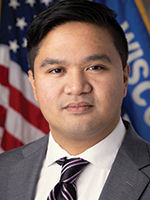
Rep. Angelito Tenorio
Sponsored bills
Maddy summaryAB 744 would provide free vehicle access to Wisconsin state parks for veterans and gold star families. The bill creates a new statute allowing any vehicle (excluding motor buses) occupied by a veteran - verified using the federal definition in 38 USC 101 - or a family member meeting gold star lapel button criteria (per 10 USC 1126) to enter parks without paying admission fees. It directly affects eligible veterans and surviving family members of service members who died in combat. The policy change removes a fee requirement for these groups when entering parks by private vehicle, with proof of eligibility required at the park entrance. The bill is currently in committee review after its December 2025 introduction.
Maddy summaryAB 728 creates a new statute (302.47) requiring immediate access (less than 24 hours' notice) for specific oversight personnel to visit correctional facilities. It directly affects state legislators on relevant committees and county employees overseeing jail operations, granting them access to residential areas, cells, dining areas, and prisoner discussions. Facilities may deny immediate access only between 9 p.m. and 6 a.m. (with daytime access within 72 hours) or if the requester has exceeded 12 annual visits. The bill aims to enhance transparency by enabling regular oversight visits without unnecessary delays.
Maddy summaryAB 724 requires the Department of Corrections to create a public, interactive website that updates complaint data from state correctional institutions every 72 hours. The system must display the total annual complaints per facility and show all complaint details broken down by category (without personal information about inmates or staff). The bill appropriates $70,000 for fiscal year 2025-26 to establish the system and $30,000 for 2026-27 to operate it. This affects state correctional institutions (which must submit data) and the public (which gains access to the searchable complaint information).
Maddy summaryAB 733 requires state prisons and county jails to provide inmates with minimum weekly hours of recreational activities and structured programming. State facilities must offer 21-35 hours weekly (depending on staffing levels), prioritizing education, job training, reentry planning, and wellness programs. County jails must provide at least 10 hours weekly starting 31 days into confinement, increasing to 21-35 hours after 90 days if staffing meets thresholds. Exceptions allow temporary reductions during lockdowns or solitary confinement, limited to 10 consecutive days.
Maddy summaryAB 723 establishes minimum bathing requirements for inmates in state correctional facilities and county jails. It mandates that state facilities provide at least four 15-minute bathing periods weekly, including 10 minutes of heated running water, while county jails must meet the same standard. The bill directly affects all inmates in these facilities by setting concrete, measurable hygiene standards. It requires the state department of corrections and county sheriffs to implement these provisions, with no additional exemptions or cost details specified in the current text.
Maddy summaryAB 734 establishes specific temperature standards for state correctional institutions and county jails, requiring indoor temperatures to stay between 68°F and 76°F at all times in housing units. It mandates facilities to record temperatures in common areas and random cells during extreme weather (below 10°F or above 90°F) and submit annual reports to the legislature. The bill appropriates $65 million for 2026-27 to install and operate heating, ventilation, and air conditioning systems, with phased implementation: one-third of facilities by 2029, another third by 2031, and the final third by 2035. This directly affects all state prisons and county jails/houses of correction in Wisconsin, requiring them to meet new climate control requirements and report compliance data.
Maddy summaryAJR 121 is a constitutional amendment proposal that would clarify county jail custody authority. It would add language stating sheriffs normally have custody of county jails and inmates, but county boards of supervisors could delegate that custody to other public officials or entities. This directly affects sheriffs, county boards, and county jail operations by defining who holds legal responsibility for inmates. The amendment does not create new policies but adjusts constitutional language governing jail custody. The bill is currently in committee after its December 2025 introduction.
Maddy summaryAB 725 requires state prisons and county jails to notify designated family members within 24 hours when an inmate faces restrictions affecting visits or communication (like solitary confinement). It also mandates an online public dashboard updated every 48 hours, showing current restrictions (with reasons and duration), solitary confinement numbers broken down by reason, and total inmate counts. The bill funds these systems with $780,000 for fiscal year 2025-26 and $275,000 for 2026-27, plus temporary staff to implement them. These changes directly affect inmates, their families, and correctional facilities by increasing transparency around restrictive practices.
Maddy summaryAB 726 requires all inmates in state correctional institutions and county jails to be paid a minimum wage of at least the hourly rate specified in statute 104.035(3)(a)1, with an immediate $2.33 per hour increase effective upon enactment. The bill mandates that wages must be based on productivity but cannot fall below this minimum rate, applies to all labor performed by inmates, and prohibits wage reductions without board approval. It also appropriates $58.9 million for 2025-26 and $88.4 million for 2026-27 to cover the increased inmate wages in state facilities, plus smaller sums for correctional enterprises. The law directly affects incarcerated individuals by guaranteeing a minimum wage for their labor, while ensuring funds are allocated to cover these new payment obligations.