

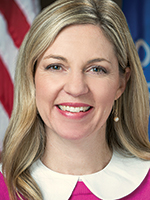
Photo of Robyn Vining
D Wisconsin House · District 13

Rep. Robyn Vining

Compare
Total votes
560
all sessions
Attendance
96%
23 missed
Near the chamber average
With party
96%
of cast votes
Near the chamber average
Bipartisan score
2%
crosses aisle rarely
Near the chamber average
Sponsored
569
bills & resolutions
Near the chamber average
Committees
4
assignments
569 bills and resolutions

Sponsored bills

Total
569
Primary
569
Co-sponsor
0
This page
569
matching current filters
Primary AB 859
Failed · Wisconsin House · Lead sponsor
Relating to: the reimbursement rate for special education costs and school age parents programs and making an appropriation. (FE)

Maddy summaryAB 859 adjusts the state reimbursement rate for special education and school-age parent program costs. It sets the reimbursement rate at 42% of eligible costs for the 2025-26 school year, increasing to 45% for the 2026-27 school year and all subsequent years. The bill applies to costs covered under sections 115.88(1m)-(3), (6), (8), 115.93, and 118.255(4), which include services for students in hospitals, convalescent homes, and school programs. This change directly affects school districts and programs providing these services by altering the state's financial contribution toward their expenses. The bill amends statutes to ensure state funds are distributed according to these revised percentages.

Failed Mar 23, 2026 0 co-sponsors
Primary AB 872
Failed · Wisconsin House · Lead sponsor
Relating to: the Energy Innovation Grant Program and making an appropriation. (FE)

Maddy summaryAB 872 creates a new Energy Innovation Grant Program to fund projects advancing clean energy technologies. It allocates $10 million annually for the 2025-26 and 2026-27 fiscal years, directly supporting the Office of Energy Innovation within the Public Service Commission. The program allows the agency to distribute grants for innovative energy solutions, with no specific project types or recipient criteria detailed in the bill. This is a funding measure with no voting record yet, as the bill was introduced on January 16, 2026.

Failed Mar 23, 2026 0 co-sponsors
Primary AB 844
Failed · Wisconsin House · Lead sponsor
Relating to: creating a stretch energy code. (FE)

Maddy summaryAB 844 allows cities, counties, villages, and towns to adopt stricter energy efficiency standards for new buildings than the state's baseline code, provided they follow a state-developed "stretch energy code." Local governments can choose to implement either residential or commercial components of this code, which must exceed current state minimums. The state must create the stretch energy code by December 2026 through a working group including energy experts, climate nonprofits, and municipalities with climate plans. This directly affects local building regulations without changing the state's baseline requirements.

Failed Mar 23, 2026 0 co-sponsors
Primary AB 857
Failed · Wisconsin House · Lead sponsor
Relating to: climate change scholarships and making an appropriation. (FE)

Maddy summaryAB 857 creates a climate change scholarship program funding $5 million annually for Wisconsin students enrolled in climate-related academic programs at eligible colleges and universities (including UW System, technical colleges, tribal colleges, or private nonprofits). It requires scholarships to be split equally between merit-based and need-based awards, with a $5,000 annual limit per student. The program is funded through a dedicated appropriation in the state budget, administered by the Higher Educational Aids Board. Students with unresolved child support liens may be excluded unless they provide approved payment plans.

Failed Mar 23, 2026 0 co-sponsors
Primary AB 867
Failed · Wisconsin House · Lead sponsor
Relating to: on-bill financing of energy improvements and granting rule-making authority. (FE)

Maddy summaryAB 867 creates a new program allowing public utilities to finance energy improvements (like solar panels or insulation) at residential properties. Utilities would cover the upfront costs and recover them over time by adding a small, regular charge to the homeowner's utility bill. The Public Service Commission must develop rules to govern this program. This directly affects homeowners seeking energy upgrades and the utilities offering this financing option.

Failed Mar 23, 2026 0 co-sponsors
Primary AB 858
Failed · Wisconsin House · Lead sponsor
Relating to: Public Service Commission consideration of the social cost of carbon emissions and the recovery of costs relating to fossil fuel energy production infrastructure and transitioning to renewable resource energy production. (FE)

Maddy summaryAB 858 requires Wisconsin's Public Service Commission to consider a minimum "social cost of carbon" of $185 per metric ton of CO2 emissions when reviewing energy certificates. It mandates that costs for expanding fossil fuel infrastructure can only be recovered from customers who directly benefit from that infrastructure, and prohibits passing transition costs to renewable energy onto ratepayers. The bill directly affects utilities seeking infrastructure investments and residential/commercial electricity customers paying rates. Key provisions ensure fossil fuel expansion costs are tied to specific beneficiaries while shielding customers from transition expenses during the shift to renewables.

Failed Mar 23, 2026 0 co-sponsors
Primary AB 853
Failed · Wisconsin House · Lead sponsor
Relating to: funding for certain research positions at the University of Wisconsin-Madison and making an appropriation. (FE)

Maddy summaryAB 853 allocates $200,000 annually for the 2025-26 and 2026-27 fiscal years to fund two full-time research positions at the University of Wisconsin-Madison focused on agriculture and climate change. The positions must be filled using existing vacant research roles (not creating new ones), assigned to the university's extension division, and contribute to increasing the total number of research positions at UW-Madison. The bill modifies the state budget to add this funding under existing appropriations for the University of Wisconsin System. It does not create new positions but directs existing resources toward climate science research in agriculture through UW-Madison's extension program.

Failed Mar 23, 2026 0 co-sponsors
Primary AB 871
Failed · Wisconsin House · Lead sponsor
Relating to: constructing laterals and service pipes without a landowner’s permission in the City of Milwaukee. (FE)

Maddy summaryAB 871 allows Milwaukee’s city government to install water, gas, sewer, and heat utility pipes (laterals/service pipes) on private property without the landowner’s permission under specific conditions. It applies only to absentee owners (non-residents) after the city makes at least three documented contact attempts, and with tenant consent for the property. Crucially, the city cannot charge property owners for these installations - the costs remain with the city. This change affects Milwaukee homeowners with vacant properties and tenants, streamlining utility upgrades while shifting financial responsibility from residents to the city.

Failed Mar 23, 2026 0 co-sponsors
Primary AB 845
Failed · Wisconsin House · Lead sponsor
Relating to: creating a grant program for farmers who implement certain sustainable practices, granting rule-making authority, and making an appropriation. (FE)

Maddy summaryAB 845 creates a $2.5 million grant program for Wisconsin farmers to adopt sustainable practices that reduce fossil fuel use or store carbon in soil or vegetation. Eligible activities include cover cropping, solar-powered equipment, planting trees, or creating conservation plans. The program excludes land in retirement programs, commercial forests, or aquaculture, and requires applicants to first seek other available grants. The Department of Agriculture must prioritize small/medium farms, track carbon reductions, and publicly report grant details and environmental impacts annually.

Failed Mar 23, 2026 0 co-sponsors
Primary AB 868
Failed · Wisconsin House · Lead sponsor
Relating to: Focus on Energy inclusion of programs promoting energy efficiency and renewable energy measures for low-income households and granting rule-making authority. (FE)

Maddy summaryAB 868 requires Wisconsin's energy utility programs to dedicate at least 25% of annual energy efficiency funding toward initiatives specifically serving low-income households. The bill defines "low-income household" using an existing state definition and mandates programs that reduce energy costs and improve efficiency for these households. It also requires the Public Service Commission to evaluate these programs every four years, setting goals to prioritize reducing energy burdens and environmental impacts for low-income residents. The law directly affects low-income households by ensuring their energy needs are addressed through utility-funded programs.

Failed Mar 23, 2026 0 co-sponsors
Showing 41 to 50 of 569 bills
Previous 1 4 5 6 57 Next