

Maddy summaryAB 439 modifies eligibility rules for a state grant program that funds improvements to agricultural roads. The bill adds a new requirement: a highway must have an engineering analysis by a licensed professional showing it cannot handle heavy agricultural traffic to qualify for the grant. This directly affects farmers and agricultural businesses that rely on these roads, as it expands the criteria beyond existing structural deficiencies or weight restrictions. The change aims to ensure roads serving farming operations receive targeted funding based on actual traffic capacity needs.
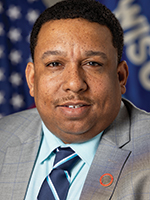
Rep. Russell Goodwin
Sponsored bills
Maddy summaryAB 399 requires certain telecommunications providers serving residential customers to offer a basic voice service plan. This directly affects telecom companies that provide phone service in the state, mandating them to maintain an affordable, essential phone service option. The key provision is that providers must offer this service at a fixed, low cost to ensure accessibility for all residents, particularly in underserved communities. The bill aims to guarantee reliable communication for emergencies and daily needs without requiring new infrastructure.
Maddy summaryAB 671 mandates the Department of Administration to study redundant federal, state, and local requirements for constructing new housing (including single-family, duplex, and multifamily units). The study must identify overlapping or unnecessary rules and submit a report with legislative recommendations within one year of the bill's effective date. This bill does not create new laws but directs a formal review to potentially streamline housing construction regulations. It directly affects future legislative decisions on housing policy, not current construction practices.
Maddy summaryAJR 109 is a symbolic joint resolution honoring Wisconsin's Hispanic and Latino veterans. It formally recognizes their service and sacrifices throughout U.S. military history, including specific references to the Borinqueneers unit and General Richard Cavazos. The resolution expresses the Wisconsin Legislature's gratitude through a formal statement, acknowledging these veterans' contributions without creating new programs or altering laws. This is a commemorative gesture, not a policy change, and directly affects no individuals or entities through legislative action.
Maddy summaryAB 566 clarifies what qualifies as an investment for Wisconsin's early-stage seed and angel investment tax credits. It defines "investment" to include equity purchases, convertible notes, or similar instruments, as determined by the Wisconsin Economic Development Corporation (WEDC). This standardizes eligibility for investors and businesses seeking these credits, applying to taxable years beginning January 1, 2025. The bill directly affects investors claiming credits and businesses receiving qualifying early-stage funding.
Maddy summaryAB 622 amends Wisconsin's unemployment insurance law to extend the period during which job seekers may refuse work without losing benefits from 6 to 10 weeks after becoming unemployed. It clarifies that workers who quit jobs they could have refused (e.g., due to unsafe conditions) may still qualify for benefits within this 10-week window, regardless of their stated reason for leaving. The bill also updates the definition for "suitable work" in the 7th-11th week of unemployment to require wages above the lowest wage quartile for similar jobs in the area. These changes directly affect unemployed workers applying for benefits and the Department of Workforce Development’s eligibility determinations.
Maddy summaryThis bill, AB 390, aims to provide access to original impounded birth records. However, the provided context does not include the bill's specific provisions, mechanisms, or who it directly affects. Without the full text or committee summary, concrete policy details cannot be described. The bill is still in early committee stages (referred to Children and Families Committee, with a fiscal estimate received), but no substantive changes are outlined in the given information.
Maddy summaryAB 394 requires all California public school driver education programs to include specific instruction on school bus safety. This directly affects students enrolled in driver education courses, ensuring they learn about bus stopping procedures and blind spots. The bill mandates that curricula cover how to safely approach stopped school buses and recognize hazards around them. These changes aim to improve student awareness and safety when near school buses.
Maddy summaryAB 395 requires school buses to be equipped with audiovisual recording devices to capture events during transportation. This mandate directly affects school districts and bus operators, who must install and maintain the devices. The key provision specifies that the recording systems must capture both audio and visual footage inside and around the bus, with data retention and privacy safeguards outlined in the bill. The legislation focuses on enhancing transparency during student transportation without specifying additional safety outcomes.
Maddy summaryAB 553 requires Wisconsin's Department of Natural Resources to install and maintain metal containers for hunters to dispose of deer carcasses at state-designated locations, with regular carcass removal. It increases annual funding by $500,000 for these disposal sites and $250,000 for hunter education about chronic wasting disease (CWD) and proper carcass disposal. The bill directly affects hunters who must use these disposal sites and the Department of Natural Resources, which implements the program. Funding applies to fiscal years 2025-26 and 2026-27 as specified in the appropriations schedule.