Issue · Housing

Housing

Every housing bill, vote, and legislator stance in Wisconsin, automatically classified by Maddy, our AI policy reader.

Total bills
108
2025-2026 Regular Session
Top supporter
Rob Kreibich
100% support rate
Top opponent
Renuka Mayadev
0% support rate
Ranked legislators
10
5 support · 5 oppose
Key legislators

Who's moving housing in Wisconsin

Legislators moving housing in Wisconsin
Legislator Party Stance Support rate Votes
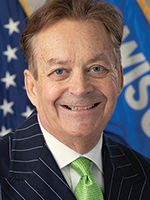
Rob Kreibich
Rob Kreibich House · District 28
R
Strong +
100% 38
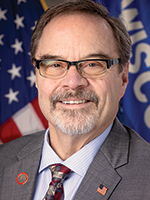
Paul Tittl
Paul Tittl House · District 25
R
Strong +
100% 31
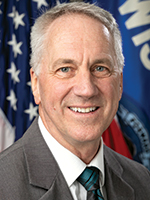
Dan Knodl
Dan Knodl House · District 24
R
Strong +
100% 38
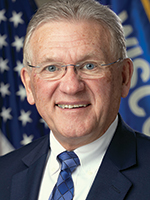
Lindee Brill
Lindee Brill House · District 27
R
Strong +
100% 38
Jerry O'Connor
Jerry O'Connor House · District 60
R
Strong +
100% 38
Renuka Mayadev
Renuka Mayadev House · District 77
D
Strong −
0% 38
Kalan Haywood
Kalan Haywood House · District 16
D
Strong −
0% 34
Angela Stroud
Angela Stroud House · District 73
D
Strong −
0% 36
Ben DeSmidt
Ben DeSmidt House · District 65
D
Strong −
0% 38
Karen DeSanto
Karen DeSanto House · District 40
D
Strong −
0% 38
Showing 71–80 of 108 bills

All housing bills

passed · Wisconsin · Assembly Mar 23, 2026

AB 625: Relating to: pay for performance grant requirements. (FE)

AB 625 requires state agencies to withhold 10-50% of certain homelessness program grants for at least 9 months. Service providers receiving these grants must demonstrate improved outcomes - like increased housing retention, job placement, or reduced homelessness returns - compared to a base year to receive the withheld funds. The bill mandates detailed reporting on program data and client outcomes, including housing stability metrics and demographic information. It directly affects organizations funded through specific homelessness grant programs under state statutes.
Sub-Topics Homelessness
failed · Wisconsin · Assembly Mar 23, 2026

AB 414: Relating to: immunity from prosecution for certain crimes based on assisting a victim of sexual assault, extending the time limit for prosecution of second-degree sexual assault, and the standard for terminating residential residency when tenant is the victim of sexual assault.

AB 414 helps sexual assault victims by creating legal protection for people who assist them (like friends or advocates) from being prosecuted for minor crimes committed while helping. It also extends the time limit for prosecuting second-degree sexual assault cases, giving victims more time to report crimes. Additionally, the bill changes rules for evictions, making it harder for landlords to remove tenants who are sexual assault victims from rental housing. These changes directly affect sexual assault victims, those who support them, and landlords in residential housing situations.
Sub-Topics Violent Crime Renters
failed · Wisconsin · Senate Mar 23, 2026

SB 223: Relating to: discrimination in employment, housing, public accommodations, education, insurance coverage, national guard, jury duty, and adoption and in the receipt of mental health or vocational rehabilitation services.

Senate Bill 223 aims to expand anti-discrimination protections within the state. It proposes to add "gender identity," "gender expression," and "sexual orientation" to the list of characteristics protected by state law. The bill amends numerous statutes to prohibit discrimination based on these categories across various sectors, including employment, housing, public accommodations, education, and insurance coverage. It also extends these protections to areas such as the National Guard, jury duty, and adoption processes.
failed · Wisconsin · Senate Mar 23, 2026

SB 178: Relating to: changes to the low-income housing tax credit. (FE)

SB 178 relates to changes to the low-income housing tax credit program. The provided amendments clarify the timing and application of the qualified allocation plan, which guides how these credits are allocated by the relevant authority.
failed · Wisconsin · Senate Mar 23, 2026

SB 614: Relating to: pay for performance grant requirements. (FE)

SB 614 requires state agencies to withhold 10-50% of certain homelessness grant funds for at least 9 months before releasing them. It directly affects organizations receiving grants under statutes related to housing services (e.g., programs for homeless individuals), including shelters and service providers. Funds are only released if grantees meet specific performance goals, such as increasing housing retention, employment, or reducing homelessness recurrence compared to a base year. Grantees must also submit detailed reports including client data, program locations, and outcomes using standardized federal identifiers. The bill aims to tie funding to measurable results in homelessness services while ensuring accountability through mandatory reporting.
Sub-Topics Homelessness
failed · Wisconsin · Senate Mar 23, 2026

SB 327: Relating to: emotional support animals in housing; falsely claiming that an animal is a service animal; and providing a penalty. (FE)

SB 327 ensures landlords cannot deny housing to tenants with emotional support animals based solely on the animal's presence. It requires tenants to provide a letter or prescription from a healthcare provider to verify their need for the animal. The bill also establishes penalties for individuals who falsely claim their pet is a service animal to gain housing access. This directly affects landlords, tenants, and housing providers across the state.
failed · Wisconsin · Assembly Mar 23, 2026

AB 607: Relating to: housing and homelessness; emergency rental assistance program; indigent civil legal services; workforce development; community action agencies; poverty reports; mental health; economic security; reimbursement for nonemergency medical transportation services; urban mass transit aid; lead exposure and abatement services; lead service line replacement; providing an exemption from emergency rule procedures; granting rule-making authority; and making an appropriation. (FE)

AB 607 creates new programs and modifies existing ones to address housing, homelessness, and related services in Wisconsin. It establishes a lead service line replacement program for water systems, creates an annual review process for homelessness services, and funds emergency rental assistance for households earning under 80% of county median income. The bill allocates $43 million for indigent civil legal services, $5 million for emergency rental assistance (2026-27), and $2.5 million for housing grants. These provisions directly affect low-income residents, homeless individuals, and service providers by expanding access to housing support, legal aid, and water infrastructure improvements.
failed · Wisconsin · Senate Mar 23, 2026

SB 621: Relating to: use of public lands to provide temporary residence for the homeless and providing a penalty. (FE)

SB 621 creates designated "structured camping facilities" on public lands (excluding parks and fairgrounds) for temporary homeless housing, directly affecting homeless individuals and local governments managing public property. It requires state or local approval to designate sites, mandates mental health/substance use evaluations for residency, and establishes waiting lists when facilities are full. Unauthorized camping on public lands not designated as such becomes a Class C misdemeanor (with a warning for first offenses), while those on waiting lists or using approved facilities cannot be penalized. The bill also requires tracking occupancy and service referrals at each facility.
Sub-Topics Homelessness
failed · Wisconsin · Assembly Mar 23, 2026

AB 449: Relating to: local regulation of accessory dwelling units. (FE)

AB 449 requires local governments to allow at least one accessory dwelling unit (ADU) - a separate living space on a single-family property - as a standard permitted use, meaning homeowners can build one without special approvals. Local rules may still limit ADU size (to match the main home's square footage), height, or yard space requirements, but cannot block ADUs entirely. The bill also prohibits using newly created ADUs as short-term rentals (like Airbnb) after a specific date. This directly affects homeowners in single-family zones and local governments that set zoning rules.
Sub-Topics Zoning
failed · Wisconsin · Senate Mar 23, 2026

SB 605: Relating to: housing and homelessness; emergency rental assistance program; indigent civil legal services; workforce development; community action agencies; poverty reports; mental health; economic security; reimbursement for nonemergency medical transportation services; urban mass transit aid; lead exposure and abatement services; lead service line replacement; providing an exemption from emergency rule procedures; granting rule-making authority; and making an appropriation. (FE)

SB 605 restructures funding for multiple social services programs. It creates a new lead service line replacement program for public water systems, establishes an emergency rental assistance program for households earning ≤80% of county median income (with $5 million allocated for 2026-27), and expands indigent civil legal services funding by $43 million annually. The bill also mandates annual reports on improving homeless services access and creates new grants for housing support, workforce development, and internet assistance programs. These changes directly affect low-income residents, homeless individuals, and legal aid clients through specific funding allocations and program requirements.
Showing 71 to 80 of 108 bills
Previous 1 7 8 9 11 Next