Issue · Healthcare

Healthcare

Every healthcare bill, vote, and legislator stance in West Virginia, automatically classified by Maddy, our AI policy reader.

Total bills
369
2026 Regular Session
Top supporter
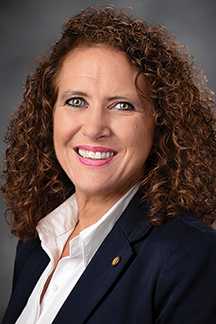
Kathie Hess Crouse
92% support rate
Top opponent
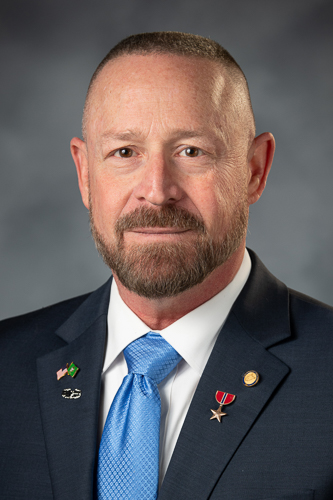
Corby Dillon
25% support rate
Ranked legislators
10
5 support · 5 oppose
Key legislators

Who's moving healthcare in West Virginia

Legislators moving healthcare in West Virginia
Legislator Party Stance Support rate Votes
Kathie Hess Crouse
Kathie Hess Crouse House · District 19
R
Strong +
92% 34
Elliott Pritt
Elliott Pritt House · District 50
R
Strong +
92% 31
Jordan Maynor
Jordan Maynor House · District 41
R
Strong +
92% 33
Doug Smith
Doug Smith House · District 39
R
Strong +
92% 27
Geno Chiarelli
Geno Chiarelli House · District 78
R
Strong +
92% 34
Corby Dillon
Corby Dillon House · District 29
R
Oppose
25% 33
Marty Gearheart
Marty Gearheart House · District 37
R
Oppose
33% 24
Shawn Fluharty
Shawn Fluharty House · District 5
D
Oppose
40% 31
Buck Jennings
Buck Jennings House · District 84
R
Mixed −
42% 33
George Street
George Street House · District 83
R
Mixed −
42% 30
Showing 71–80 of 369 bills

All healthcare bills

in committee · West Virginia · House of Delegates Feb 3, 2026

HB 5062: To create the Healthy Moms, Healthy Babies Act

HB 5062 creates the Healthy Moms, Healthy Babies Act to expand Medicaid coverage for pregnant women and infants in West Virginia. It extends postpartum coverage to one year (up from the previous standard), increases reimbursement rates for prenatal/delivery care to at least $600, and adds coverage for depression screening, self-measured blood pressure monitoring, remote ultrasounds, and doula services. The bill directly affects low-income pregnant women and newborns whose family incomes are at or below 185% of the federal poverty level. Key provisions include requiring Medicaid to cover specific services like fetal monitoring and gestational diabetes management without bundled payments, and ensuring continuous eligibility for one year after pregnancy regardless of income changes.
in committee · West Virginia · Senate Feb 20, 2026

SB 1019: Requiring coverage for medically necessary treatment for cleft lip and cleft palate

Senate Bill 1019 requires health insurance plans in West Virginia to cover medically necessary treatment for cleft lip and cleft palate. This applies directly to individuals with these congenital conditions, particularly children, who rely on insurance for surgical and medical care. The bill mandates coverage for all necessary treatments without excluding specific procedures, ensuring plans cover the full range of care deemed medically appropriate by a physician. It sets eligibility and defines coverage terms but does not specify cost-sharing details or financial limits.
Sub-Topics Insurance
in committee · West Virginia · House of Delegates Feb 3, 2026

HB 5122: Creating the Affordable Medicaid Buy-in Program

HB 5122 creates a new West Virginia Medicaid Buy-In Program to provide affordable health coverage to residents who earn too much for Medicaid but too little for private insurance, specifically those ineligible for both Medicaid and Medicare whose employers haven’t denied their group coverage. The program, administered by the Department of Human Services starting January 2027, offers income-based premiums (with priority for those transitioning from Medicaid) and covers essential services like emergency care, prescriptions, mental health treatment, and pediatric services. It requires reimbursement rates to align with Medicaid standards and mandates efforts to maximize federal funding through existing Medicaid options and waivers. The bill ensures non-discrimination in access and aims to maintain coverage continuity between the new program, Medicaid, and private plans.
in committee · West Virginia · Senate Feb 6, 2026

SB 809: Rescheduling cannabis from Schedule 1 to Schedule 3

SB 809 would reclassify cannabis and its natural/synthetic derivatives from West Virginia's strictest "Schedule I" (illegal with no medical use) to "Schedule III" (permitted for medical use under prescription). This change would directly affect medical cannabis patients and healthcare providers in West Virginia by allowing legally sanctioned medical use with a prescription. The bill amends state law to move cannabis out of Schedule I (which lists substances like heroin and fentanyl) and into Schedule III, where medical access is permitted. This represents a concrete policy shift toward legal medical cannabis use in the state.
in committee · West Virginia · Senate Feb 23, 2026

SB 1078: Clarifying requirements of possession and administration of epinephrine in schools

SB 1078 clarifies rules for schools to stock and use epinephrine auto-injectors to treat severe allergic reactions (anaphylaxis). It allows schools to maintain epinephrine supplies without requiring a prior diagnosis for each student or staff member, and permits trained non-medical staff (including bus drivers) to administer it during emergencies if they reasonably believe anaphylaxis is occurring. The bill specifies that epinephrine must be stored securely, accessible only to medical personnel or designated trained staff, and can be used for students with existing prescriptions or in emergency situations. This directly affects schools, students, staff, and visitors who may experience allergic reactions during school activities or transportation.
signed · West Virginia · House of Delegates Jun 29, 2026

HB 5327: West Virginia ALS Care Services Act

HB 5327, the West Virginia ALS Care Services Act, establishes a state program to provide targeted support for residents living with ALS and their caregivers. The bill requires the Department of Human Services to fund three key services: care coordination and education to help navigate healthcare systems, loan programs for assistive technology and reusable ramps (addressing a common financial barrier as ramps aren't typically covered by insurance), and access to multidisciplinary ALS clinics. These clinics consolidate specialized care, reduce the need for repeated specialist visits and emergency care, and aim to improve patient outcomes while lowering long-term healthcare costs. The program directly affects West Virginia ALS patients and their families by enabling them to remain safely at home longer, reducing reliance on costly institutional care.
in committee · West Virginia · House of Delegates Feb 5, 2026

HB 5233: Relating to living anatomical gift

HB 5233 amends West Virginia's anatomical gift laws to specifically clarify rules for *living* anatomical gifts - donations of body parts made while the donor is still alive for transplantation or therapy. It establishes that only adults (18+) can make such gifts, requires clear consent documentation, and defines who can legally act as an "agent" (e.g., via medical power of attorney) to make gifts on a donor’s behalf. The bill also updates key terms like "donor registry" (including driver’s license markings) and specifies that consent must be documented to avoid confusion. This directly affects living donors, medical providers, and organ/tissue procurement organizations in West Virginia.
in committee · West Virginia · House of Delegates Feb 16, 2026

HB 5553: Relating to participation in federal prescription drug pricing programs.

HB 5553 allows West Virginia's Public Employees Insurance Agency (PEIA) and the Department of Human Services to voluntarily join federal prescription drug pricing programs, such as those using international reference pricing models. The bill permits these agencies to negotiate drug prices directly with manufacturers or use federal benchmarks for reimbursement, but only if it saves money for the state and maintains beneficiary access to necessary medications. It explicitly prohibits requiring the state to adopt federal drug lists or override existing state pharmacy benefit rules. Both agencies must report annually to the legislature on program participation, estimated savings, and any access issues.
Sub-Topics Prescription Drugs
signed · West Virginia · House of Delegates Jun 29, 2026

HB 5022: Relating to expanding the programs to be included in the annual capitation rate review.

HB 5022 expands the annual review of healthcare reimbursement rates to include additional programs beyond the current four (Intellectual and Developmental Disabilities Waiver, Aged and Disabled Waiver, Personal Care Services, and Traumatic Brain Injury Waiver). The bill requires the Bureau for Medical Services to annually study provider costs - including inflation, staffing expenses, and contract changes - and compare rates with similar programs in other states. Providers must submit financial data to support these reviews, and the bureau must report findings and rate adjustment recommendations to the Joint Committee on Finance each year. This change directly affects healthcare providers serving Medicaid waiver program participants in West Virginia.
Sub-Topics Medicaid
in committee · West Virginia · House of Delegates Feb 23, 2026

HB 5681: Relating to empowering qualified certified nurse practitioners and certified nurse midwives to prescribe, administer, and dispense prescriptions drugs without a collaborating physician.

HB 5681 would allow qualified certified nurse practitioners and certified nurse midwives in West Virginia to prescribe, administer, and dispense prescription drugs without needing a collaborating physician. Currently, state law requires these professionals to have a written agreement with a physician to prescribe medications, but the bill removes this requirement. The legislation amends specific sections of the West Virginia Code governing registered nurses and their practice standards. This change would directly affect nurse practitioners and midwives by expanding their independent prescribing authority for medications.
Showing 71 to 80 of 369 bills
Previous 1 7 8 9 37 Next