Issue · Education

Education (School Funding)

Every education bill, vote, and legislator stance in West Virginia, automatically classified by Maddy, our AI policy reader.

Total bills
45
2026 Regular Session
Top supporter
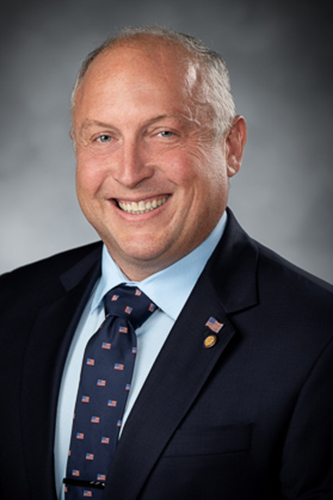
Bill Flanigan
100% support rate
Top opponent
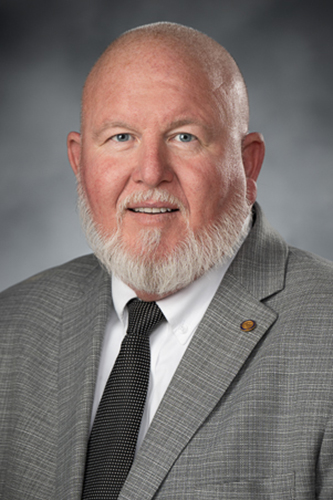
Scot Heckert
0% support rate
Ranked legislators
10
5 support · 5 oppose
Key legislators

Who's moving school funding in West Virginia

Legislators moving school funding in West Virginia
Legislator Party Stance Support rate Votes
Bill Flanigan
Bill Flanigan House · District 4
R
Strong +
100% 4
Erica Moore
Erica Moore House · District 15
R
Strong +
100% 4
Lori Dittman
Lori Dittman House · District 63
R
Strong +
100% 4
Andy Shamblin
Andy Shamblin House · District 59
R
Support
75% 4
Betsy Kelly
Betsy Kelly House · District 9
R
Support
75% 4
Scot Heckert
Scot Heckert House · District 13
R
Strong −
0% 4
Chris Toney
Chris Toney House · District 43
R
Oppose
25% 4
Chuck Sheedy
Chuck Sheedy House · District 7
R
Oppose
25% 4
Evan Hansen
Evan Hansen House · District 79
D
Oppose
25% 4
Jeff Stephens
Jeff Stephens House · District 6
R
Oppose
25% 4
Showing 31–40 of 45 bills

All education bills

in committee · West Virginia · Senate Jan 14, 2026

SB 218: Creating Community School Support Fund

Senate Bill 218 creates a $5 million annual Community School Support Fund within West Virginia's Department of Education to assist schools at risk of closure or consolidation. It directly affects schools that qualified for Federal Title I funding during the 2024-2025 school year, providing up to 20% of a school's operating costs to help sustain them. Schools must apply through their Local School Improvement Council, and the fund exempts certain staffing requirements while allowing use of Step 7 funds for personnel and facility costs. The bill requires the State Superintendent to identify savings to set aside the $5 million annually and clarifies the application process for this targeted support.
Sub-Topics School Funding
in committee · West Virginia · Senate Jan 14, 2026

SB 217: Creating Community Schools Funding Formula Revision Act

SB 217 (Creating Community Schools Funding Formula Revision Act) requires the West Virginia Department of Education to review school closures and consolidations considered during the current year and the previous four fiscal years. Within 180 days, the department must propose changes to the School Aid Formula designed to prevent at least 80% of those closures, regardless of prior district decisions based on financial or operational factors. The bill directly affects school districts facing closure threats due to budget constraints. It mandates a specific review period (5 years), a concrete prevention target (80%), and a strict timeline (180 days) for formula adjustments.
Sub-Topics School Funding
in committee · West Virginia · Senate Jan 19, 2026

SB 504: West Virginia Rural School Protection Act

SB 504, the West Virginia Rural School Protection Act, prevents the closure or consolidation of qualifying rural schools by requiring county boards to follow strict new procedures. It applies to schools in counties with under 100 people per square mile, those causing students to exceed 15 road miles or 30 minutes one-way transportation, or the sole school in an area. Key requirements include a detailed impact statement (showing transportation times, enrollment trends, and cost comparisons), a two-thirds board vote, and voter approval via statewide election or petition-triggered referendum. The bill also mandates mitigation plans for affected students and creates a state funding weight to support rural schools. These changes aim to preserve rural school access while ensuring thorough community review before closures.
Sub-Topics School Funding School Safety School Transportation Tags Rural Communities
in committee · West Virginia · House of Delegates Jan 15, 2026

HB 4373: To implement a Property Tax Poverty Exemption - School Excess Levy

This bill creates a property tax exemption for homeowners in West Virginia whose household income meets federal poverty guidelines. It directly affects low-income homeowners who occupy their property as their primary residence and pay school excess levies (the portion of property taxes funding schools beyond regular levies). To qualify, applicants must file an annual application between July 1 and December 1 with proof of income, residency, and property ownership, and meet residency requirements (two years in WV or specific return-from-out-of-state rules). The exemption applies only to school excess levy taxes - not regular property taxes - and must be renewed yearly.
in committee · West Virginia · House of Delegates Jan 20, 2026

HB 4605: Relating to modifying the school aid formula to provide more support for schools under certain circumstances.

HB 4605 modifies West Virginia's school funding formula to provide additional support for public schools under specific circumstances. The bill removes restrictions on using funds for instructional programs, allowing schools greater flexibility in allocating resources for teaching and learning. It also establishes a budget limit for the Third Grade Success Act and requires the Governor to provide specific funding for the Department of Education's budget. These changes adjust how school aid is distributed to better address varying school needs as defined in the legislation.
Sub-Topics School Funding
in committee · West Virginia · Senate Jan 21, 2026

SB 555: Establishing Essential Personnel Bridge Grant Program

SB 555 establishes the Essential Personnel Bridge Grant Program to provide targeted financial assistance to West Virginia school districts for essential staff positions not fully covered by existing state funding. It directly affects county school boards, allowing them to apply for reimbursements to cover part of the salaries and benefits for staff in roles critical to maintaining instructional programming, special education services, mental health support, transportation, or compliance with mandates. Applications require demonstrating that positions exceed state-funded levels and address specific student needs, with grants prioritized based on county financial capacity, local funding reliance, and impact on student outcomes. Funds may only be used for mandated salaries/benefits of the requested positions, and the program requires annual reporting on grant usage and student impacts.
in committee · West Virginia · Senate Jan 21, 2026

SB 554: Establishing enrollment stabilizer mechanism within public school support plan

SB 554 establishes an enrollment stabilizer mechanism to help West Virginia public school districts plan budgets more predictably by smoothing out year-to-year changes in student enrollment. The bill requires school funding calculations to use the highest of three options: actual recent enrollment, 98% of the prior year's enrollment, or a three-year average of enrollment. It also creates a rural stability add-on for qualifying rural counties experiencing significant enrollment volatility, allowing adjustments to the stabilizer for geographic isolation and local funding capacity. This bill directly affects all 55 West Virginia county school boards, with special protections for rural districts, without increasing the total state funding amount for the basic school support program.
introduced · West Virginia · Senate Jan 27, 2026

SB 600: Limiting family income for Hope Scholarship eligibility

SB 600 would limit eligibility for West Virginia's Hope Scholarship Program by requiring that a student's parent or parents have a combined federal adjusted gross income under $100,000. This change directly affects families applying for the scholarship, as it sets a new income threshold for qualification. The bill also requires unused scholarship funds to transfer to the student's local county school system at year-end and mandates that all scholarship funds be spent only on education services provided within West Virginia. These provisions amend existing sections of the state code governing the Hope Scholarship Program.
in committee · West Virginia · House of Delegates Jan 14, 2026

HB 4189: Relating to Hope Scholarships awards

HB 4189 modifies West Virginia's Hope Scholarship program by adding income-based eligibility limits for families. It sets award percentages based on family income relative to federal poverty levels (e.g., full awards for families at or below 450% poverty, 10% for those at or below 750%). The bill also requires counties to be reimbursed for services provided to scholarship recipients and mandates parents submit tax documentation to verify income, with strict confidentiality protections. This directly affects low-to-moderate-income families seeking scholarship funds for K-12 education expenses.
in committee · West Virginia · Senate Jan 21, 2026

SB 552: Authorizing county boards of education to designate schools as rural anchor schools

SB 552 authorizes West Virginia county school boards to designate qualifying rural schools as "rural anchor schools," directly affecting low-enrollment schools in predominantly rural communities. To qualify, schools must meet specific criteria, including being the primary neighborhood school, having enrollment below state averages, and facing transportation or safety barriers if closed. The bill provides these schools with state funding based on a minimum 150-student enrollment for fixed costs (like utilities and staffing), regardless of actual enrollment, while requiring funds to be used only for operational costs, core staffing, or academic programs. County boards must report annually on enrollment, staffing, and fund usage to the state board.
Sub-Topics School Funding Tags Rural Communities
Showing 31 to 40 of 45 bills
Previous 1 3 4 5 Next