Issue · Education

Education (School Choice)

Every education bill, vote, and legislator stance in West Virginia, automatically classified by Maddy, our AI policy reader.

Total bills
31
2026 Regular Session
Top supporter
Dana Ferrell
100% support rate
Top opponent
Sean Hornbuckle
0% support rate
Ranked legislators
10
5 support · 5 oppose
Key legislators

Who's moving school choice in West Virginia

Legislators moving school choice in West Virginia
Legislator Party Stance Support rate Votes
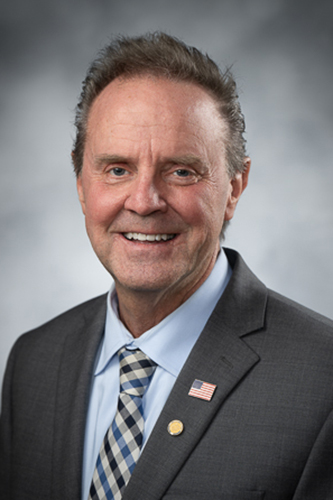
Dana Ferrell
Dana Ferrell House · District 60
R
Strong +
100% 6
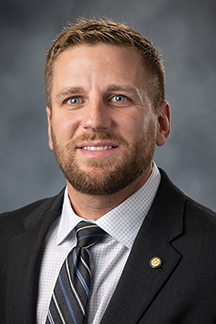
David Cannon
David Cannon House · District 89
R
Strong +
100% 6
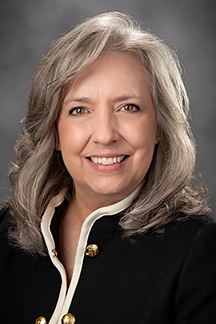
Erica Moore
Erica Moore House · District 15
R
Strong +
100% 6
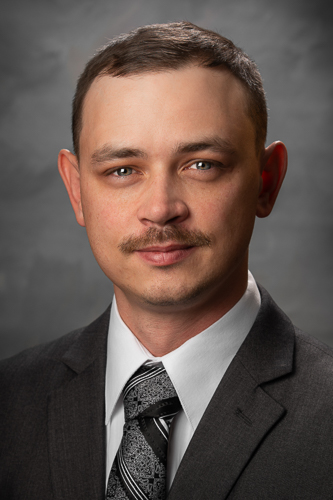
Jordan Bridges
Jordan Bridges House · District 33
R
Strong +
100% 6
Mark Dean
Mark Dean House · District 34
R
Strong +
100% 6
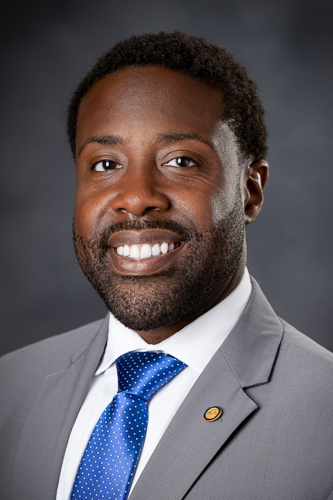
Sean Hornbuckle
Sean Hornbuckle House · District 25
D
Strong −
0% 3
Evan Hansen
Evan Hansen House · District 79
D
Strong −
17% 6
Kayla Young
Kayla Young House · District 56
D
Strong −
20% 5
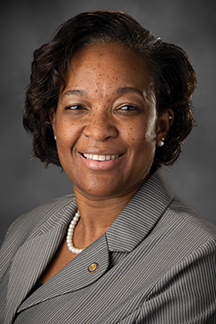
Anitra Hamilton
Anitra Hamilton House · District 81
D
Oppose
33% 6
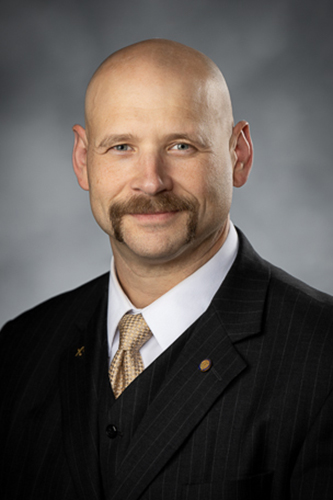
Corby Dillon
Corby Dillon House · District 29
R
Oppose
33% 6
Showing 21–30 of 31 bills

All education bills

in committee · West Virginia · Senate Jan 14, 2026

SB 223: Creating Community School Parents' Choice Act

SB 223 requires West Virginia county school boards to follow specific steps before closing or consolidating any school (except when a bond issue already covered the closure). Before making a final decision, boards must prepare written reasons with supporting data, hold public hearings with adequate notice, and create an impact statement covering student transportation, financial effects, enrollment, staff impacts, and community consequences. The bill ensures parents and community representatives (through school improvement councils) receive notice and have opportunities to provide input during the process. It applies directly to students, families, school staff, and local communities affected by potential school closures or consolidations. The law includes a 10-year sunset date but focuses on procedural requirements for school board decisions.
introduced · West Virginia · Senate Jan 27, 2026

SB 605: Providing tax credit for homeschool students

SB 605 would provide a tax credit to West Virginia resident parents or legal guardians who homeschool or enroll their children in private schools meeting state education standards. The credit equals the amount a student eligible for the HOPE Scholarship would receive, covering kindergarten through 12th grade. Families already receiving the HOPE Scholarship are excluded from this credit. The State Tax Commissioner will establish rules for claiming the credit, but the State Board of Education cannot impose additional regulations on homeschooled children.
in committee · West Virginia · House of Delegates Jan 19, 2026

HB 4063: Relating to requiring the State Board of Education to design, test, and deploy an internet-based reporting system to be known as the School Choice Portal

HB 4063 requires West Virginia's State Board of Education to create and deploy an online portal called the "School Choice Portal" by August 2026. The portal will allow families using non-public school options (such as homeschooling) to electronically submit required notices and reports, including a Notice of Intent, with features like secure access, dashboards for families and school boards, and submission acknowledgments. It must work across all 55 counties, include input from stakeholders like homeschoolers and microschools, and clearly label optional information. The bill mandates the portal be operational for the 2026-2027 school year and requires the Board to report child listings to the relevant county.
Sub-Topics School Choice
in committee · West Virginia · House of Delegates Feb 17, 2026

HB 4817: Relating to modifying the Charter Schools Startup Fund

HB 4817 changes the name of West Virginia's "Charter Schools Stimulus Fund" to the "Charter Schools Startup Fund" and modifies its administration. The bill requires charter school applicants to submit applications directly to the West Virginia Professional Charter School Board, expands eligible uses of funds to cover startup costs like personnel, instructional materials, equipment, and building renovations, and eliminates prior financial capacity requirements. It mandates repayment with interest if schools fail to open within 30 months after receiving grants (up to $300,000 initially, plus $100,000 later), with the Board managing distributions based on funding availability. This bill directly affects new and existing charter school applicants and schools seeking startup financial support in West Virginia.
introduced · West Virginia · Senate Jan 14, 2026

SB 53: Providing greater access to unused buildings for public charter schools

Senate Bill 53 requires West Virginia county school boards to publish an annual list of unused public buildings (such as closed or unoccupied school facilities) on a public website. This allows public charter schools to request and lease these buildings for classroom use, provided the buildings are not currently used for instruction. The bill ensures county boards cannot sell or block a building once a charter school requests it, and gives schools up to two years to secure approval and complete necessary renovations. Charter schools must pay market-rate rent and cover all operating costs (including utilities, maintenance, and repairs) during the lease. If a charter school's application is denied, the county board is not obligated to hold the building for future requests.
Sub-Topics School Choice
signed · West Virginia · Senate Jun 25, 2026

SB 63: Creating Sustaining Opportunities for Academics in Rural Schools Act

SB 63 amends West Virginia's charter school application rules by adding detailed requirements for new or converted public charter schools. It mandates applicants to submit specific elements including a mission statement with academic focus, student achievement goals, governance structure plans, enrollment strategies, five-year budgets, and plans for serving students with disabilities or language needs. The bill does not specifically target rural schools (despite its title), as these requirements apply broadly to all charter school applications statewide. This procedural change affects school applicants seeking approval to establish or convert public charter schools, focusing on transparency and accountability in the application process.
Sub-Topics School Choice Tags Rural Communities
in committee · West Virginia · House of Delegates Jan 19, 2026

HB 4112: Provide tax credit for homeschool students

HB 4112 creates a tax credit for West Virginia parents or legal guardians who homeschool or send children to private schools meeting state education standards. The credit equals the annual HOPE Scholarship amount per taxpayer (not per child) and applies to tax years starting January 1, 2026. Families already eligible for the HOPE Scholarship cannot claim this credit. The bill does not allow the State Board of Education to add new regulations for homeschooled children receiving this credit.
in committee · West Virginia · House of Delegates Jan 14, 2026

HB 4145: Creating a school choice office.

HB 4145 would create a school choice office within the Governor's Office, funded by legislative appropriation, to assist students and parents navigating school options in West Virginia. The office would coordinate with the Department of Education to provide information about public schools, private/parochial schools, virtual learning, homeschooling, learning pods, and micropods. It would specifically use the existing statewide homeschool online portal as a primary tool to share these options with families. The bill focuses on administrative coordination rather than altering funding or enrollment rules.
introduced · West Virginia · Senate Jan 14, 2026

SB 216: Restoring Private Schools Act of 2026

This bill, SB 216 (Restoring Private Schools Act of 2026), clarifies and updates requirements for private, parochial, and church schools in West Virginia. It mandates these schools to maintain attendance and immunization records, comply with fire/safety inspections, and establish crisis plans. The key provision requires all such schools to administer annually a nationally normed standardized test (matching public school grade/subject requirements) with participation rates equal to public schools, while allowing special education schools alternative assessment methods. Schools must share test results with parents and the state education department upon request. The bill preserves schools' autonomy over curriculum and instruction but formalizes testing and recordkeeping standards.
in committee · West Virginia · House of Delegates Jan 20, 2026

HB 4611: Creating the Hope to Help Community Schools Act of 2026.

HB 4611 establishes "Public Community Micro Schools" (PCMS) for West Virginia public schools with fewer than 150 students, enabling parent-led conversion to give families direct control over school decisions. To become a PCMS, at least five parents must form a committee, secure a 2/3 vote from parents representing at least one-third of enrolled students, and gain approval for the school to operate under parent governance. PCMS schools would receive two dedicated funding streams: Hope Scholarship funds for staffing (via an "ESA" account) and per-pupil operational funds (for transportation and costs), while waiving most state staffing rules (except special needs requirements). The bill also allows PCMS to use alternative leadership models (like a head teacher) and vertical classroom integration, with parent committees retaining veto power over closures or consolidations.
Showing 21 to 30 of 31 bills
Previous 1 2 3 4 Next