

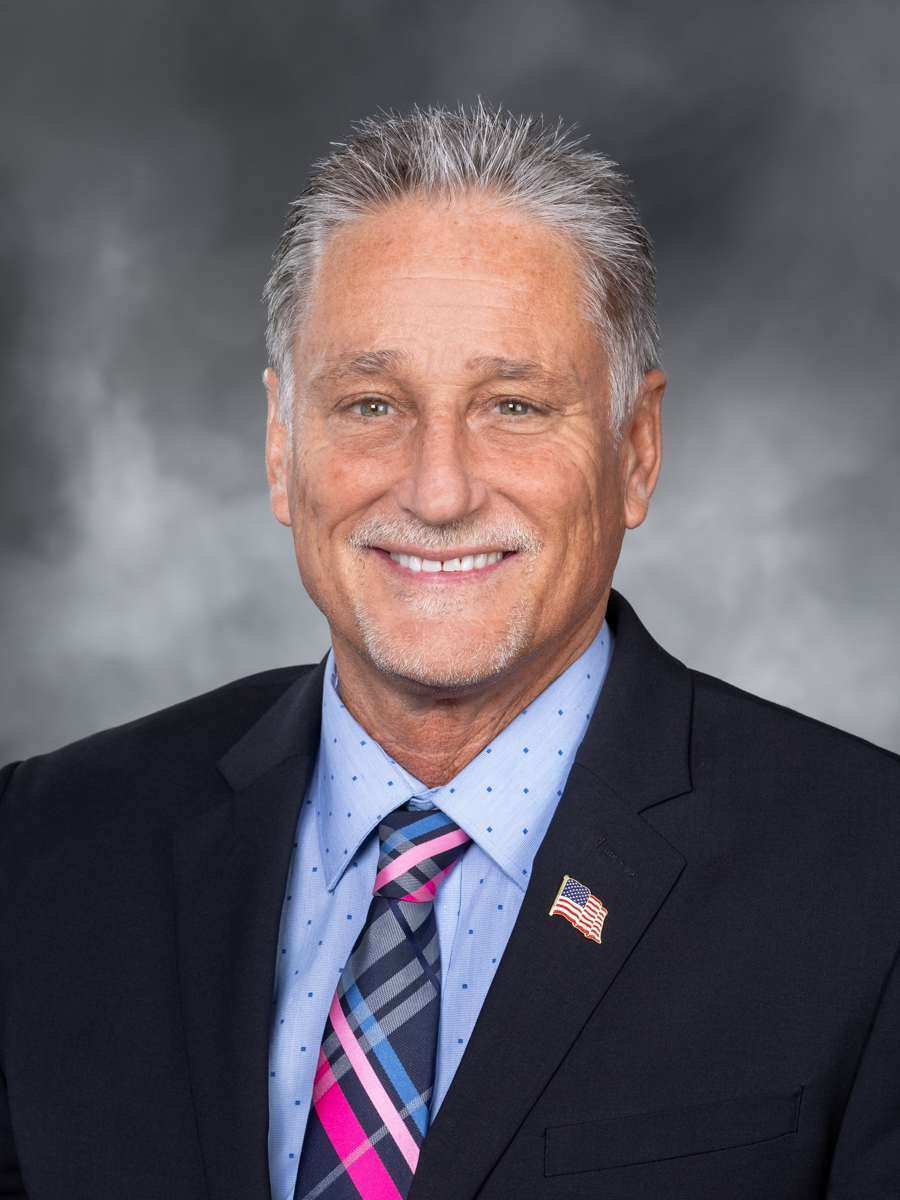
Photo of Jeff Wilson
R Washington Senate · District 19

Sen. Jeff Wilson

Compare
Total votes
3,367
all sessions
Attendance
98%
80 missed
Lower than 96% of chamber peers
With party
94%
of cast votes
Near the chamber average
Bipartisan score
3%
crosses aisle rarely
Near the chamber average
Sponsored
396
bills & resolutions
Near the chamber average
Committees
4
assignments
396 bills and resolutions

Sponsored bills

Total
396
Primary
70
Co-sponsor
326
This page
396
matching current filters
Co-sponsor SB 5151
In committee · Washington Senate · Co-sponsor
Limiting annual state spending growth to median worker wage growth, with excess revenues dedicated to property tax relief.

Maddy summarySB 5151 limits annual state spending growth to the average annual increase in Washington's median worker wage, starting in 2026. It requires the state to calculate a spending cap based on the prior decade's median wage growth and directs any excess revenue above this cap toward lowering property tax rates. The bill applies to all state general fund spending and mandates that the Economic and Revenue Forecast Council determine excess revenues by December 1 each year, which the Department of Revenue must use to reduce property tax rates by the following year. This directly affects state budget decisions and homeowners through potential property tax relief.

In committee Jan 12, 2026 1 co-sponsor
Co-sponsor SB 5564
In committee · Washington Senate · Co-sponsor
Modifying the goals of a basic education.

Maddy summarySB 5564 modifies Washington state's basic education goals to emphasize preparing students to become "globally competitive citizens" while adding specific requirements about understanding the state's constitutional republic foundations. It mandates the state superintendent to identify and post ethnic studies materials for K-12 schools by September 1, 2025, and encourages schools to incorporate these materials into curricula (with K-6 focusing on integration and 7-12 offering dedicated courses). The bill also requires updating state learning standards to include "appreciating and admiring differing cultures" and ensuring academic accuracy in core subjects like math and science. These changes directly affect all public K-12 schools and students across Washington state.

In committee Jan 12, 2026 1 co-sponsor
Co-sponsor SB 5603
In committee · Washington Senate · Co-sponsor
Juvenile access to attorneys when contacted by law enforcement.

Maddy summaryThis bill requires Washington law enforcement to provide juveniles (under age 18) with immediate access to an attorney before questioning or when they might waive constitutional rights during police contact. For jurisdictions over 1 million people, the attorney must consult in person; smaller areas may use phone or video. Statements made without this consultation are inadmissible in court unless the juvenile properly waived rights after meeting with a lawyer, or if exceptions apply (like imminent life threats or trafficking victim situations). The law aims to prevent coerced statements and ensure juveniles understand their rights before interacting with police.

In committee Jan 12, 2026 1 co-sponsor
Co-sponsor SB 5670
In committee · Washington Senate · Co-sponsor
Creating the fuel tax assistance grant program.

Maddy summarySB 5670 creates a state grant program to help rural school districts with large geographic areas (450 square miles or more) offset rising transportation costs from increased fuel prices. The program, administered by the Office of the Superintendent of Public Instruction, provides direct financial assistance for fuel-related expenses in school transportation. It specifically targets districts facing higher costs due to their extensive service areas. The grant is funded through appropriations and focuses solely on mitigating fuel cost impacts for eligible rural schools.

In committee Jan 12, 2026 1 co-sponsor
Co-sponsor SB 5406
In committee · Washington Senate · Co-sponsor
Concerning the purchase of power at state expense for electric vehicle charging stations.

Maddy summarySB 5406 authorizes the state to pay for electricity used to charge electric vehicles (EVs) at state office locations. It directly affects state employees who use plug-in EVs for work-related purposes or as commute vehicles. The bill amends state law to allow state-funded electricity for both publicly owned and privately owned EVs used in state business or commuting. The director of enterprise services must report on electricity costs and EV usage at state offices if expenses become significant. This policy change specifically addresses state-funded power for EV charging infrastructure at government facilities.

In committee Jan 12, 2026 1 co-sponsor
Co-sponsor SB 5007
In committee · Washington Senate · Co-sponsor
Supporting students who are chronically absent and at risk for not graduating high school.

Maddy summarySB 5007 creates a statewide program to support students missing 10% or more of school days (chronically absent) and at risk of not graduating high school. It requires educational service districts to train staff on early warning systems to identify at-risk students and connect them with supports like family engagement, health services, academic help, and transportation. The bill establishes a "Building Bridges" grant program for local school-family-community partnerships to implement dropout prevention systems, including data-driven interventions, mentorship, and alternative education options. These partnerships must collect and report data on student demographics, attendance, graduation rates, and outcomes to track effectiveness. The law aims to improve reengagement and graduation rates through coordinated, evidence-based support for vulnerable students.

In committee Jan 12, 2026 1 co-sponsor
Co-sponsor SB 5421
In committee · Washington Senate · Co-sponsor
Allowing small business establishments in residential zones.

Maddy summarySB 5421 allows certain small businesses to operate in residential zones across Washington state, directly affecting cities and towns (which must permit these businesses) and qualifying small business owners. The bill defines "neighborhood businesses" as specific types: small food venues (500-2,000 sq ft), local retail stores (up to 10,000 sq ft), licensed childcare centers (serving ≤45 children), and low-impact professional services (≤3 full-time staff). Cities must permit these businesses in residential areas while imposing reasonable rules on noise, signage, hours (minimum 12 hours/day), deliveries, and alcohol sales - without restricting existing licensed operations. The law aims to support local economies and community spaces without altering neighborhood character, requiring cities to adopt compatible regulations.

In committee Jan 12, 2026 1 co-sponsor
Co-sponsor SB 5009
Signed into law · Washington Senate · Co-sponsor
Modifying the student transportation allocation to accommodate multiple vehicle types for transporting students.

Maddy summarySB 5009 modifies the student transportation allocation system for school districts in Washington state. It encourages districts to use various vehicle types, including school buses and other vehicles like district-owned passenger cars, for student transportation if deemed safe and cost-effective. The bill updates reporting requirements for districts to include miles driven per vehicle type and directs the superintendent of public instruction (SPI) to calculate transportation allocations based on all vehicle types used. Additionally, the SPI will establish minimum categories and competitive specifications for all student transportation vehicles to guide reimbursement.

Signed into law May 20, 2025 1 co-sponsor
Co-sponsor SB 5004
Signed into law · Washington Senate · Co-sponsor
Updating emergency response systems in public schools including panic or alert buttons.

Maddy summarySB 5004 mandates that Washington public school districts update their emergency response systems in collaboration with local law enforcement and public safety agencies. These systems must utilize evolving technology to expedite emergency responses, offering options like panic or alert buttons, live video or audio feeds, remote door access, or live interactive two-way communication. School districts are required to submit progress reports on their systems to the Office of the Superintendent of Public Instruction by October 1, 2025, which will then compile and report this information to the legislature by December 1, 2025. This act, also known as Alyssa's law, applies to charter and state-tribal education compact schools.

Signed into law May 19, 2025 1 co-sponsor
Primary SB 5033
Signed into law · Washington Senate · Lead sponsor
Concerning sampling or testing of biosolids for PFAS chemicals.

Maddy summarySenate Bill 5033 establishes requirements for sampling and testing biosolids for PFAS chemicals in Washington state. It directs the Department of Ecology to issue guidance on PFAS sampling for facilities that generate biosolids by July 2026. These facilities will then be required to conduct quarterly PFAS chemical testing of their biosolids from January 2027 to June 2028, submitting the results to the department. Septic tank sludge is excluded from these specific sampling requirements. Based on the collected data, the Department of Ecology must report to the legislature by July 2029 with a summary of PFAS levels and recommendations for future actions.

Signed into law May 17, 2025 0 co-sponsors
Showing 181 to 190 of 396 bills
Previous 1 … 18 19 20 … 40 Next