

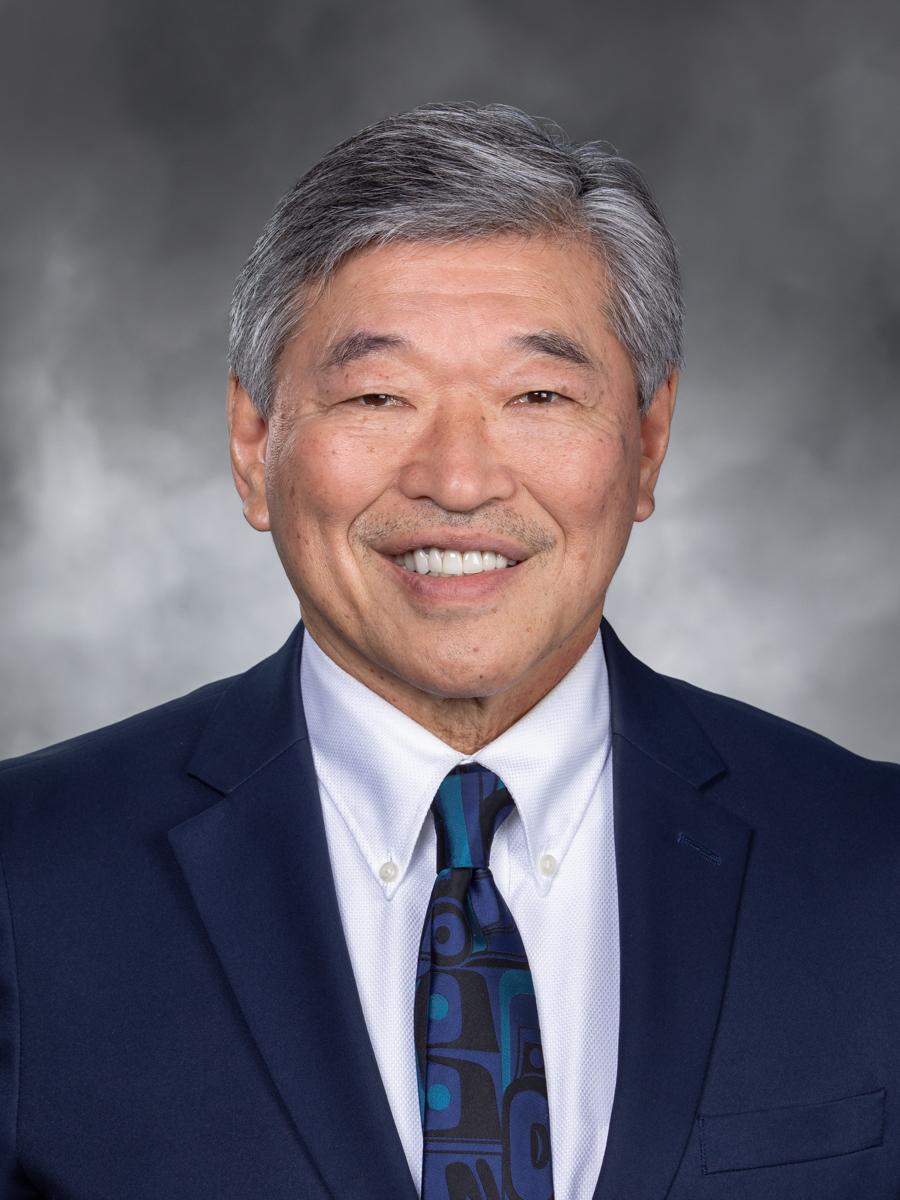
Photo of Bob Hasegawa
D Washington Senate · District 11

Sen. Bob Hasegawa

Compare
Total votes
5,979
all sessions
Attendance
100%
17 missed
Near the chamber average
With party
90%
of cast votes
Lower than 98% of chamber peers
Bipartisan score
5%
crosses aisle rarely
Higher than 96% of chamber peers
Sponsored
1,859
bills & resolutions
Higher than 96% of chamber peers
Committees
7
assignments
1,859 bills and resolutions

Sponsored bills

Total
1,859
Primary
169
Co-sponsor
1,690
This page
1,859
matching current filters
Primary SB 5688
In committee · Washington Senate · Lead sponsor
Concerning federal orders that violate the United States Constitution, Washington Constitution, or judicial precedent.

Maddy summarySB 5688, the "Washington Sovereignty Act," prohibits Washington state officials and agencies from enforcing federal executive orders that violate the U.S. Constitution, Washington Constitution, or court rulings. It directly affects state employees, law enforcement, and agencies, requiring them to refuse such federal orders and allowing them to seek reimbursement from the federal government for costs incurred when protecting First Amendment protests against those orders. The bill creates new legal requirements in state law (Chapter 43.01 RCW) to prevent state resources from being used to enforce unconstitutional federal actions. It takes immediate effect as an emergency measure to protect state constitutional rights.

In committee Jan 12, 2026 0 co-sponsors
Co-sponsor SB 5115
In committee · Washington Senate · Co-sponsor
Creating the Washington dream act service incentive program.

Maddy summarySB 5115 creates the Washington Dream Act Service Incentive Program, providing financial aid grants to eligible students who complete community service. It directly affects Washington state residents who cannot access federal financial aid due to immigration status, require demonstrated financial need, and enroll in or plan to attend an institution of higher education. Students earn grants by completing up to 19 hours weekly of non-political, non-religious community service with approved organizations (like nonprofits, government agencies, or approved businesses), with grant amounts calculated based on service hours and the adjusted minimum wage. The program requires institutions to verify service hours and administer grants at the start of each term, while prioritizing students not eligible for state work-study programs. The program requires specific legislative funding by June 30, 2025, to take effect.

In committee Jan 12, 2026 1 co-sponsor
Co-sponsor SB 5658
In committee · Washington Senate · Co-sponsor
Concerning the workforce education investment account.

Maddy summarySB 5658 modifies Washington state's college grant program to expand financial aid eligibility, raising the income threshold for maximum grants from 55% to 70% of the state median family income. It also creates a new $500 annual "bridge grant" for low-income students receiving the maximum college grant (excluding those in the college-bound scholarship program), to cover non-tuition expenses like books and housing. The bill establishes a "workforce education investment account" funded by a surcharge, directing all revenues to advanced computing programs at institutions like the University of Washington, with automatic enrollment increases when demand exceeds 100 students. This account must supplement, not replace, other funding, and the bill creates an oversight board to manage allocations. The changes primarily affect low-income undergraduate students pursuing higher education in STEM fields, especially those from underserved communities.

In committee Jan 12, 2026 1 co-sponsor
Co-sponsor SB 5397
In committee · Washington Senate · Co-sponsor
Establishing limits on the percentage of courses taught by faculty without tenure track status at community and technical colleges.

Maddy summarySB 5397 limits the percentage of courses taught by non-tenure-track faculty at Washington state community and technical colleges. Starting July 1, 2030, these institutions must ensure no more than 45% of annual courses are taught by such faculty, requiring them to adopt policies by July 2026. Colleges must also submit annual reports starting in 2028 detailing their progress toward this 45% cap, including current course percentages. This bill directly affects all Washington community and technical colleges and their faculty hiring practices.

In committee Jan 12, 2026 1 co-sponsor
Co-sponsor SB 5035
In committee · Washington Senate · Co-sponsor
Concerning voter education during a period in which a jurisdiction is changing the method of selecting candidates.

Maddy summarySB 5035 requires Washington counties or jurisdictions changing their voting methods (such as switching from primaries to single-event elections) to provide comprehensive voter education. It mandates mailed materials explaining the new system compared to the old one, a multilingual 24/7 website with FAQs, and targeted advertising in local media like newspapers and radio. The law also requires translations for all languages required by federal or state voting laws and provides educational materials to high schools about the change. These requirements apply during the transition period before the new voting method is used in an election.

In committee Jan 12, 2026 1 co-sponsor
Co-sponsor SB 5453
In committee · Washington Senate · Co-sponsor
Concerning public defense recruitment and retention.

Maddy summarySB 5453 creates two key programs to address Washington's public defense staffing shortage. It requires the Office of Public Defense to establish a mandatory training program for new public defense paralegals and mitigation specialists by June 2027, covering ethics, client communication, and networking. The bill also mandates creating a pool of at least 10 full-time paralegals by 2027 to support contracted attorneys, prioritizing solo practitioners and small firms, with outreach to justice-impacted individuals. These provisions directly aim to improve recruitment and retention for public defense staff across the state, particularly in underserved areas.

In committee Jan 12, 2026 1 co-sponsor
Co-sponsor SB 5241
In committee · Washington Senate · Co-sponsor
Adding fusion energy to facilities that may obtain site certification for the purposes of chapter 80.50 RCW.

Maddy summarySB 5241 adds fusion energy facilities to Washington State's list of qualifying clean energy projects eligible for site certification under chapter 80.50 RCW. This means fusion energy developers can now apply for site certification through the same process used for solar, wind, and other clean energy projects. The bill amends the definition of "alternative energy resource" in RCW 80.50.020 to explicitly include fusion energy, aligning it with existing clean energy technologies. This change directly affects fusion energy companies seeking to build facilities in Washington by allowing them to utilize the state's streamlined siting process for clean energy projects.

In committee Jan 12, 2026 1 co-sponsor
Co-sponsor SB 5606
In committee · Washington Senate · Co-sponsor
Providing sufficient funding for the Washington state long-term care ombuds program.

Maddy summarySB 5606 requires Washington’s long-term care ombuds program to develop annual funding recommendations by June 1, 2026, and every even-numbered year after. These recommendations must ensure funding meets the Institute of Medicine’s recommended ratio of one ombuds per 2,000 residents, account for projected growth in long-term care beds, inflation, and administrative needs. The bill directly affects residents of licensed long-term care facilities - classified as vulnerable adults - who rely on the ombuds program to resolve complaints about their care and rights. It creates a formal process for the program and state agencies to secure adequate funding, addressing a 2020 report that found current resources were insufficient to meet basic service standards.

In committee Jan 12, 2026 1 co-sponsor
Co-sponsor SB 5499
In committee · Washington Senate · Co-sponsor
Codifying the body scanner program at the department of corrections.

Maddy summaryWashington State's SB 5499 codifies the existing body scanner program at two correctional facilities (Washington Corrections Center for Women and one male facility) to detect contraband and reduce strip searches. The bill requires scanners meeting safety standards to identify items under clothing or in body cavities, mandates gender-responsive policies, and specifies that individuals with positive scans for contraband must undergo substance use disorder assessments and treatment. It also sets radiation safety protocols, requires annual reporting on scanner results and contraband types, and tracks radiation exposure limits for staff and individuals. The law directly affects incarcerated people, staff, visitors, and contractors entering participating facilities by changing security screening procedures.

In committee Jan 12, 2026 1 co-sponsor
Co-sponsor SB 5795
In committee · Washington Senate · Co-sponsor
Reducing the state sales and use tax rate.

Maddy summarySB 5795 reduces Washington's state sales and use tax rate from 6.5% to 6% for most retail purchases, effective January 1, 2027. The bill directly affects all Washington residents who make retail purchases, with the largest benefit going to low- and middle-income households who pay a higher percentage of their income in sales tax under the current system. This change modifies RCW 82.08.020 to lower the tax rate while maintaining existing exemptions for items like groceries and medical supplies.

In committee Jan 12, 2026 1 co-sponsor
Showing 221 to 230 of 1,859 bills
Previous 1 … 22 23 24 … 186 Next