

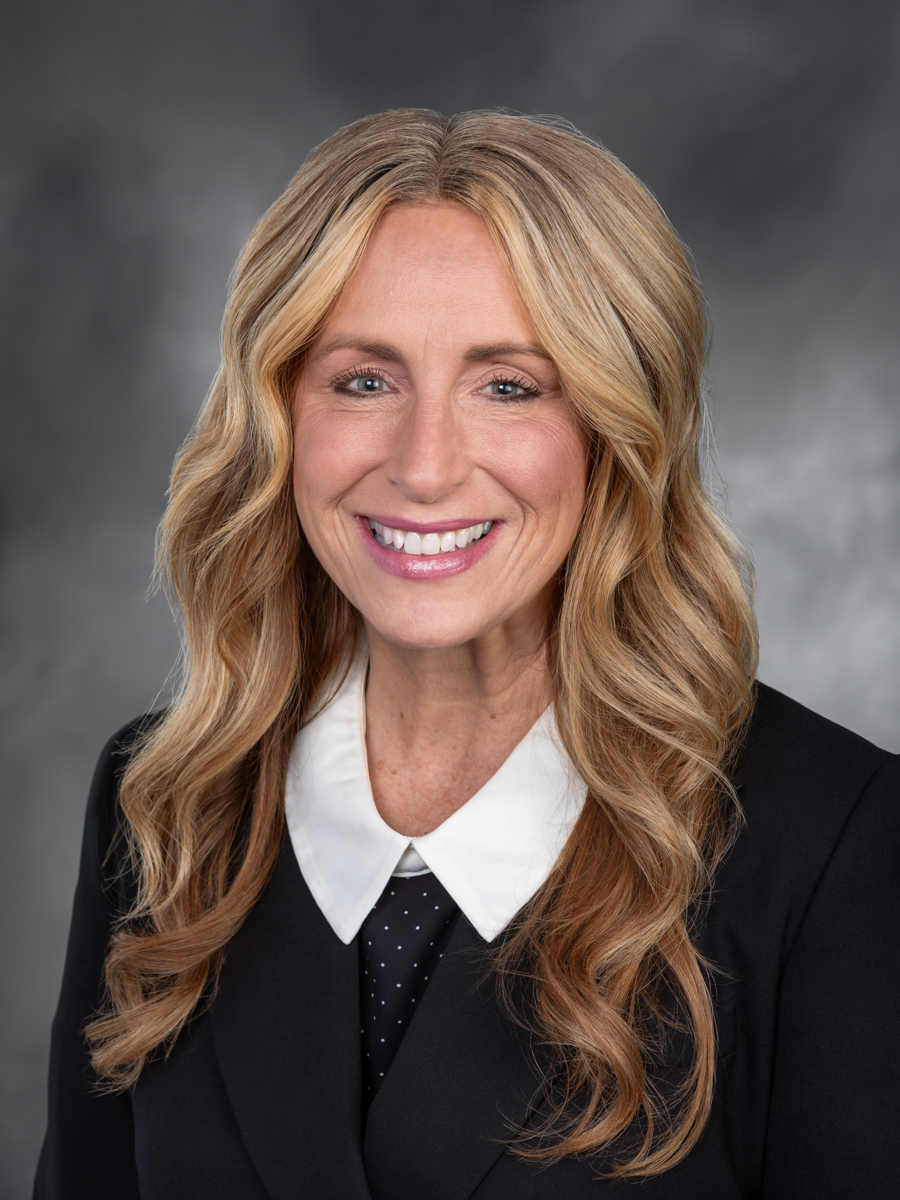
Photo of Stephanie Barnard
R Washington House · District 8 On the 2026 ballot

Rep. Stephanie Barnard

Compare
Total votes
2,532
all sessions
Attendance
99%
16 missed
Near the chamber average
With party
95%
of cast votes
Near the chamber average
Bipartisan score
2%
crosses aisle rarely
Near the chamber average
Sponsored
332
bills & resolutions
Near the chamber average
Committees
5
assignments
332 bills and resolutions

Sponsored bills

Total
332
Primary
42
Co-sponsor
290
This page
332
matching current filters
Co-sponsor HB 1942
In committee · Washington House · Co-sponsor
Promoting the economic development of innovative uses of artificial intelligence.

Maddy summaryHB 1942 creates a state program to support economic growth through innovative artificial intelligence (AI) applications. It requires the state department to collaborate with an AI task force quarterly, seek federal grants and private funding for small businesses developing AI solutions, and issue biennial reports starting in 2026 on progress, funding obtained, and state priorities. The bill also mandates a study by the Washington State Institute for Public Policy to identify AI opportunities in areas like wildfire management and healthcare by 2027, with the main program expiring in 2035. This directly affects state agencies, small businesses, and the AI task force.

In committee Jan 12, 2026 1 co-sponsor
Co-sponsor HB 1058
In committee · Washington House · Co-sponsor
Providing incentives to improve freight railroad infrastructure.

Maddy summaryHB 1058 creates tax credits for eligible railroads to fund infrastructure improvements. It directly affects small regional railroads (class II/III), public entities like ports/cities, and industrial property owners with rail spurs in Washington. The bill provides a 50% tax credit on qualified expenses for maintenance, new rail development, or modernization projects (e.g., track upgrades, bridges, safety equipment), with annual limits of $500,000 per taxpayer and a total $8 million statewide cap. Credits can be carried forward for up to five years or transferred to other eligible taxpayers.

In committee Jan 12, 2026 1 co-sponsor
Co-sponsor HB 1928
In committee · Washington House · Co-sponsor
Requiring senate confirmation of gubernatorial appointments to vacancies on the supreme court.

Maddy summaryHB 1928 requires the Washington State Senate to confirm the governor's appointments to vacancies on the Supreme Court. The Senate must vote on confirmations before a legislative session ends if appointed during session, or at the next session if appointed outside sessions, needing a two-thirds majority. Rejected appointees cannot be reappointed for two years, and confirmed appointees serve until the next general election. The bill takes effect only if voters approve a related constitutional amendment in the 2026 election.

In committee Jan 12, 2026 1 co-sponsor
Co-sponsor HB 1699
In committee · Washington House · Co-sponsor
Defending equity in interscholastic sports.

Maddy summaryHB 1699 (Defending equity in interscholastic sports) requires Washington public school districts to verify a student’s biological sex through a healthcare provider’s statement (based on reproductive anatomy, genetics, or testosterone levels) before allowing biologically male students to participate in female-identified sports. It permits schools to prohibit biologically male students from competing in sports with separate male/female classifications, while mandating equal resources (equipment, facilities, coaching, etc.) for all gender-segregated teams. The bill amends existing laws (RCW 28A.600.200 and 28A.640.020) to align with these provisions and requires the superintendent to develop guidelines eliminating sex discrimination in school activities. It directly affects public school students, athletic programs, and district policies governing interscholastic sports participation.

In committee Jan 12, 2026 1 co-sponsor
Co-sponsor HB 1076
In committee · Washington House · Co-sponsor
Concerning the health technology assessment program.

Maddy summaryHB 1076 establishes a structured process for Washington State’s health technology assessment program, directly affecting state health programs (like Medicaid) that decide which medical technologies qualify for coverage. The bill requires the state to systematically review health technologies prioritized based on Medicare coverage, expert guidelines, safety concerns, high costs, or significant usage variations, with up to eight reviews annually. Key provisions mandate evidence-based assessments of safety, efficacy, and cost-effectiveness - considering patient input and unique impacts on populations (e.g., age, disability) - and require decisions within 180 days of submission. The program must align with federal Medicare decisions unless new evidence supports a different conclusion, ensuring transparency through public comment and written explanations for denied requests.

In committee Jan 12, 2026 1 co-sponsor
Co-sponsor HB 1712
In committee · Washington House · Co-sponsor
Allowing the use of electricity generated by qualified biomass facilities in the Pacific Northwest to meet renewable resource requirements.

Maddy summaryHB 1712 amends Washington state law to allow utilities to count electricity from qualified biomass facilities in the Pacific Northwest toward their renewable energy requirements under the Energy Independence Act. The bill defines "qualified biomass energy" as electricity generated from specific organic sources like wood byproducts, agricultural waste, and dedicated energy crops - excluding treated wood or municipal waste - provided the facility began operations before March 31, 1999, and is located in the Pacific Northwest. This change directly affects utilities required to meet renewable portfolio standards, expanding their eligible resource options. By including qualified biomass energy as a valid renewable source, the bill provides utilities with additional compliance pathways for state-mandated renewable energy goals.

In committee Jan 12, 2026 1 co-sponsor
Co-sponsor HB 1099
In committee · Washington House · Co-sponsor
Creating a tenant assistance program.

Maddy summaryHB 1099 creates a state tenant assistance program providing up to $400 monthly rent help to Washington renters who spend over 30% of their income on housing costs and earn at or below 80% of their county’s median household income (per HUD data). Priority is given to households earning 60% or less of median income or receiving Supplemental Security Income. The program, funded by 20% of county recording fee surcharges (from RCW 36.22.250), will be administered by the Department of Commerce through public housing authorities and expires June 30, 2032. Assistance is limited to 12 consecutive months per household, with annual reports required on program usage and outcomes.

In committee Jan 12, 2026 1 co-sponsor
Co-sponsor HB 2053
In committee · Washington House · Co-sponsor
Concerning limiting state employment based on population.

Maddy summaryHB 2053 would limit Washington State's employment by requiring that the state not hire more than one full-time equivalent employee for every 70 residents. This applies to all state agencies and departments, using the Office of Financial Management's official population estimates to calculate the cap. The bill amends state law to add this requirement, averaging employee counts over the fiscal year and basing population on the office's certified data. It directly affects state hiring decisions but does not change current staffing levels. The policy sets a concrete numerical limit on state workforce size relative to population.

In committee Jan 12, 2026 1 co-sponsor
Co-sponsor HB 1777
In committee · Washington House · Co-sponsor
Concerning the requirements and process for approving and registering apprenticeship programs.

Maddy summaryHB 1777 streamlines the state approval process for apprenticeship programs that already have federal approval, directly affecting program sponsors (including tribal and nontribal organizations) and employers seeking to expand training opportunities. It requires the apprenticeship council to expedite reviews of federally-approved programs by limiting state-specific scrutiny to unique requirements, while reforming competitor objections: objections must be filed within 30 days of provisional approval, and frivolous objections can trigger penalties like attorney fee payments or $10,000 fines. The bill also mandates annual reports comparing Washington’s program approval rates to federal standards and other states, including details on pending applications and denial reasons. These changes aim to reduce current delays - where 4 of 17 2024 applications remained pending after federal approval - without altering apprenticeship content or creating new training slots.

In committee Jan 12, 2026 1 co-sponsor
Co-sponsor HB 1022
In committee · Washington House · Co-sponsor
Creating a homes for heroes program.

Maddy summaryHB 1022 creates a pilot program providing no-interest down payment and closing cost loans (up to $25,000) to essential workers in Washington state who meet income limits. It directly affects firefighters, nurses, police officers, emergency medical technicians, mental health professionals, social workers, child care providers, and veterans with household income below 100% of the state median. Loans require no repayment until the home is sold, rented, or refinanced, and the program is capped at $15 million in funding through June 2027. The bill mandates reporting on program outcomes to the legislature by 2026 and 2027.

In committee Jan 12, 2026 1 co-sponsor
Showing 151 to 160 of 332 bills
Previous 1 … 15 16 17 … 34 Next