

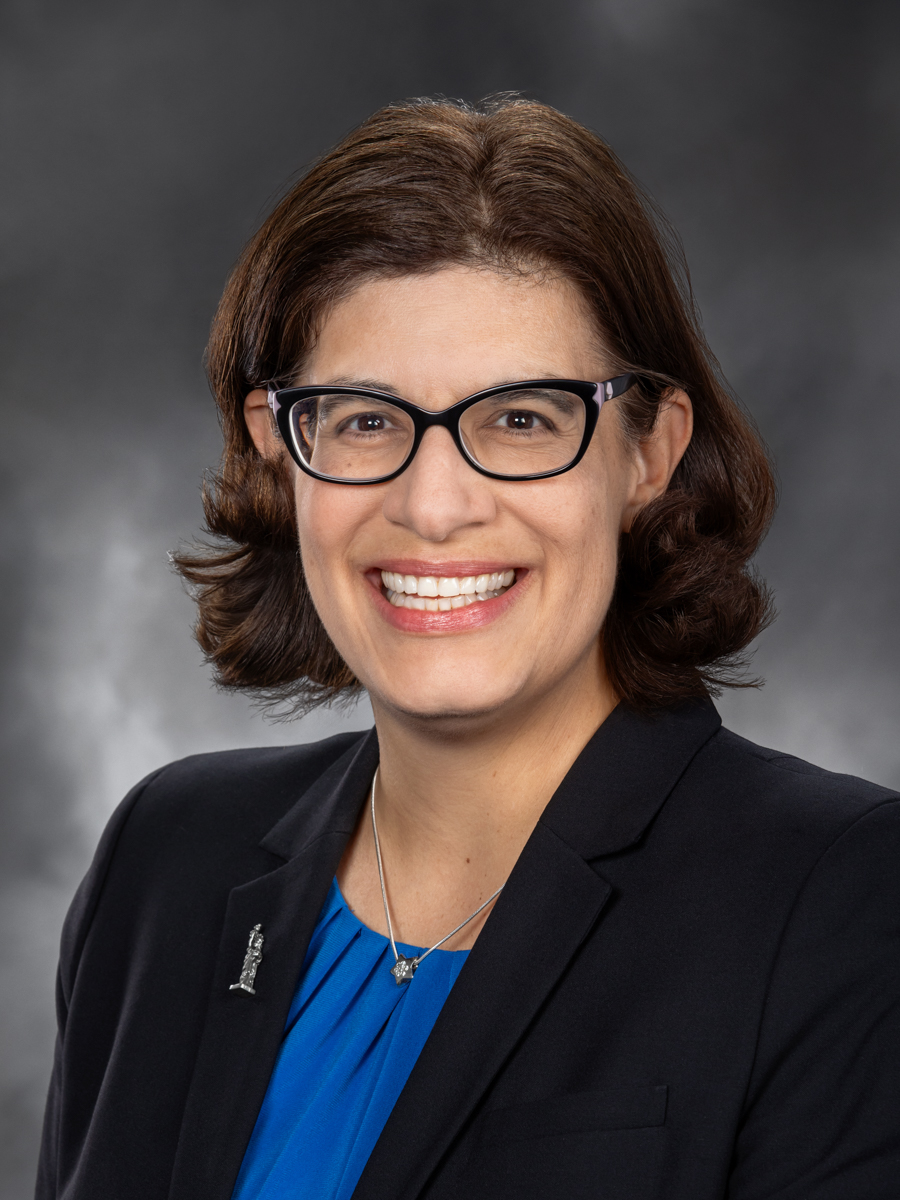
Photo of Nicole Macri
D Washington House · District 43 On the 2026 ballot

Rep. Nicole Macri

Compare
Total votes
6,316
all sessions
Attendance
100%
24 missed
Near the chamber average
With party
99%
of cast votes
Near the chamber average
Bipartisan score
0%
crosses aisle rarely
Near the chamber average
Sponsored
1,887
bills & resolutions
Higher than 93% of chamber peers
Committees
4
assignments
1,887 bills and resolutions

Sponsored bills

Total
1,887
Primary
109
Co-sponsor
1,778
This page
1,887
matching current filters
Co-sponsor HB 1870
In committee · Washington House · Co-sponsor
Concerning county property tax levies for public health clinic purposes.

Maddy summaryHB 1870 allows Washington counties to levy an additional property tax of up to five cents per $1,000 of assessed value specifically for public health clinics. This tax can only fund the operation, maintenance, and capital expenses of clinics providing services like primary care, dental care, disease prevention, reproductive health, and behavioral health. The bill amends existing tax laws to exempt this new levy from standard county tax limits (like the $1.80 cap), ensuring it doesn’t count toward other spending restrictions. It directly affects counties and public health clinics, which would use the funds for low-barrier health services to underserved communities.

In committee Jan 12, 2026 1 co-sponsor
Co-sponsor HB 1320
In committee · Washington House · Co-sponsor
Modifying business and occupation tax rates to fund programs and services to benefit Washingtonians.

Maddy summaryHB 1320 increases business and occupation tax rates for multiple sectors to fund state programs. It raises rates for extractors and manufacturers to 0.5324%, semiconductor manufacturers to 0.3025% (with employment requirements), and real estate brokers to 1.65%. The bill also creates a temporary 0.31944% rate for aviation repair stations until 2040. Businesses claiming semiconductor tax preferences must maintain 90% of their three-year average employment or reimburse 50% of the tax benefit. All rate changes are intended to generate revenue for state programs benefiting Washington residents, as specified in the bill's title.

In committee Jan 12, 2026 1 co-sponsor
Co-sponsor HB 1181
In committee · Washington House · Co-sponsor
Concerning labor standards and the Washington minimum wage act.

Maddy summaryHB 1181 clarifies who is covered by Washington's minimum wage law by updating definitions in the Washington Minimum Wage Act. It adds specific exclusions, such as farm interns with special certificates and minor league baseball players under collective bargaining agreements, while refining definitions for terms like "family member" and "retail establishment." These changes directly affect employers and workers in defined categories, ensuring the law applies only to eligible employees. The bill does not change the current minimum wage rate but refines coverage to align with evolving workplace structures.

In committee Jan 12, 2026 1 co-sponsor
Co-sponsor HB 1292
In committee · Washington House · Co-sponsor
Concerning cost-of-living adjustments for plan 1 retirees of the teachers' retirement system and public employees' retirement system.

Maddy summaryHB 1292 establishes an ongoing annual cost-of-living adjustment (COLA) for retirees in Plan 1 of Washington's Teachers' Retirement System (TRS) and Public Employees' Retirement System (PERS), starting July 2026. The bill uses the Consumer Price Index (CPI) to calculate annual increases, capping the first adjustment at 3% and limiting yearly changes to no more than a 3% difference from the prior year. It consolidates the costs of past COLA increases over a 15-year period while requiring new benefit improvements to be paid over a 10-year amortization. The bill directly affects current and future retirees in both systems who qualify under Plan 1, excluding those covered by specific exception provisions.

In committee Jan 12, 2026 1 co-sponsor
Co-sponsor HB 1132
In committee · Washington House · Co-sponsor
Enhancing public safety by limiting bulk purchases and transfers of firearms and ammunition.

Maddy summaryHB 1132 updates Washington's firearm dealer licensing rules to enhance safety. It requires dealers to implement strict security measures, including alarms monitored by law enforcement, locked storage for firearms during non-business hours, and digital surveillance systems covering all sales areas. The bill mandates annual background checks for all employees selling firearms and prohibits temporary sales outside licensed locations except at designated gun shows. It also requires dealers to annually certify compliance with all licensing conditions and face permanent license loss for violations. These provisions directly affect licensed firearm dealers operating in Washington state.

In committee Jan 12, 2026 1 co-sponsor
Co-sponsor HB 1138
In committee · Washington House · Co-sponsor
Improving public safety by implementing evidence-based interview practices that increase the reliability of statements collected during criminal investigations.

Maddy summaryHB 1138 requires Washington law enforcement officers to stop using deceptive tactics (like falsely claiming evidence exists) during criminal interrogations starting in 2026. It presumes statements obtained through deception are inadmissible in court for misdemeanor or felony cases, unless prosecutors prove the statement was voluntary. The bill mandates free, state-developed training for all officers on evidence-based techniques like the PEACE method, cognitive interviews, and trauma-informed approaches by July 2026. This directly affects law enforcement agencies, prosecutors, and individuals being questioned in criminal investigations.

In committee Jan 12, 2026 1 co-sponsor
Co-sponsor HB 1645
In committee · Washington House · Co-sponsor
Enhancing consumer protections for automobile insurance coverage.

Maddy summaryHB 1645 requires Washington auto insurance policies covering car damage (physical damage coverage) to include a mandatory appraisal process for resolving disputes over repair costs. If insurers and policyholders disagree on the value of damage, they must use this process: each selects an appraiser, then an umpire if needed, with clear rules for cost-sharing. Policyholders get reimbursed for appraisal costs if the final valuation exceeds the insurer’s initial offer by $500 or more. This applies to all policies issued or renewed on or after January 1, 2026.

In committee Jan 12, 2026 1 co-sponsor
Co-sponsor HB 1867
In committee · Washington House · Co-sponsor
Allowing counties or cities to impose a real estate excise tax for the purpose of developing affordable housing, subject to the will of the voters.

Maddy summaryHB 1867 allows Washington counties or cities to impose a real estate excise tax of up to 0.5% on home sales, with proceeds dedicated exclusively to developing affordable housing for very low, low, and moderate-income residents and those with special needs. Local governments must first gain voter approval through a majority vote in an election, either via a resolution from local officials or a petition signed by 10% of eligible voters. The tax revenue must be managed through a competitive grant process for nonprofit housing providers, housing authorities, or public agencies, with spending plans requiring public hearings. Counties and cities cannot levy this tax if the county has already implemented a similar tax under prior law. This bill directly affects local governments and homebuyers/sellers in communities that choose to adopt the tax.

In committee Jan 12, 2026 1 co-sponsor
Co-sponsor HB 1328
In committee · Washington House · Co-sponsor
Accelerating the development of clean energy and transmission.

Maddy summaryHB 1328 establishes a Clean Energy Development Office within the Department of Commerce to accelerate clean energy project and transmission facility development in Washington. The bill directly affects clean energy developers, tribes, local governments, and communities hosting projects by creating a centralized resource to address barriers like information gaps, zoning uncertainty, and inadequate community engagement. Key mechanisms include developing public geospatial tools for project siting, providing technology and regulatory information, supporting tribal-led projects, and creating templates for community benefits agreements. The office will proactively coordinate state efforts to meet climate goals while ensuring environmental protection and equitable benefits for host communities.

In committee Jan 12, 2026 1 co-sponsor
Co-sponsor HB 1901
In committee · Washington House · Co-sponsor
Concerning mattress producer responsibility organizations.

Maddy summaryHB 1901 requires mattress manufacturers and importers to fund recycling programs to reduce landfill waste. It creates a system where producers pay for collection, recycling, and proper disposal of mattresses, directly affecting companies selling mattresses in Washington. The bill mandates "environmentally sound" recycling practices, prioritizing reuse and recycling over landfill disposal, and establishes producer responsibility organizations to manage these programs. This aims to cut illegal dumping, create recycling jobs, and capture materials like metal and foam for reuse, reducing landfill costs and emissions.

In committee Jan 12, 2026 1 co-sponsor
Showing 201 to 210 of 1,887 bills
Previous 1 … 20 21 22 … 189 Next