

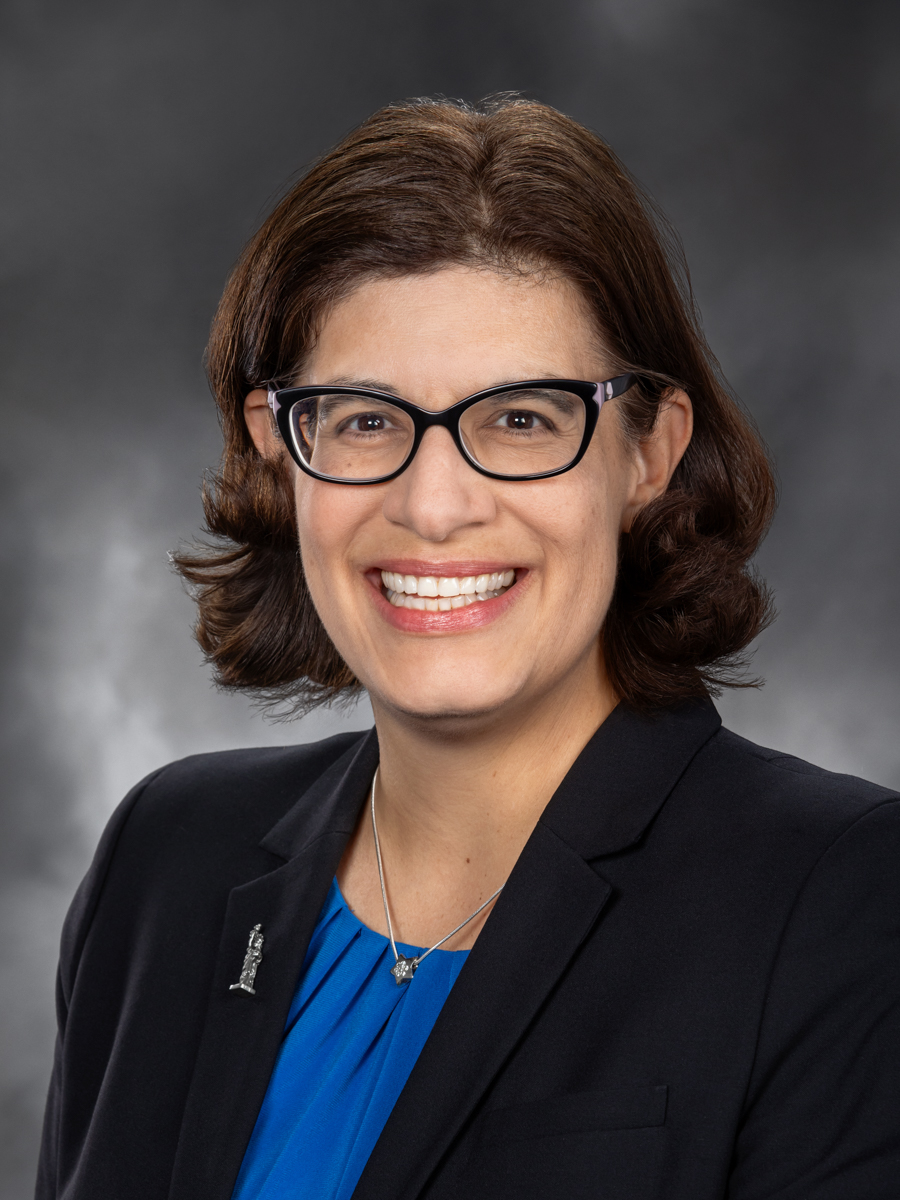
Photo of Nicole Macri
D Washington House · District 43 On the 2026 ballot

Rep. Nicole Macri

Compare
Total votes
6,316
all sessions
Attendance
100%
24 missed
Near the chamber average
With party
99%
of cast votes
Near the chamber average
Bipartisan score
0%
crosses aisle rarely
Near the chamber average
Sponsored
1,887
bills & resolutions
Higher than 93% of chamber peers
Committees
4
assignments
1,887 bills and resolutions

Sponsored bills

Total
1,887
Primary
109
Co-sponsor
1,778
This page
1,887
matching current filters
Co-sponsor HB 2425
In committee · Washington House · Co-sponsor
Concerning nursing delegation.

Maddy summaryHB 2425 clarifies when registered nurses in Washington can delegate tasks to certified nursing assistants or home care aides. It allows delegation of "simple care tasks" like blood pressure monitoring or insulin device setup in community-based or in-home settings, but prohibits delegation of medication administration (except specific insulin monitoring), sterile procedures, or tasks requiring nursing judgment. Nurses must verify staff competency, evaluate patient stability, and supervise delegated tasks, with strict limits on what can be delegated based on patient condition. The bill applies directly to nurses, nursing assistants under Chapter 18.88A, and home care aides under Chapter 18.88B in non-acute care settings.

In committee Feb 3, 2026 1 co-sponsor
Co-sponsor HB 2437
In committee · Washington House · Co-sponsor
Establishing fee authority for accreditation services provided to opioid treatment programs by the department of health.

Maddy summaryHB 2437 allows Washington's Department of Health to establish fees for accrediting opioid treatment programs, which must cover the department's costs for this service. The bill directs the department to set initial and renewal fees after gaining federal approval to accredit such programs under federal rules (42 C.F.R. Part 8). These fees will be used to offset expenses, with the department permitted to draw from opioid abatement settlement funds to cover costs. The bill directly affects opioid treatment programs seeking federal accreditation and the department managing the process.

In committee Feb 3, 2026 1 co-sponsor
Co-sponsor HB 2161
In committee · Washington House · Co-sponsor
Concerning the general powers and duties of the attorney general’s office.

Maddy summaryHB 2161 expands the Washington Attorney General's authority to issue written civil investigative demands for documents, testimony, or answers to questions during investigations into potential violations of specific state and federal laws. It directly affects individuals and entities that may possess relevant records or information related to these investigations. The bill establishes clear procedures for these demands, requiring specific details about the investigation, reasonable descriptions of requested materials, and defined timelines, while prohibiting demands that would be unreasonable or require privileged information. It also includes strict confidentiality rules about disclosing the demand itself and limits how produced materials can be shared or used, ensuring the process aligns with standard civil court procedures.

In committee Feb 3, 2026 1 co-sponsor
Co-sponsor HB 1622
Passed · Washington House · Co-sponsor
Allowing bargaining over matters related to the use of artificial intelligence.

Maddy summaryHouse Bill 1622 allows public sector employees in Washington state to collectively bargain with their employers over the use of artificial intelligence (AI) in the workplace. The bill amends existing state law to remove the "use of technology" from a list of management rights that are typically not subject to negotiation for employees in higher education and other state agencies. It defines artificial intelligence as machine learning and related technologies that enable computer systems to perform tasks like computer vision or natural language processing. This change empowers unions and public employers to negotiate agreements on the implementation and utilization of AI technologies.

Passed Feb 3, 2026 1 co-sponsor
Co-sponsor HB 2132
In committee · Washington House · Co-sponsor
Concerning applications for state financial aid.

Maddy summaryHB 2132 protects student privacy for Washington state financial aid applications by making personally identifying and financial information exempt from public records requests. It limits how long institutions and the state council retain application records (one year after the award year ends, unless an audit or appeal is pending) and restricts sharing this data with other entities, including the federal government, without a court order or specific data-sharing agreements. The bill directly affects students applying for state financial aid (excluding the federal FAFSA) and state agencies handling these applications. Key provisions include strict privacy safeguards for sensitive data and clear limits on data sharing to prevent unauthorized disclosure.

In committee Feb 2, 2026 1 co-sponsor
Co-sponsor HB 2212
In committee · Washington House · Co-sponsor
Reducing microplastic pollution from washing machines.

Maddy summaryHB 2212 requires new commercial and industrial washing machines sold in Washington to include microfiber filters that capture tiny plastic fibers (under 5mm) starting July 1, 2028, with existing machines needing filters by July 1, 2034. It mandates clear labeling on machines and regular filter maintenance to prevent microplastics - released in high numbers per laundry load - from entering waterways. The bill also allows for future residential machine requirements if other states adopt similar rules and costs stay below $70 per unit. Violations face civil penalties up to $10,000 per offense, enforced by the Department of Ecology. This targets a major pollution source linked to health and marine ecosystem risks.

In committee Feb 2, 2026 1 co-sponsor
Co-sponsor HB 2435
In committee · Washington House · Co-sponsor
Creating the legislative office on Indian affairs.

Maddy summaryHB 2435 creates a new legislative office on Indian affairs to provide educational resources and support to Washington State legislators and professional legislative staff regarding tribal affairs and the state's government-to-government relationship with tribes. The office will offer mandatory annual training for staff on tribal sovereignty, cultural awareness, policy best practices, and terminology, plus assistance in locating resources on tribal issues. It aims to complement the governor's office of Indian affairs - without replacing it or acting as a direct liaison to tribal leaders - by coordinating with legislative committees to incorporate tribal policy guidance into bill drafting. The office will operate under existing legislative funding and administrative structures, with defined roles for its director and staff.

In committee Jan 30, 2026 1 co-sponsor
Co-sponsor HR 4675
Passed · Washington House · Co-sponsor
Honoring the Washington National Guard.

Maddy summaryHouse Resolution 4675, adopted on January 28, 2026, is a ceremonial resolution expressing the Washington State House of Representatives' gratitude to the Washington National Guard for their service. It specifically acknowledges the Guard's roles in emergency response (including flood operations and search-and-rescue missions), disaster recovery efforts (like adapting from the Oso landslide), and national defense support (such as aerial refueling capabilities). The resolution directs copies to the Adjutant General, Governor, and other officials but does not create new laws or alter policies. It directly honors National Guard members, their families, and employers without imposing any financial or operational requirements.

Passed Jan 28, 2026 1 co-sponsor
Co-sponsor HB 2550
In committee · Washington House · Co-sponsor
Adding certain students at certain community and technical colleges to the passengers that must be allowed to ride transit for free under the transit support grant program.

Maddy summaryHB 2550 expands Washington state's transit support grant program to include students enrolled in degree- or certificate-seeking programs at community and technical colleges as free-ride passengers. This directly affects community and technical college students and transit agencies receiving state grants, requiring them to adopt a zero-fare policy for this group to qualify for funding. Transit agencies must document this policy by October 1, 2022, and track trips taken under the program. The bill amends existing law to add these students to the existing free-ride eligibility for youth 18 and under, with agencies aligning implementation with equity principles.

In committee Jan 28, 2026 1 co-sponsor
Co-sponsor HB 2243
In committee · Washington House · Co-sponsor
Including physical and occupational therapists as attending providers for workers' compensation.

Maddy summaryHB 2243 adds physical and occupational therapists to the list of authorized "attending providers" for workers' compensation claims in Washington State. The bill amends statutes (RCW 51.08.200, 51.28.010, and others) to explicitly include these professionals, alongside physicians and other licensed providers, when treating injured workers. This change directly affects injured workers who require physical or occupational therapy, allowing them to receive care from these specialists under workers' compensation. The law updates provider eligibility requirements and reporting procedures to reflect this expansion, ensuring therapists are recognized in the claims process.

In committee Jan 28, 2026 1 co-sponsor
Showing 121 to 130 of 1,887 bills
Previous 1 … 12 13 14 … 189 Next