

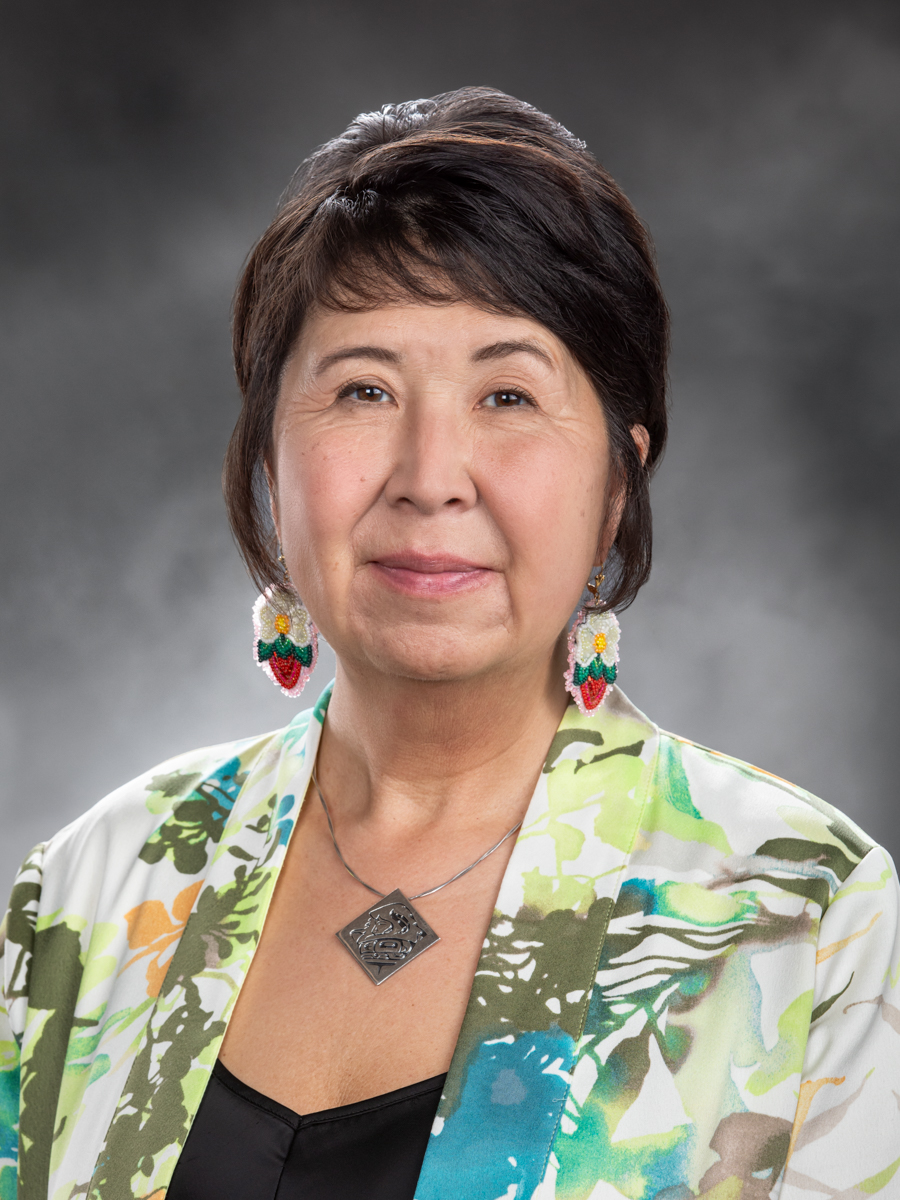
Photo of Debra Lekanoff
D Washington House · District 40 On the 2026 ballot

Rep. Debra Lekanoff

Compare
Total votes
4,956
all sessions
Attendance
97%
139 missed
Lower than 91% of chamber peers
With party
99%
of cast votes
Higher than 89% of chamber peers
Bipartisan score
0%
crosses aisle rarely
Lower than 91% of chamber peers
Sponsored
837
bills & resolutions
Near the chamber average
Committees
6
assignments
837 bills and resolutions

Sponsored bills

Total
837
Primary
91
Co-sponsor
746
This page
837
matching current filters
Primary HB 2598
In committee · Washington House · Lead sponsor
Improving statewide coordination in support of anadromous fish recovery.

Maddy summaryHB 2598 establishes a Salmon Advisory Commission to improve coordination between Washington state agencies and tribal governments on salmon recovery efforts. The commission will identify gaps in recovery work, review monitoring data, and recommend actions to the governor and legislature. This bill amends existing salmon recovery laws to require state agencies to collaborate through this new body, without reallocating current programs or responsibilities. It directly affects state fish and wildlife agencies, tribal co-managers, and organizations implementing salmon habitat restoration projects.

In committee Feb 4, 2026 0 co-sponsors
Co-sponsor HB 2567
In committee · Washington House · Co-sponsor
Concerning the Washington college grant and college bound scholarship program for students attending private four-year not-for-profit institutions of higher education in Washington.

Maddy summaryHB 2567 updates Washington's college grant program to adjust funding for students attending private four-year non-profit institutions. Starting in the 2026-27 academic year, the maximum grant amount for these students will be set at 50% of the average award given to students at public four-year institutions, replacing the previous fixed amount of $9,739 (adjusted annually for tuition growth). This change directly affects students enrolled at eligible private non-profit universities in Washington state who qualify for financial aid. The bill amends existing grant formulas to align private institution funding more closely with public institution awards, effective after the 2025-26 academic year.

In committee Feb 4, 2026 1 co-sponsor
Primary HB 2520
In committee · Washington House · Lead sponsor
Concerning emergency meetings of public agencies.

Maddy summaryHB 2520 allows public agencies in Washington to hold emergency meetings remotely or outside regular locations when necessary for urgent action during declared emergencies. It requires agencies to provide free, real-time public access to these meetings via phone, internet, or broadcast, and to clearly state how the public can participate. The bill also updates rules for special meetings outside county seats for local concerns and joint meetings between counties. These changes ensure emergency meetings remain transparent and accessible while maintaining public accountability under state open-meeting laws.

In committee Feb 4, 2026 0 co-sponsors
Co-sponsor HB 2620
In committee · Washington House · Co-sponsor
Restoring collaboration in the forest practices rule-making process for the benefit of long-term protection of natural resources and the forest products industry.

Maddy summaryHB 2620 invalidates a 2025 forest buffer rule adopted by Washington's Forest Practices Board and requires the Board to restart the rulemaking process for riparian buffers around nonfish streams. The bill mandates the Board to develop a measurable economic viability standard for the timber industry by January 2027, ensuring rules consider impacts on small landowners and operational mills. It also requires the Board to reevaluate scientific studies used in the prior rulemaking, ensuring longer-term monitoring and actual evidence of aquatic resource impacts before adopting new standards. This legislation directly affects the Forest Practices Board, timber industry stakeholders, and rural communities dependent on forest revenue.

In committee Feb 3, 2026 1 co-sponsor
Co-sponsor HB 2573
In committee · Washington House · Co-sponsor
Concerning community access to food, medicine, and health services.

Maddy summaryHB 2573 requires supermarkets, full-service grocery stores, and pharmacies to provide advance notice of closures or major operational changes to local governments and the public. Specifically, these businesses must give six months' notice for general areas and one year's notice in "overburdened communities" (defined under Chapter 70A.02 RCW), including posting notices in primary languages spoken by 5% of residents. Local governments must include these notices in land use permits and public outreach, and can use zoning tools to prioritize redeveloping vacant properties for these essential services. The bill aims to prevent "food and pharmacy deserts" by ensuring continued access to healthy food, medicine, and health services in communities planning for increased density, affordable housing, and transit-oriented development.

In committee Feb 3, 2026 1 co-sponsor
Primary HB 2437
In committee · Washington House · Lead sponsor
Establishing fee authority for accreditation services provided to opioid treatment programs by the department of health.

Maddy summaryHB 2437 allows Washington's Department of Health to establish fees for accrediting opioid treatment programs, which must cover the department's costs for this service. The bill directs the department to set initial and renewal fees after gaining federal approval to accredit such programs under federal rules (42 C.F.R. Part 8). These fees will be used to offset expenses, with the department permitted to draw from opioid abatement settlement funds to cover costs. The bill directly affects opioid treatment programs seeking federal accreditation and the department managing the process.

In committee Feb 3, 2026 0 co-sponsors
Primary HB 2435
In committee · Washington House · Lead sponsor
Creating the legislative office on Indian affairs.

Maddy summaryHB 2435 creates a new legislative office on Indian affairs to provide educational resources and support to Washington State legislators and professional legislative staff regarding tribal affairs and the state's government-to-government relationship with tribes. The office will offer mandatory annual training for staff on tribal sovereignty, cultural awareness, policy best practices, and terminology, plus assistance in locating resources on tribal issues. It aims to complement the governor's office of Indian affairs - without replacing it or acting as a direct liaison to tribal leaders - by coordinating with legislative committees to incorporate tribal policy guidance into bill drafting. The office will operate under existing legislative funding and administrative structures, with defined roles for its director and staff.

In committee Jan 30, 2026 0 co-sponsors
Co-sponsor HB 2038
In committee · Washington House · Co-sponsor
Establishing the youth behavioral health account and funding the account through the imposition of a business and occupation additional tax on the operation of social media platforms.

Maddy summaryHB 2038 creates a "youth behavioral health account" funded by a 0.4% tax on the gross income of social media platforms operating in Washington, starting January 2026. The tax applies to platforms defined as services allowing social interaction (like Facebook or TikTok), excluding email, gaming, or review sites. Funds will support telebehavioral health services for school-aged youth, a state coordinator for youth behavioral health, and implementation of a statewide strategic plan for prenatal through age 25 care. The bill explicitly states the tax does not apply to 501(c)(3) non-profits.

In committee Jan 30, 2026 1 co-sponsor
Primary HB 2578
In committee · Washington House · Lead sponsor
Adding tribal members to the fish and wildlife commission.

Maddy summaryHB 2578 adds four tribal representatives to Washington's Fish and Wildlife Commission, increasing its total membership from nine to 13. Specifically, it requires the governor to appoint two tribal chairs (one from tribes east of the Cascades, one from tribes west of the Cascades) and two tribal council members as alternates for each region, all serving four-year terms. These tribal members must be elected tribal leaders whose traditional lands are in Washington and will represent all federally recognized tribes in the state. The bill amends commission composition rules in RCW 77.04.030 to formalize this tribal representation, ensuring tribal perspectives are included in fish and wildlife management decisions.

In committee Jan 28, 2026 0 co-sponsors
Co-sponsor HR 4675
Passed · Washington House · Co-sponsor
Honoring the Washington National Guard.

Maddy summaryHouse Resolution 4675, adopted on January 28, 2026, is a ceremonial resolution expressing the Washington State House of Representatives' gratitude to the Washington National Guard for their service. It specifically acknowledges the Guard's roles in emergency response (including flood operations and search-and-rescue missions), disaster recovery efforts (like adapting from the Oso landslide), and national defense support (such as aerial refueling capabilities). The resolution directs copies to the Adjutant General, Governor, and other officials but does not create new laws or alter policies. It directly honors National Guard members, their families, and employers without imposing any financial or operational requirements.

Passed Jan 28, 2026 1 co-sponsor
Showing 41 to 50 of 837 bills
Previous 1 4 5 6 84 Next