

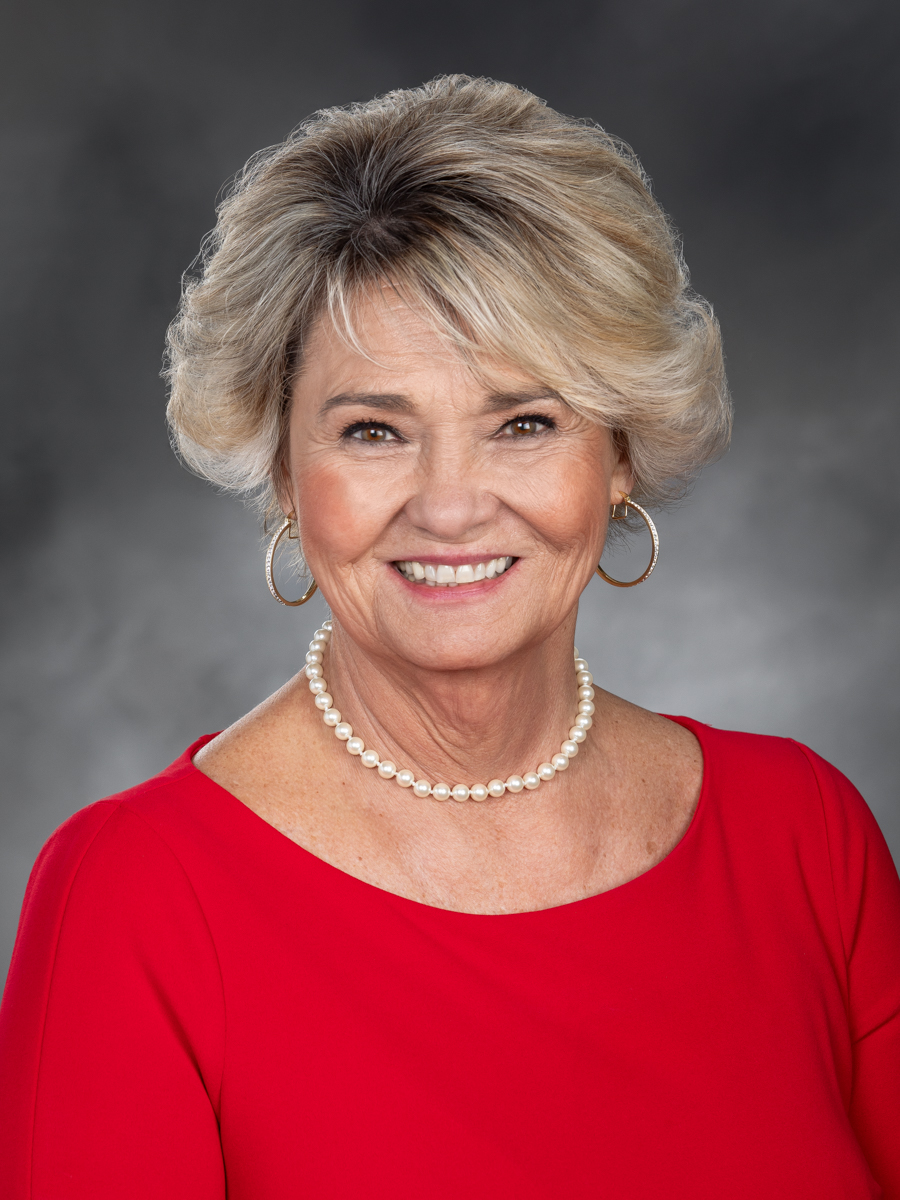
Photo of Suzanne Schmidt
R Washington House · District 4

Rep. Suzanne Schmidt

Compare
Total votes
2,532
all sessions
Attendance
99%
13 missed
Near the chamber average
With party
94%
of cast votes
Lower than 85% of chamber peers
Bipartisan score
3%
crosses aisle rarely
Higher than 83% of chamber peers
Sponsored
369
bills & resolutions
Near the chamber average
Committees
3
assignments
369 bills and resolutions

Sponsored bills

Total
369
Primary
39
Co-sponsor
330
This page
369
matching current filters
Co-sponsor HB 1340
In committee · Washington House · Co-sponsor
Exempting prepared food from sales tax.

Maddy summaryHB 1340 would exempt most prepared food from Washington's sales tax, directly affecting restaurants, food trucks, and businesses selling meals prepared for immediate consumption. The bill defines "prepared food" as food sold heated, with utensils provided (like plates or cutlery), or mixed by the seller (excluding simple cuts or raw ingredients needing home cooking). It excludes soft drinks, bottled water, dietary supplements, alcoholic beverages, tobacco, and cannabis from the exemption. This change would reduce sales tax for qualifying food items sold by businesses meeting the defined criteria, but not for packaged snacks, drinks, or other excluded products.

In committee Jan 12, 2026 1 co-sponsor
Co-sponsor HB 1564
In committee · Washington House · Co-sponsor
Supporting employers providing child care assistance to employees by establishing a business and occupation and public utility tax credit.

Maddy summaryHB 1564 creates a 100% tax credit for Washington employers that provide child care assistance to employees, directly affecting eligible businesses. The credit covers 100% of costs for two types of assistance: (1) employer-paid portions of employee wages used for child care expenses (like tuition), and (2) costs for in-house child care facilities. Employers can claim the credit against business and occupation taxes (Chapter 82.04 RCW) or public utility taxes (Chapter 82.16 RCW), but not both for the same costs. The credit is available from January 1, 2026, through December 31, 2037, with a final expiration date of January 1, 2038.

In committee Jan 12, 2026 1 co-sponsor
Co-sponsor HB 1091
In committee · Washington House · Co-sponsor
Concerning sexually violent predators' ineligibility to earn supervision compliance credit.

Maddy summaryHB 1091 amends Washington state law to prevent certain offenders sentenced as sexually violent predators from earning supervision compliance credit. Specifically, it removes eligibility for this credit for individuals sentenced under statutes related to sexually violent offenses (RCW 9.94A.507, 650, 655, 660, or 670) or subject to specific supervision types (RCW 9.94A.745 or community custody under RCW 9.94A.730). The bill does not change the credit system itself but explicitly excludes these offenders from accruing the standard 10 days of credit per compliant month. This affects individuals serving sentences under the specified laws who are under community supervision. The change aligns with existing eligibility restrictions but codifies them more directly in the statute.

In committee Jan 12, 2026 1 co-sponsor
Primary HB 1387
In committee · Washington House · Lead sponsor
Concerning the prevailing wages on public works.

Maddy summaryHB 1387 changes how prevailing wages are set for public construction projects in Washington. It requires the state to use existing collective bargaining agreement rates for unionized trades until May 31, 2027, and then adopt the rate covering the majority of workers (or the most workers if no majority exists) for most trades starting June 1, 2027. Shipbuilding and ship repair trades will use the highest available collective bargaining rate in a county for all contracts after 2027. This directly affects public works contractors and unionized construction workers, ensuring wage rates align with actual union agreements rather than wage surveys in most cases.

In committee Jan 12, 2026 0 co-sponsors
Co-sponsor HB 1058
In committee · Washington House · Co-sponsor
Providing incentives to improve freight railroad infrastructure.

Maddy summaryHB 1058 creates tax credits for eligible railroads to fund infrastructure improvements. It directly affects small regional railroads (class II/III), public entities like ports/cities, and industrial property owners with rail spurs in Washington. The bill provides a 50% tax credit on qualified expenses for maintenance, new rail development, or modernization projects (e.g., track upgrades, bridges, safety equipment), with annual limits of $500,000 per taxpayer and a total $8 million statewide cap. Credits can be carried forward for up to five years or transferred to other eligible taxpayers.

In committee Jan 12, 2026 1 co-sponsor
Co-sponsor HB 1835
In committee · Washington House · Co-sponsor
Aligning cannabis licensing decisions by the liquor and cannabis board with local zoning ordinances.

Maddy summaryHB 1835 requires Washington's Liquor and Cannabis Board to deny or not renew cannabis licenses for properties where local governments (cities, counties, tribes, or port authorities) provide written objections stating that zoning laws prohibit cannabis operations there. This directly affects cannabis businesses seeking new licenses or renewals, as local zoning decisions now override the board's discretion. The bill amends state law to mandate that the board consider these written objections before approving any license application. It ensures state cannabis licensing aligns with local land-use regulations, preventing licenses for properties that conflict with community zoning rules. The policy change applies to all cannabis business types, including cultivation, retail, and processing.

In committee Jan 12, 2026 1 co-sponsor
Co-sponsor HB 1799
In committee · Washington House · Co-sponsor
Concerning persons convicted of violent offenses with a firearm.

Maddy summaryHB 1799 prohibits individuals convicted of violent offenses involving a firearm from earning early release credits toward their prison sentences. Specifically, it amends Washington state law to deny all "good time credits" or "earned release time" for sentences resulting from violent crimes where a firearm was used as a deadly weapon. This directly affects people sentenced for violent felonies with firearm enhancements under existing law (RCW 9.94A.533), preventing them from reducing their sentences through behavior-based credits. The bill does not change sentencing lengths but restricts a key mechanism for early release for this specific group of offenders.

In committee Jan 12, 2026 1 co-sponsor
Co-sponsor HB 1699
In committee · Washington House · Co-sponsor
Defending equity in interscholastic sports.

Maddy summaryHB 1699 (Defending equity in interscholastic sports) requires Washington public school districts to verify a student’s biological sex through a healthcare provider’s statement (based on reproductive anatomy, genetics, or testosterone levels) before allowing biologically male students to participate in female-identified sports. It permits schools to prohibit biologically male students from competing in sports with separate male/female classifications, while mandating equal resources (equipment, facilities, coaching, etc.) for all gender-segregated teams. The bill amends existing laws (RCW 28A.600.200 and 28A.640.020) to align with these provisions and requires the superintendent to develop guidelines eliminating sex discrimination in school activities. It directly affects public school students, athletic programs, and district policies governing interscholastic sports participation.

In committee Jan 12, 2026 1 co-sponsor
Co-sponsor HB 1435
In committee · Washington House · Co-sponsor
Creating a law enforcement hiring grant program.

Maddy summaryHB 1435 creates a state grant program to help local and tribal law enforcement agencies hire more officers. It provides up to 75% of entry-level salaries and benefits (capped at $125,000 per officer position) for 36 months, requiring a 25% local cash match. Grants cannot cover non-salary costs or fund officers recently hired by the same agency. The program requires agencies to apply through a formal process, report on hiring impacts, and includes a $100 million appropriation for fiscal year 2026.

In committee Jan 12, 2026 1 co-sponsor
Co-sponsor HB 1712
In committee · Washington House · Co-sponsor
Allowing the use of electricity generated by qualified biomass facilities in the Pacific Northwest to meet renewable resource requirements.

Maddy summaryHB 1712 amends Washington state law to allow utilities to count electricity from qualified biomass facilities in the Pacific Northwest toward their renewable energy requirements under the Energy Independence Act. The bill defines "qualified biomass energy" as electricity generated from specific organic sources like wood byproducts, agricultural waste, and dedicated energy crops - excluding treated wood or municipal waste - provided the facility began operations before March 31, 1999, and is located in the Pacific Northwest. This change directly affects utilities required to meet renewable portfolio standards, expanding their eligible resource options. By including qualified biomass energy as a valid renewable source, the bill provides utilities with additional compliance pathways for state-mandated renewable energy goals.

In committee Jan 12, 2026 1 co-sponsor
Showing 111 to 120 of 369 bills
Previous 1 11 12 13 37 Next