

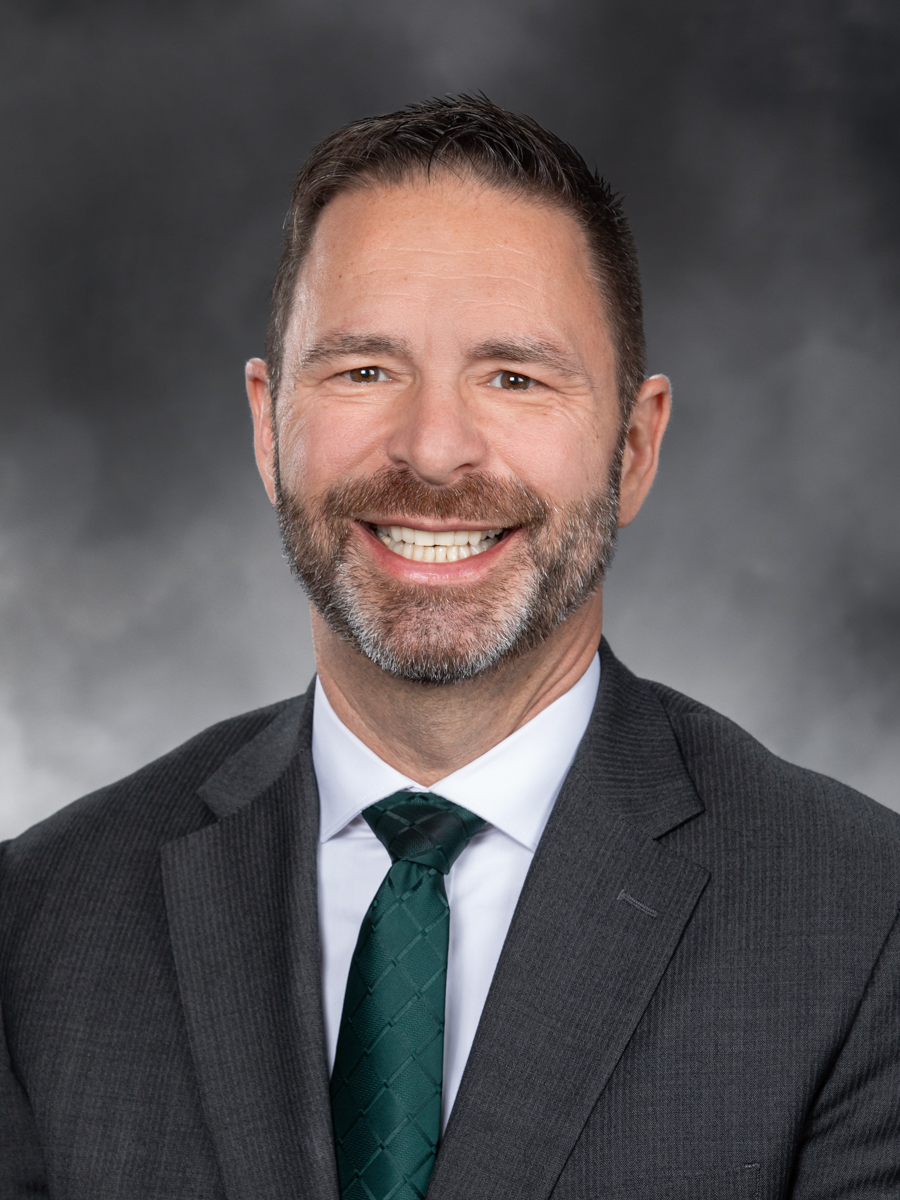
Photo of Dan Griffey
R Washington House · District 35 On the 2026 ballot

Rep. Dan Griffey

Compare
Total votes
6,316
all sessions
Attendance
97%
167 missed
Near the chamber average
With party
94%
of cast votes
Near the chamber average
Bipartisan score
3%
crosses aisle rarely
Near the chamber average
Sponsored
725
bills & resolutions
Near the chamber average
Committees
3
assignments
725 bills and resolutions

Sponsored bills

Total
725
Primary
72
Co-sponsor
653
This page
725
matching current filters
Co-sponsor HB 1367
In committee · Washington House · Co-sponsor
Improving motorcycle safety by authorizing the use of the right shoulder of limited access roadways.

Maddy summaryHB 1367 allows motorcycles to temporarily use the right shoulder of limited-access highways (like freeways) when traffic is stopped or moving at 25 mph or slower. This applies only under specific conditions: motorcycles must not exceed 10 mph faster than adjacent traffic, must travel alone (not two abreast), and must exit the shoulder before exits offering alternative routes or services. The bill amends Washington’s vehicle code to permit this shoulder use while maintaining existing restrictions on lane-sharing and passing. It directly affects motorcycle riders operating in slow-moving or stopped traffic on major highways.

In committee Feb 5, 2026 1 co-sponsor
Co-sponsor HB 2310
In committee · Washington House · Co-sponsor
Concerning criminal classification and penalties for sexually motivated assault in the fourth degree.

Maddy summaryHB 2310 changes sentencing for certain fourth-degree assaults by elevating them to a class C felony when the assault is found to be sexually motivated and the perpetrator has two or more prior convictions for sex offenses within the past decade. It directly affects individuals who commit sexually motivated fourth-degree assaults and have prior adult convictions for offenses like rape, child molestation, or assault with sexual motivation. The bill adds a new provision requiring a "finding of sexual motivation" under existing law (RCW 9.94A.835) to trigger the felony classification, replacing prior domestic violence-based triggers for similar cases. This targets repeat offenders with a history of sex-related crimes, making the sentencing more severe for new sexually motivated assaults in these specific circumstances.

In committee Feb 4, 2026 1 co-sponsor
Co-sponsor HB 2629
In committee · Washington House · Co-sponsor
Protecting critical infrastructure.

Maddy summaryHB 2629 requires scrap metal businesses in Washington to maintain detailed transaction records for all nonferrous metal sales (like copper, aluminum, and brass), including seller identification, vehicle details, and a signed declaration affirming property isn’t stolen. It prohibits cash payments for most transactions, mandates digital photos/videos of materials, and restricts sales to verified commercial accounts. The bill directly affects scrap metal businesses and individual sellers, with penalties for noncompliance. It aims to prevent metal theft by increasing transparency in transactions, not by addressing physical infrastructure protection as the title suggests.

In committee Feb 4, 2026 1 co-sponsor
Primary HB 1529
In committee · Washington House · Lead sponsor
Increasing opportunities for cities to utilize county resources for road construction and maintenance.

Maddy summaryHB 1529 allows cities to contract with counties for road construction and maintenance work without counting that work toward the city's 10% limit on using city employees for public works projects. The bill specifically exempts county-performed road striping and paving from the 10% cap, making it easier for cities - especially rural ones - to access county resources. It also sets dollar limits ($150,000 for multi-trade projects, $75,500 for single-trade) on city employees performing road work and requires cities to report spending to the state auditor. First-class cities must follow these rules when using county crews or city staff for road projects.

In committee Feb 4, 2026 0 co-sponsors
Co-sponsor HB 2566
In committee · Washington House · Co-sponsor
Concerning local government procurement.

Maddy summaryHB 2566 requires Washington counties to use competitive bidding for most local government purchases of supplies, equipment, and public works projects (excluding county hospitals, road funds, and equipment rentals). It sets a $40,000 threshold where simplified bidding may apply for smaller public works contracts and mandates clear advertising, written specifications, and bid deposits for larger projects. The bill limits counties to having public employees perform no more than 10% of annual public works construction (excluding emergencies) and establishes rules for "unit priced contracts" for recurring work like maintenance. These changes aim to standardize procurement processes while providing limited flexibility for small projects and recurring maintenance needs.

In committee Feb 3, 2026 1 co-sponsor
Co-sponsor HB 1622
Passed · Washington House · Co-sponsor
Allowing bargaining over matters related to the use of artificial intelligence.

Maddy summaryHouse Bill 1622 allows public sector employees in Washington state to collectively bargain with their employers over the use of artificial intelligence (AI) in the workplace. The bill amends existing state law to remove the "use of technology" from a list of management rights that are typically not subject to negotiation for employees in higher education and other state agencies. It defines artificial intelligence as machine learning and related technologies that enable computer systems to perform tasks like computer vision or natural language processing. This change empowers unions and public employers to negotiate agreements on the implementation and utilization of AI technologies.

Passed Feb 3, 2026 1 co-sponsor
Co-sponsor HB 2704
In committee · Washington House · Co-sponsor
Requiring all less restrictive alternatives for sexually violent predators to be operated by the department of social and health services or a contracted provider.

Maddy summaryHB 2704 requires that all "less restrictive alternatives" for sexually violent predators - treatment settings less restrictive than total confinement - must be operated directly by Washington's Department of Social and Health Services or by a provider contracted with the department. This applies to individuals convicted of or charged with sexual violence who have a mental abnormality or personality disorder making them likely to commit predatory sexual acts if not confined. The bill explicitly excludes placement in the community protection program (RCW 71A.12.230) from qualifying as a less restrictive alternative. It amends existing statutes to enforce this operational requirement, ensuring such programs meet state oversight standards. This policy change directly affects sexually violent predators under civil commitment proceedings.

In committee Jan 29, 2026 1 co-sponsor
Co-sponsor HB 2209
In committee · Washington House · Co-sponsor
Concerning sentencing enhancements for theft offenses, robbery, possessing stolen property, and trafficking stolen property.

Maddy summaryHB 2209 amends Washington State's sentencing guidelines to add mandatory additional prison time for certain theft, robbery, and stolen property offenses when a firearm or deadly weapon is used. It requires judges to add 5 years for class A felonies, 3 years for class B felonies, or 18 months for class C felonies involving firearms, with similar but shorter additions for deadly weapons (not firearms). These enhancements must be served consecutively to other sentences and are mandatory, with limited exceptions for specific weapon-related crimes. The bill is currently in committee review and has not yet been enacted into law.

In committee Jan 29, 2026 1 co-sponsor
Co-sponsor HR 4675
Passed · Washington House · Co-sponsor
Honoring the Washington National Guard.

Maddy summaryHouse Resolution 4675, adopted on January 28, 2026, is a ceremonial resolution expressing the Washington State House of Representatives' gratitude to the Washington National Guard for their service. It specifically acknowledges the Guard's roles in emergency response (including flood operations and search-and-rescue missions), disaster recovery efforts (like adapting from the Oso landslide), and national defense support (such as aerial refueling capabilities). The resolution directs copies to the Adjutant General, Governor, and other officials but does not create new laws or alter policies. It directly honors National Guard members, their families, and employers without imposing any financial or operational requirements.

Passed Jan 28, 2026 1 co-sponsor
Co-sponsor HB 1809
In committee · Washington House · Co-sponsor
Professionalizing first responders and co-responders through training and reimbursement for behavioral health emergency response.

Maddy summaryHB 1809 requires Washington state to develop and implement a standardized 9-hour training program for emergency medical technicians (EMTs) and paramedics on responding to behavioral health emergencies, such as overdoses and suicidal crises, by July 2026. It creates a voluntary "behavioral health endorsement" for EMTs who complete the training, allowing them to better connect individuals in crisis to community services instead of emergency departments. The bill mandates the Department of Health to adopt rules integrating this training into existing certification programs by January 2027. This aims to reduce reliance on emergency rooms for behavioral health crises while improving first responder preparedness and collaboration with co-response teams.

In committee Jan 28, 2026 1 co-sponsor
Showing 21 to 30 of 725 bills
Previous 1 2 3 4 73 Next