

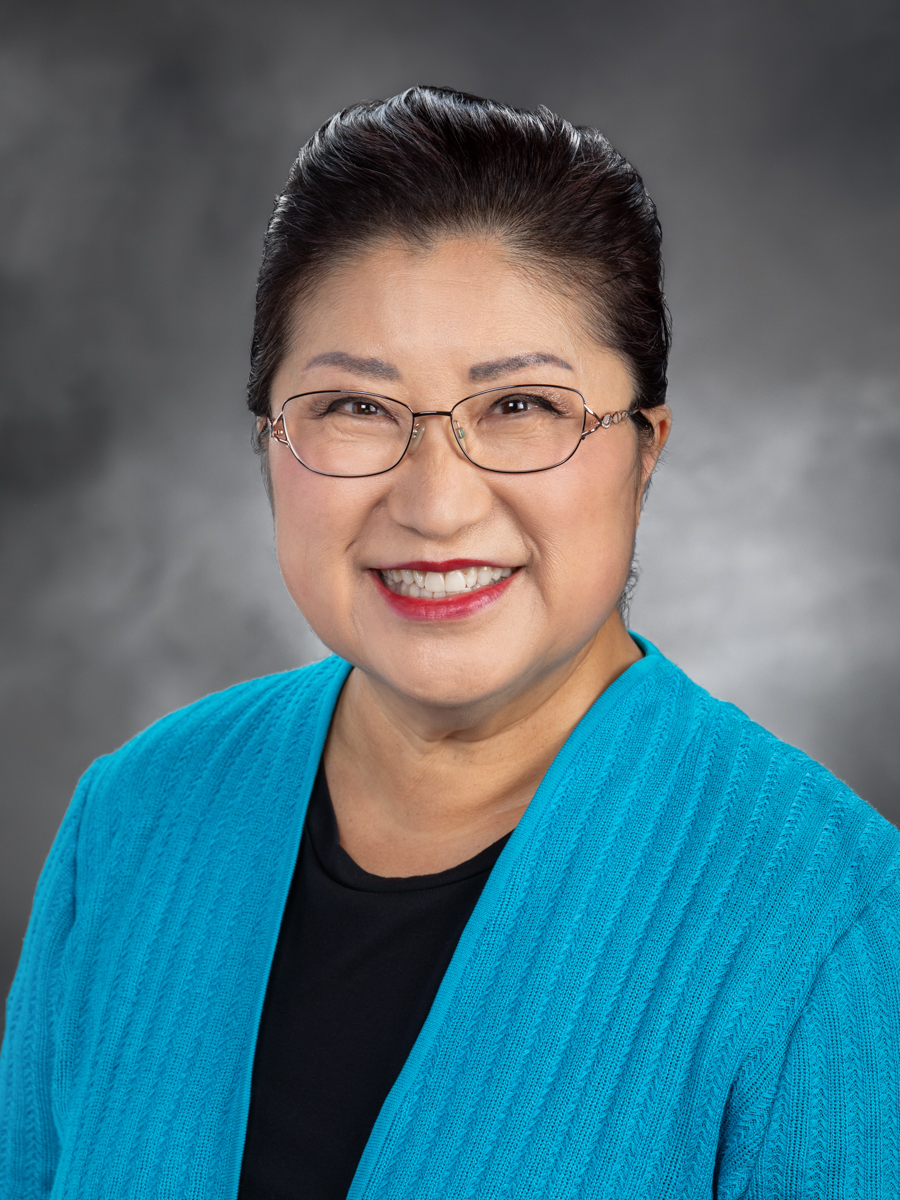
Photo of Cindy Ryu
D Washington House · District 32

Rep. Cindy Ryu

Compare
Total votes
6,316
all sessions
Attendance
99%
41 missed
Near the chamber average
With party
98%
of cast votes
Near the chamber average
Bipartisan score
1%
crosses aisle rarely
Near the chamber average
Sponsored
1,534
bills & resolutions
Higher than 90% of chamber peers
Committees
3
assignments
1,534 bills and resolutions

Sponsored bills

Total
1,534
Primary
115
Co-sponsor
1,419
This page
1,534
matching current filters
Co-sponsor HB 2437
In committee · Washington House · Co-sponsor
Establishing fee authority for accreditation services provided to opioid treatment programs by the department of health.

Maddy summaryHB 2437 allows Washington's Department of Health to establish fees for accrediting opioid treatment programs, which must cover the department's costs for this service. The bill directs the department to set initial and renewal fees after gaining federal approval to accredit such programs under federal rules (42 C.F.R. Part 8). These fees will be used to offset expenses, with the department permitted to draw from opioid abatement settlement funds to cover costs. The bill directly affects opioid treatment programs seeking federal accreditation and the department managing the process.

In committee Feb 3, 2026 1 co-sponsor
Co-sponsor HB 2159
In committee · Washington House · Co-sponsor
Establishing the preK promise account.

Maddy summaryHB 2159 creates a dedicated "preK promise account" managed by the state treasurer to fund Washington's state-funded early childhood education programs. The account receives and tracks donations, grants, and gifts separately from each source, and funds can only be used for eligible children in the existing early childhood education program (RCW 43.216.510). Unlike typical state funds, this account does not require annual appropriations for spending, and any leftover funds accumulate rather than returning to the general fund. The bill directly affects early childhood education programs and the children they serve, establishing a new funding mechanism for these services.

In committee Feb 3, 2026 1 co-sponsor
Co-sponsor HB 2161
In committee · Washington House · Co-sponsor
Concerning the general powers and duties of the attorney general’s office.

Maddy summaryHB 2161 expands the Washington Attorney General's authority to issue written civil investigative demands for documents, testimony, or answers to questions during investigations into potential violations of specific state and federal laws. It directly affects individuals and entities that may possess relevant records or information related to these investigations. The bill establishes clear procedures for these demands, requiring specific details about the investigation, reasonable descriptions of requested materials, and defined timelines, while prohibiting demands that would be unreasonable or require privileged information. It also includes strict confidentiality rules about disclosing the demand itself and limits how produced materials can be shared or used, ensuring the process aligns with standard civil court procedures.

In committee Feb 3, 2026 1 co-sponsor
Co-sponsor HB 2716
In committee · Washington House · Co-sponsor
Restoring the public utility tax credit for low-income assistance.

Maddy summaryHB 2716 restores a tax credit for electric and gas utilities that provide low-income energy assistance, directly affecting these utilities and the low-income households they serve through energy assistance programs. Utilities can claim a 50% tax credit on qualifying contributions (money given to low-income energy assistance programs) and billing discounts (reduced bills for eligible customers) if their spending exceeds 125% of their 2000 levels. The credit is capped at $2.5 million statewide annually, requires annual applications with specific documentation, and expires unused. The bill aims to support existing low-income energy assistance programs by incentivizing utility contributions.

In committee Feb 2, 2026 1 co-sponsor
Co-sponsor HB 2587
In committee · Washington House · Co-sponsor
Establishing a pilot program to advance funds to nonprofits to support grant performance.

Maddy summaryThis bill establishes a temporary pilot program allowing Washington state agencies to advance up to 25% of a grant (capped at $200,000) to eligible public benefit nonprofits. It directly affects nonprofits that received state grants for public health, safety, welfare, or state benefit programs within six months, have a budget under $5 million, and have operated for at least three years with satisfactory past performance. The advance funds must be repaid from future grant payments, require a binding contract, and are limited to one-time use. The program expires June 30, 2029, and requires a 2028 report evaluating its effectiveness and recommending future action.

In committee Feb 2, 2026 1 co-sponsor
Co-sponsor HB 2132
In committee · Washington House · Co-sponsor
Concerning applications for state financial aid.

Maddy summaryHB 2132 protects student privacy for Washington state financial aid applications by making personally identifying and financial information exempt from public records requests. It limits how long institutions and the state council retain application records (one year after the award year ends, unless an audit or appeal is pending) and restricts sharing this data with other entities, including the federal government, without a court order or specific data-sharing agreements. The bill directly affects students applying for state financial aid (excluding the federal FAFSA) and state agencies handling these applications. Key provisions include strict privacy safeguards for sensitive data and clear limits on data sharing to prevent unauthorized disclosure.

In committee Feb 2, 2026 1 co-sponsor
Co-sponsor HB 2212
In committee · Washington House · Co-sponsor
Reducing microplastic pollution from washing machines.

Maddy summaryHB 2212 requires new commercial and industrial washing machines sold in Washington to include microfiber filters that capture tiny plastic fibers (under 5mm) starting July 1, 2028, with existing machines needing filters by July 1, 2034. It mandates clear labeling on machines and regular filter maintenance to prevent microplastics - released in high numbers per laundry load - from entering waterways. The bill also allows for future residential machine requirements if other states adopt similar rules and costs stay below $70 per unit. Violations face civil penalties up to $10,000 per offense, enforced by the Department of Ecology. This targets a major pollution source linked to health and marine ecosystem risks.

In committee Feb 2, 2026 1 co-sponsor
Co-sponsor HB 2435
In committee · Washington House · Co-sponsor
Creating the legislative office on Indian affairs.

Maddy summaryHB 2435 creates a new legislative office on Indian affairs to provide educational resources and support to Washington State legislators and professional legislative staff regarding tribal affairs and the state's government-to-government relationship with tribes. The office will offer mandatory annual training for staff on tribal sovereignty, cultural awareness, policy best practices, and terminology, plus assistance in locating resources on tribal issues. It aims to complement the governor's office of Indian affairs - without replacing it or acting as a direct liaison to tribal leaders - by coordinating with legislative committees to incorporate tribal policy guidance into bill drafting. The office will operate under existing legislative funding and administrative structures, with defined roles for its director and staff.

In committee Jan 30, 2026 1 co-sponsor
Co-sponsor HB 2708
In committee · Washington House · Co-sponsor
Removing a tax exemption for the replacement of equipment for data centers.

Maddy summaryHB 2708 removes a tax exemption for data center equipment replacement in Washington State, directly affecting data center operators currently using this exemption. The bill eliminates the tax break for purchasing new server equipment and power infrastructure, with existing exemptions set to expire by July 2048. It also requires qualifying data centers to meet new employment thresholds - adding 35 family wage jobs or 3 per 20,000 sq ft of new server space - to maintain their exemption. New exemption certificates for refurbished data centers can no longer be issued after July 2026, and all new applications for this exemption are prohibited after that date.

In committee Jan 30, 2026 1 co-sponsor
Co-sponsor HB 2446
In committee · Washington House · Co-sponsor
Developing the quantum technology industry into the state's economic development and workforce.

Maddy summaryHB 2446 requires Washington's Department of Commerce to develop a state quantum technology strategy by June 2027, directly affecting state agencies, research institutions (like public universities and the Pacific Northwest National Laboratory), and businesses in the quantum industry. The strategy must analyze the current quantum sector, identify public-private partnerships, explore workforce development, and outline how to attract federal funding and private investment. It mandates the department to seek non-state funding and contract with Washington-based quantum organizations to support this effort. The bill expires August 1, 2027, and aims to position Washington competitively amid growing national investments in quantum technology.

In committee Jan 30, 2026 1 co-sponsor
Showing 121 to 130 of 1,534 bills
Previous 1 12 13 14 154 Next