

Maddy summaryHB 2580 increases state funding to supplement school districts' local enrichment levies in Washington. It provides additional state funds based on a district's actual levy rate: districts with rates below $1.50 per $1,000 assessed value receive funding proportional to their rate, while those at or above $1.50 receive full maximum assistance. Tribal education compact schools receive per-student funding up to $2,692.74 (adjusted for inflation starting 2028), calculated using prior year data. The bill takes effect January 1, 2027, and does not count toward the state's basic education funding.
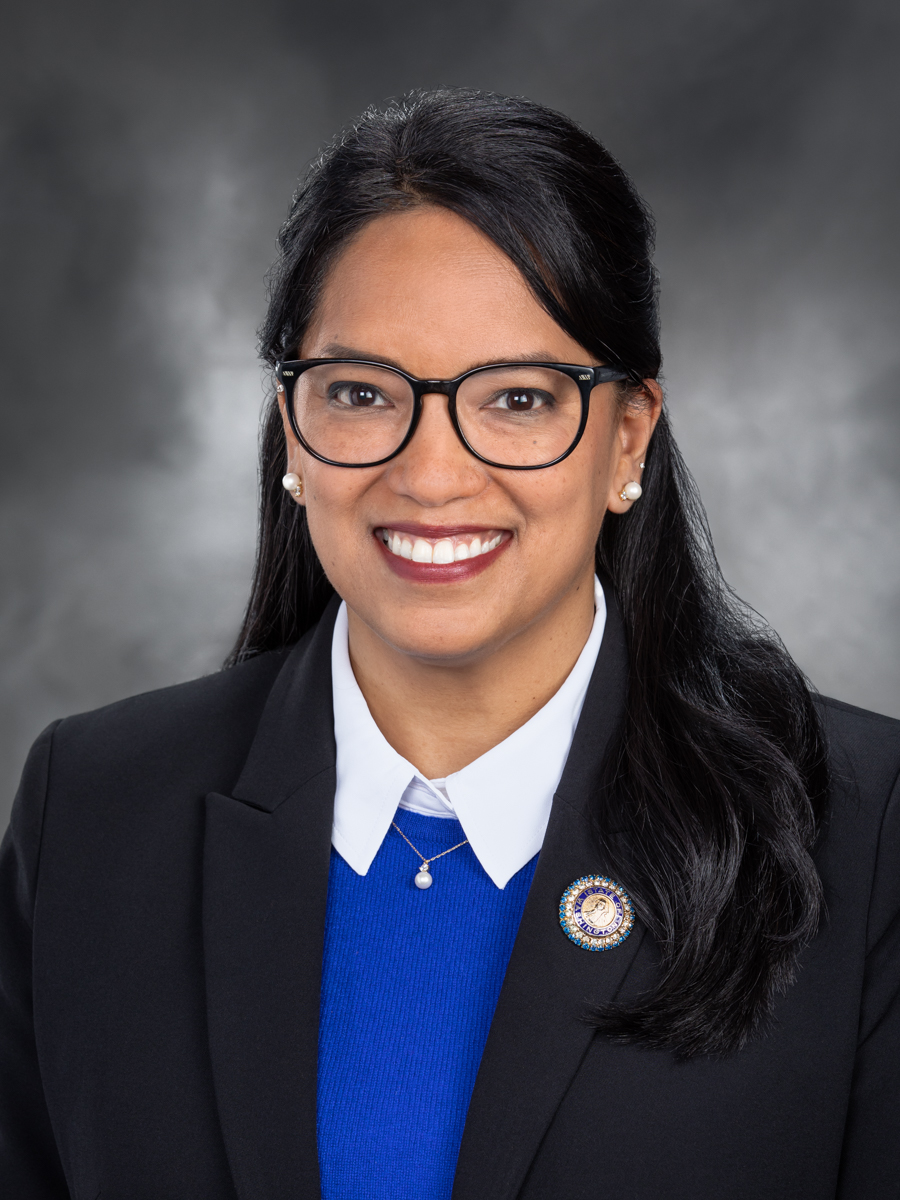
Rep. Kristine Reeves
Sponsored bills
Maddy summaryHB 2279 requires Washington's Department of Agriculture to evaluate the use of PFAS chemicals (known as "forever chemicals") in agricultural fertilizers and pesticides. By December 2026, the department must establish criteria to assess these chemicals, and starting in December 2027, it will review new fertilizer and pesticide registrations against these standards. Products containing PFAS that fail to meet the criteria may be refused or canceled for registration. This directly affects fertilizer and pesticide manufacturers, as well as farmers who rely on these agricultural products. The bill does not ban PFAS outright but creates a new review process for future product registrations.
Maddy summaryHB 2400 requires vloggers earning $12,000+ annually from compensated social media video content to register with Washington’s Department of Revenue as conducting business (Sec. 2). It mandates social media platforms and advertisers to set up trust accounts for minor children appearing in paid videos, withholding a pro-rata percentage of compensation based on the child’s screen time (Sec. 3). Platforms with Washington nexus must annually report detailed data to the Department, including creator counts, revenue from minors’ content, and video segment volumes (Sec. 4). The bill directly affects compensated vloggers, platforms, and advertisers, creating new registration, trust-fund, and reporting obligations.
Maddy summaryHB 2237 requires the Washington State Fire Marshal's Office (SFMO) to set deputy state fire marshal salaries competitive with local fire departments, using a specific salary survey. It mandates the Office of Financial Management to compare compensation (including base pay, premiums, education, and longevity pay) against seven major local agencies like Seattle and Spokane fire departments, updating this comparison every four years starting September 2026. The bill also directs the State Fire Service Policy Board to examine whether the SFMO should operate independently from the state patrol, reporting by December 2026. This aims to address staffing shortages caused by lower SFMO pay compared to local departments.
Maddy summaryHB 2171 creates a statewide alert system to protect foster youth who go missing, requiring Washington State Patrol and child welfare agencies to issue public alerts within 24 hours of a report. It mandates counties to form rapid response teams with law enforcement and advocates to locate missing youth and establishes a foster youth empowerment account funding mental health therapy, emergency support, and peer mentorship for up to 10 years after youth exit foster care. The bill also creates an oversight board of former foster youth and trauma experts to review missing or deceased cases and recommend system improvements. These provisions directly affect foster youth in Washington’s dependency system (under chapter 13.34 RCW), aiming to reduce trafficking risks and improve support through coordinated response and long-term services.
Maddy summaryHB 2561 amends Washington's retirement law to include standby pay as part of the "basic salary" used to calculate retirement benefits for law enforcement officers and firefighters enrolled in Plan 2. Specifically, it requires that compensation received while in "standby status" (paid time when not working but required to be available for immediate duty) be counted toward retirement benefits, alongside regular wages. This change directly affects current and future Plan 2 members in these professions, ensuring their retirement income reflects all earned compensation during standby periods. The bill explicitly excludes vacation pay, sick leave, and severance from this calculation. It does not alter existing retirement benefit formulas but clarifies which compensation types are included in the base salary calculation.
Maddy summaryHB 2562 increases state funding for school districts that collect local enrichment levies, adjusting the target rate from $1.50 to $2.50 per $1,000 of property value. It calculates state assistance based on a district’s actual levy rate relative to this $2.50 target, with a per-student funding threshold of $3,838 (adjusted for inflation starting in 2027). The bill directly affects public school districts and state-tribal education compact schools, ensuring state support aligns with local levy efforts. It takes effect January 1, 2027, and does not count toward the state’s constitutionally required basic education funding.
Maddy summaryThis is a ceremonial House resolution (not a policy bill) introduced on January 19, 2026, by multiple Washington State Representatives. It formally recognizes Dr. Martin Luther King Jr.'s life, legacy of nonviolent activism, and contributions to civil rights, including his role in the Civil Rights Act of 1964 and Voting Rights Act of 1965. The resolution expresses the House's commitment to upholding Dr. King's ideals of equality, justice, and opportunity for all. As a symbolic gesture, it does not create new laws, allocate funds, or affect any specific individuals or groups.
Maddy summaryHB 2535 requires all public college and university student health centers in Washington to offer medication abortion access by the 2027-28 academic year, either through telehealth agreements with safety-net abortion providers or other cost-effective methods. Institutions without student health centers must provide referrals to abortion services and train staff on campus resources for telehealth appointments. The bill also mandates that all public colleges maintain a dedicated webpage with clear information on reproductive health services, including scheduling, academic accommodations, and links to state health resources. This law directly affects approximately 196,000 pregnancy-capable students at Washington's public institutions by reducing travel barriers and integrating abortion care into campus health services.
Maddy summaryHB 2533 modifies Washington state procedures for releasing sexually violent predators to less restrictive community placements. It requires counties to have adequate placement options proportional to their population of confined predators (a "fair share" requirement) and allows counties to reject placements that don't meet this standard, particularly if the placement would occur near schools, parks, or other "risk potential facilities" listed in the bill. The bill amends statutes to clarify definitions like "less restrictive alternative" and prohibits placements in community programs already covered under separate laws. These changes aim to balance public safety with individual release considerations while ensuring geographic fairness in placement distribution.