

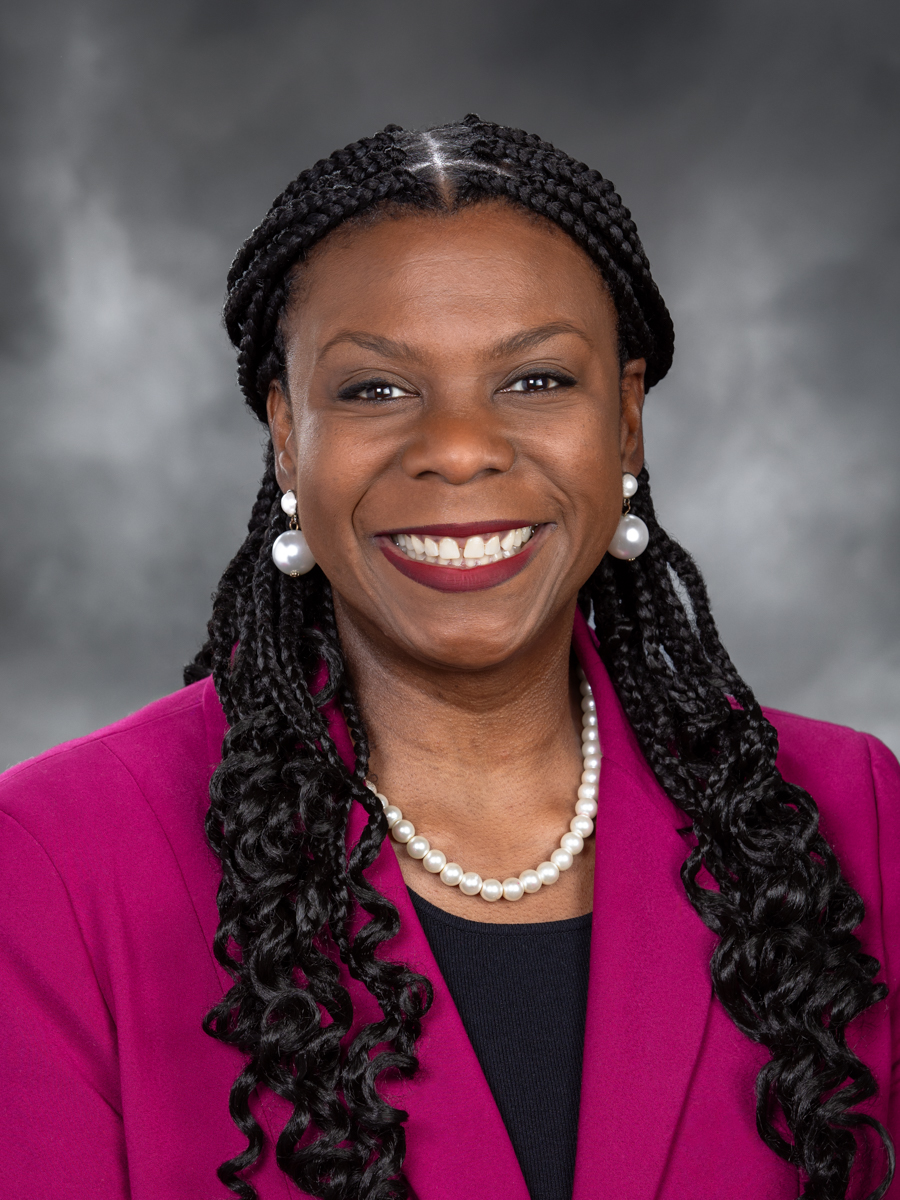
Photo of Jamila Taylor
D Washington House · District 30 On the 2026 ballot

Rep. Jamila Taylor

Compare
Total votes
3,509
all sessions
Attendance
99%
43 missed
Lower than 77% of chamber peers
With party
99%
of cast votes
Higher than 93% of chamber peers
Bipartisan score
0%
crosses aisle rarely
Lower than 95% of chamber peers
Sponsored
536
bills & resolutions
Near the chamber average
Committees
4
assignments
536 bills and resolutions

Sponsored bills

Total
536
Primary
54
Co-sponsor
482
This page
536
matching current filters
Co-sponsor HB 2394
In committee · Washington House · Co-sponsor
Enhancing public safety and enforcement of crimes that impact insurance.

Maddy summaryHB 2394 updates Washington's insurance fraud laws to better address modern schemes. It clarifies definitions of "insurer" to include health care service contractors and health maintenance organizations, and explicitly lists fraud types like submitting false medical bills, embezzling premiums, or misrepresenting insurance claims. The bill upgrades insurance fraud to a class B felony and requires restitution for insurers and victims. This directly affects insurers, consumers, and individuals committing fraud involving insurance claims or payments.

In committee Feb 3, 2026 1 co-sponsor
Co-sponsor HB 1622
Passed · Washington House · Co-sponsor
Allowing bargaining over matters related to the use of artificial intelligence.

Maddy summaryHouse Bill 1622 allows public sector employees in Washington state to collectively bargain with their employers over the use of artificial intelligence (AI) in the workplace. The bill amends existing state law to remove the "use of technology" from a list of management rights that are typically not subject to negotiation for employees in higher education and other state agencies. It defines artificial intelligence as machine learning and related technologies that enable computer systems to perform tasks like computer vision or natural language processing. This change empowers unions and public employers to negotiate agreements on the implementation and utilization of AI technologies.

Passed Feb 3, 2026 1 co-sponsor
Co-sponsor HB 2212
In committee · Washington House · Co-sponsor
Reducing microplastic pollution from washing machines.

Maddy summaryHB 2212 requires new commercial and industrial washing machines sold in Washington to include microfiber filters that capture tiny plastic fibers (under 5mm) starting July 1, 2028, with existing machines needing filters by July 1, 2034. It mandates clear labeling on machines and regular filter maintenance to prevent microplastics - released in high numbers per laundry load - from entering waterways. The bill also allows for future residential machine requirements if other states adopt similar rules and costs stay below $70 per unit. Violations face civil penalties up to $10,000 per offense, enforced by the Department of Ecology. This targets a major pollution source linked to health and marine ecosystem risks.

In committee Feb 2, 2026 1 co-sponsor
Primary HB 2419
In committee · Washington House · Lead sponsor
Concerning participation in the address confidentiality program by administrative law judges and staff employed by the office of administrative hearings.

Maddy summaryHB 2419 expands Washington's address confidentiality program to include administrative law judges and staff employed by the Office of Administrative Hearings. It allows these employees, who face safety threats related to their work, to apply for a confidential address through the Secretary of State. The bill requires a sworn statement confirming safety concerns and directs the Department of Licensing to update vehicle registration records using the confidential address, ensuring their personal information remains protected.

In committee Jan 30, 2026 0 co-sponsors
Primary HB 2455
In committee · Washington House · Lead sponsor
Creating a housing assistance pilot program for youth enrolled in extended foster care.

Maddy summaryHB 2455 creates a two-year housing assistance pilot program for up to 50 youth in Washington's extended foster care system who are homeless or at imminent risk of homelessness. The program provides rental assistance covering up to 24 months (until age 21), with participants paying no more than 30% of their income toward rent, based on local fair market rent. It requires the Department of Children, Youth, and Families to conduct transition planning for youth turning 21 and mandates a 2029 report detailing program outcomes, participant demographics, and costs by county. The bill directly affects youth aged 18-21 in extended foster care who face housing instability while navigating federal housing programs.

In committee Jan 28, 2026 0 co-sponsors
Co-sponsor HR 4675
Passed · Washington House · Co-sponsor
Honoring the Washington National Guard.

Maddy summaryHouse Resolution 4675, adopted on January 28, 2026, is a ceremonial resolution expressing the Washington State House of Representatives' gratitude to the Washington National Guard for their service. It specifically acknowledges the Guard's roles in emergency response (including flood operations and search-and-rescue missions), disaster recovery efforts (like adapting from the Oso landslide), and national defense support (such as aerial refueling capabilities). The resolution directs copies to the Adjutant General, Governor, and other officials but does not create new laws or alter policies. It directly honors National Guard members, their families, and employers without imposing any financial or operational requirements.

Passed Jan 28, 2026 1 co-sponsor
Primary HB 2550
In committee · Washington House · Lead sponsor
Adding certain students at certain community and technical colleges to the passengers that must be allowed to ride transit for free under the transit support grant program.

Maddy summaryHB 2550 expands Washington state's transit support grant program to include students enrolled in degree- or certificate-seeking programs at community and technical colleges as free-ride passengers. This directly affects community and technical college students and transit agencies receiving state grants, requiring them to adopt a zero-fare policy for this group to qualify for funding. Transit agencies must document this policy by October 1, 2022, and track trips taken under the program. The bill amends existing law to add these students to the existing free-ride eligibility for youth 18 and under, with agencies aligning implementation with equity principles.

In committee Jan 28, 2026 0 co-sponsors
Primary HB 2700
In committee · Washington House · Lead sponsor
Requiring arbitration for tort claims against the state of Washington and its subdivisions.

Maddy summaryHB 2700 requires all tort claims (injuries caused by government negligence, such as accidents on public property or by public employees) against Washington State or its local government subdivisions to go through mandatory arbitration before trial, for any amount of money sought. This applies directly to individuals seeking compensation for injuries caused by state or local government actions, and to the state and its agencies as defendants. The bill amends existing law to make arbitration mandatory for these claims, removing the previous $15,000 or $100,000 monetary thresholds that applied to private cases. The law takes immediate effect as an emergency measure to protect public finances while establishing a structured process for resolving such claims.

In committee Jan 28, 2026 0 co-sponsors
Co-sponsor HB 2227
In committee · Washington House · Co-sponsor
Providing a real estate excise tax exemption for the sale of qualified affordable housing.

Maddy summaryHB 2227 would exempt sales of "qualified affordable housing" from Washington's real estate excise tax. This bill amends the state's tax code (RCW 82.45.010) to create this specific exemption for qualifying affordable housing properties. The exemption directly affects sellers of eligible affordable housing units, reducing their tax burden when selling such properties. The bill is currently pending in the House Finance Committee after being prefaced in December 2025.

In committee Jan 27, 2026 1 co-sponsor
Co-sponsor HB 2313
In committee · Washington House · Co-sponsor
Concerning publicly owned grocery stores.

Maddy summaryHB 2313 authorizes Washington cities to establish publicly owned grocery stores in underserved areas with food access gaps. Cities can acquire property (including via eminent domain), apply for state capital grants covering building rehabilitation and 24-hour "food locker systems," and use tax increment financing to fund store development and infrastructure. The bill requires annual reporting on financial status, community access, jobs created, and for third-party operated stores, sales data and compliance with contractual benchmarks like local produce sourcing. This directly affects cities seeking to address food insecurity through municipal grocery initiatives.

In committee Jan 27, 2026 1 co-sponsor
Showing 51 to 60 of 536 bills
Previous 1 … 5 6 7 … 54 Next