

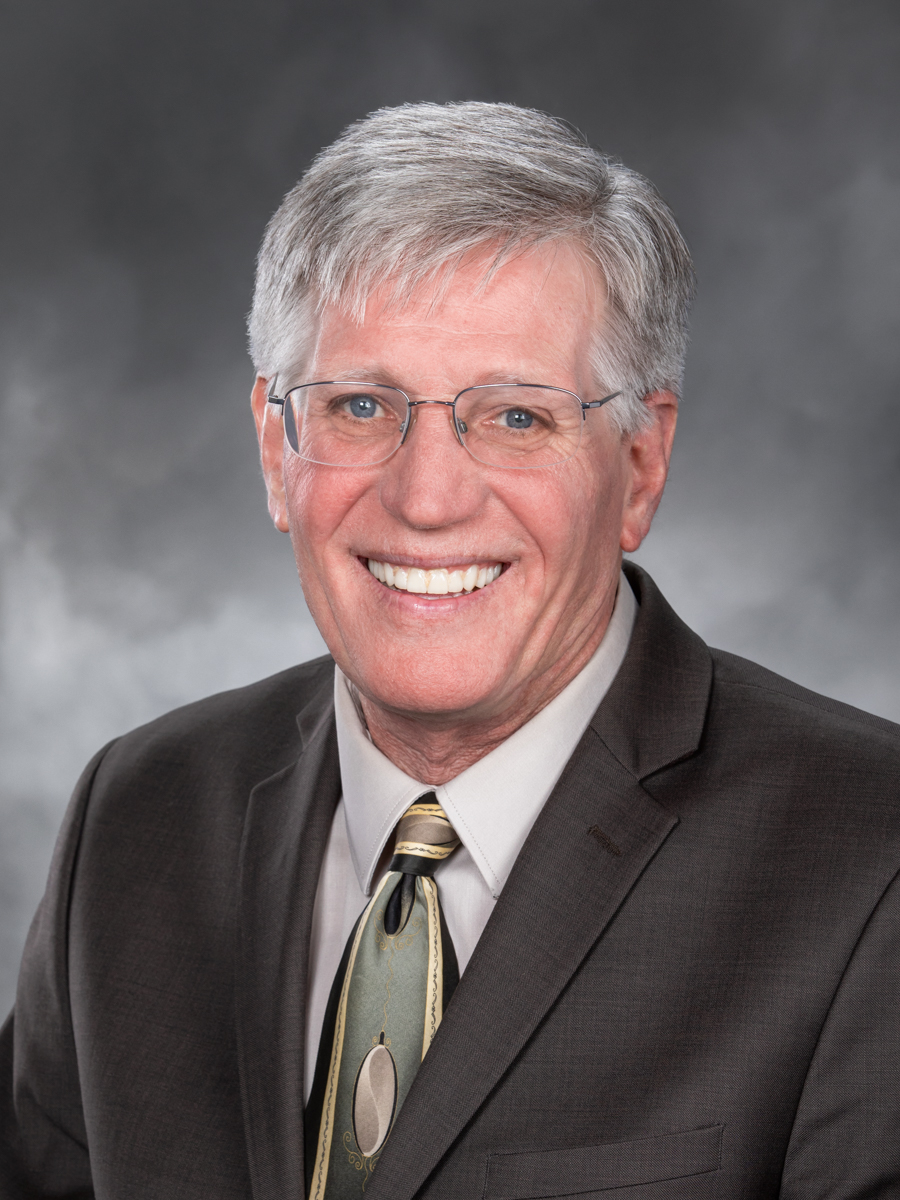
Photo of Timm Ormsby
D Washington House · District 3

Rep. Timm Ormsby

Compare
Total votes
6,316
all sessions
Attendance
99%
41 missed
Near the chamber average
With party
99%
of cast votes
Near the chamber average
Bipartisan score
0%
crosses aisle rarely
Near the chamber average
Sponsored
1,706
bills & resolutions
Higher than 94% of chamber peers
Committees
4
assignments
1,706 bills and resolutions

Sponsored bills

Total
1,706
Primary
84
Co-sponsor
1,622
This page
1,706
matching current filters
Co-sponsor HB 2707
In committee · Washington House · Co-sponsor
Removing a tax exemption for the warehousing and reselling of prescription drugs.

Maddy summaryHB 2707 ends a tax exemption for drug wholesalers and retailers that warehouse and resell prescription drugs, requiring them to pay a 0.5% tax on their gross income starting January 1, 2027. The bill directly affects businesses registered with the federal Drug Enforcement Administration and licensed by Washington’s Pharmacy Quality Assurance Commission. It repeals the existing tax exemption (RCW 82.04.272) and adds the activity to the state’s taxable business list under RCW 82.04.280. The change aims to generate revenue for state services by updating outdated tax preferences.

In committee Jan 30, 2026 1 co-sponsor
Primary HB 2706
In committee · Washington House · Lead sponsor
Creating an administrative process for adjudicating department of children, youth, and families tort claims against the state.

Maddy summaryHB 2706 creates a claims commission within the Office of Administrative Hearings to handle historical tort claims against the Department of Children, Youth, and Families (DCYF) for incidents occurring before 2020. The commission, made up of an administrative law judge, a trauma specialist, a plaintiff's attorney, and state agency representatives, will review claims that meet existing filing requirements, with the state having sovereign immunity for these claims. Claimants who accept the commission’s award cannot pursue further legal action, but those dissatisfied may request a trial in superior court, aiming to reduce the state’s financial burden from a sharp rise in claims (from 157 in 2019 to 1,455 in 2025).

In committee Jan 29, 2026 0 co-sponsors
Co-sponsor HB 2704
In committee · Washington House · Co-sponsor
Requiring all less restrictive alternatives for sexually violent predators to be operated by the department of social and health services or a contracted provider.

Maddy summaryHB 2704 requires that all "less restrictive alternatives" for sexually violent predators - treatment settings less restrictive than total confinement - must be operated directly by Washington's Department of Social and Health Services or by a provider contracted with the department. This applies to individuals convicted of or charged with sexual violence who have a mental abnormality or personality disorder making them likely to commit predatory sexual acts if not confined. The bill explicitly excludes placement in the community protection program (RCW 71A.12.230) from qualifying as a less restrictive alternative. It amends existing statutes to enforce this operational requirement, ensuring such programs meet state oversight standards. This policy change directly affects sexually violent predators under civil commitment proceedings.

In committee Jan 29, 2026 1 co-sponsor
Co-sponsor HB 2217
In committee · Washington House · Co-sponsor
Concerning rehabilitative pathways for persons charged with certain felony offenses who have no prior felony convictions in adult criminal court.

Maddy summaryHB 2217 creates a rehabilitative pathway for individuals in Washington state charged with certain non-violent, non-sex felony offenses who have no prior felony convictions. Eligible defendants may request a court to defer conviction and sentencing for up to one year, during which they must comply with conditions like community service or treatment. If they successfully complete the deferral period, the charges are dismissed; if not, they face sentencing for the original offense. The bill excludes violent offenses, most drug crimes, and certain DUI charges from eligibility.

In committee Jan 29, 2026 1 co-sponsor
Co-sponsor HR 4675
Passed · Washington House · Co-sponsor
Honoring the Washington National Guard.

Maddy summaryHouse Resolution 4675, adopted on January 28, 2026, is a ceremonial resolution expressing the Washington State House of Representatives' gratitude to the Washington National Guard for their service. It specifically acknowledges the Guard's roles in emergency response (including flood operations and search-and-rescue missions), disaster recovery efforts (like adapting from the Oso landslide), and national defense support (such as aerial refueling capabilities). The resolution directs copies to the Adjutant General, Governor, and other officials but does not create new laws or alter policies. It directly honors National Guard members, their families, and employers without imposing any financial or operational requirements.

Passed Jan 28, 2026 1 co-sponsor
Co-sponsor HB 2700
In committee · Washington House · Co-sponsor
Requiring arbitration for tort claims against the state of Washington and its subdivisions.

Maddy summaryHB 2700 requires all tort claims (injuries caused by government negligence, such as accidents on public property or by public employees) against Washington State or its local government subdivisions to go through mandatory arbitration before trial, for any amount of money sought. This applies directly to individuals seeking compensation for injuries caused by state or local government actions, and to the state and its agencies as defendants. The bill amends existing law to make arbitration mandatory for these claims, removing the previous $15,000 or $100,000 monetary thresholds that applied to private cases. The law takes immediate effect as an emergency measure to protect public finances while establishing a structured process for resolving such claims.

In committee Jan 28, 2026 1 co-sponsor
Co-sponsor HB 2516
In committee · Washington House · Co-sponsor
Placing a moratorium on the use of certain rodenticides.

Maddy summaryHB 2516 places a two-year moratorium (January 2027-December 2028) on the use of anticoagulant rodenticides and rodenticides containing bromethalin, prohibiting their sale and application except for limited emergencies like drinking water protection or disease control. The bill requires the Washington State Academy of Sciences to study rodenticide impacts on wildlife and research safer alternatives, with findings due by December 2028. This directly affects pest control professionals, property managers, and agricultural operations that currently use these chemicals. The moratorium expires June 30, 2029, unless extended by future legislation.

In committee Jan 27, 2026 1 co-sponsor
Co-sponsor HB 2676
In committee · Washington House · Co-sponsor
Implementing efficiencies and programming changes in public education.

Maddy summaryHB 2676 establishes a reimbursement system for school districts purchasing student transportation vehicles, based on vehicle category, expected lifespan (minimum 15 years), and inflation. It requires districts to maintain vehicles properly or face reduced future reimbursements. The bill also mandates that all school districts provide a standardized online "high school and beyond plan" platform for students by the 2020-21 school year, featuring automatic grade updates, multilingual support, and privacy controls. The Superintendent of Public Instruction must select a vendor for this platform by June 2024 and develop a statewide implementation plan by October 2024. These changes directly affect public school districts, transportation providers, and students in Washington State.

In committee Jan 27, 2026 1 co-sponsor
Co-sponsor HB 2542
In committee · Washington House · Co-sponsor
Requiring use of alternatives to animal testing methods.

Maddy summaryHB 2542 requires Washington-based animal testing facilities, contract testing facilities, and drug manufacturers to use non-animal test methods for drug development when scientifically valid alternatives are available. It prohibits the use of animal test methods in the drug development process (including discovery and preclinical research) if equivalent or better alternatives exist, defined as methods validated by federal bodies that don’t involve animals. The law does not apply if federal regulations mandate animal testing, and violations are treated as unfair trade practices under Washington’s consumer protection law. This directly affects entities conducting drug safety and efficacy testing within the state, aiming to align with federal policy supporting non-animal testing methods.

In committee Jan 27, 2026 1 co-sponsor
Co-sponsor HB 2117
In committee · Washington House · Co-sponsor
Adding a tribal member to the board of natural resources.

Maddy summaryHB 2117 adds a seventh member to Washington's Board of Natural Resources, specifically a tribal representative appointed by the governor from federally recognized tribes in the state. The bill amends the board's composition to include this position, requiring the governor to consult with tribes during appointments and ensuring the representative serves a four-year term starting July 1, 2026. This change directly affects the board's decision-making process on natural resource management and requires collaboration with tribal nations. The bill aims to incorporate tribal perspectives and expertise into state forestland and natural resource policies.

In committee Jan 27, 2026 1 co-sponsor
Showing 121 to 130 of 1,706 bills
Previous 1 12 13 14 171 Next