

Maddy summaryHB 2000 requires Washington's law enforcement memorial to include names of state officers deemed to have died "in the line of duty" under the federal Hometown Heroes Survivors Benefits Act of 2003 (as certified by the U.S. Department of Justice). It applies retroactively to officers who died on or after January 1, 2020, and mandates that once certified, their names be added to the memorial during the next scheduled wall update. This bill directly affects Washington law enforcement officers who qualify under the federal standard, ensuring their names are recognized on the state memorial. The change is procedural, focusing on administrative inclusion rather than altering benefits or policies.
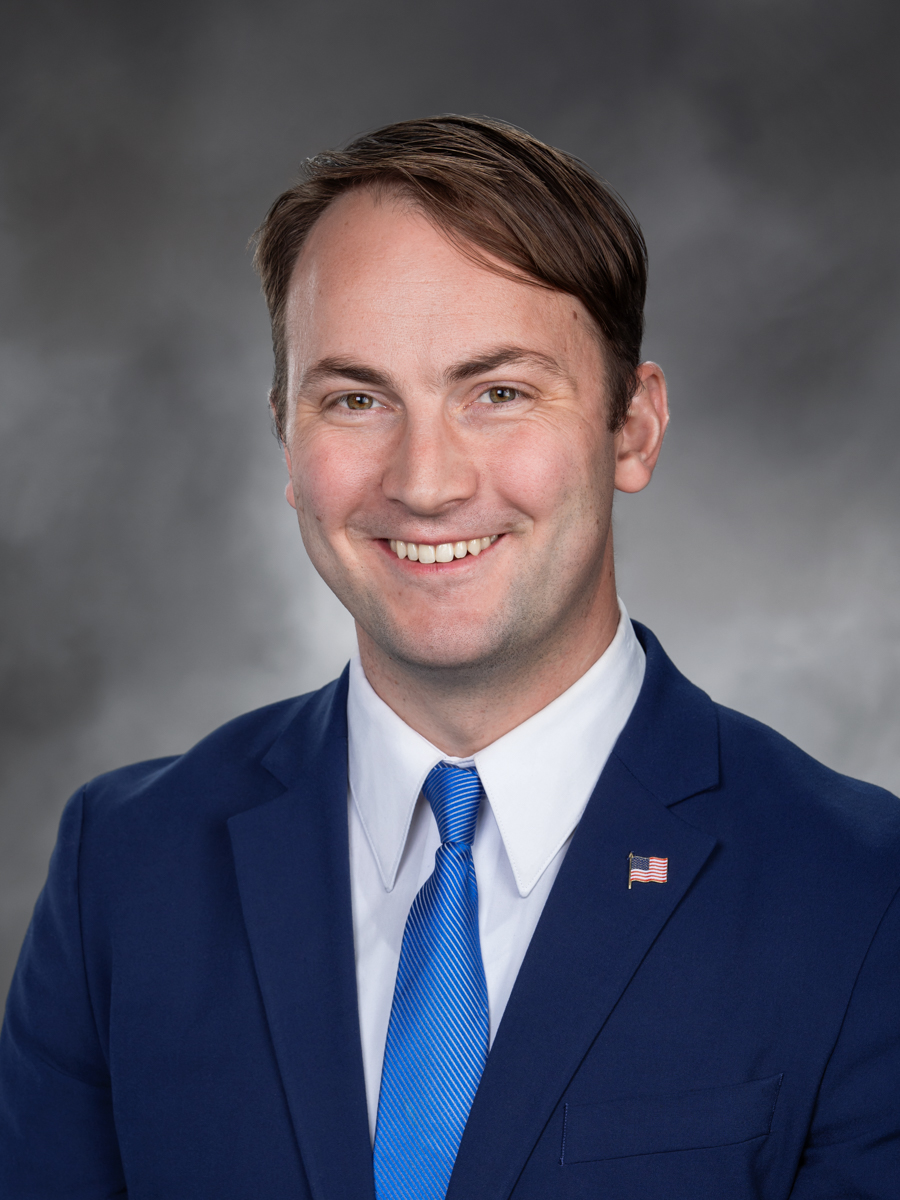
Rep. Adison Richards
Sponsored bills
Maddy summaryHB 1004 increases Washington State's personal property tax exemption from $15,000 to $50,000 for individual taxpayers. It directly affects residents owning personal property (like furniture, jewelry, or equipment) valued under $50,000, excluding private vehicles and mobile homes. To claim the exemption, taxpayers must attest under penalty of perjury that their total personal property value is below $50,000 and they are claiming only one exemption statewide. The bill amends existing tax code sections to reflect this change and requires county assessors to verify claims. The exemption would take effect January 1, 2026, contingent on voter approval of a related constitutional amendment.
Maddy summaryHB 1751 exempts required course materials (like textbooks and digital resources) from Washington state sales and use taxes for students enrolled at public colleges and universities. It requires students to show valid enrollment proof at approved vendors (campus bookstores or institution-designated online sellers) to qualify for the exemption. Public institutions must inform students about this tax break via their websites and course syllabi. The bill directly affects all students at Washington’s public higher education institutions by reducing out-of-pocket costs for essential learning materials, which the legislature notes are increasingly unaffordable (65% of students skip buying textbooks due to cost).
Maddy summaryHB 1040 allows people eligible for Washington’s property tax exemption programs (for seniors or disabled residents) to exclude up to $6,000 annually in rental income from their primary residence when calculating income eligibility for the exemption. This applies only to long-term rentals (not short-term rentals like Airbnb, which must still be reported as taxable income). The bill amends existing tax code to include rental income as part of "combined disposable income" calculations, adjusting how income thresholds are applied. It directly affects low-income homeowners in qualifying exemption programs who rent out space in their primary home.
Maddy summaryHB 1830 requires schools, educational organizations, and their contractors to conduct fingerprint-based background checks through Washington State Patrol and FBI systems for employees and volunteers with regularly scheduled unsupervised access to children under 18 or people with developmental disabilities. This applies to volunteers working with small groups (5 or fewer children under 12, 3 or fewer aged 12-18, or individuals with developmental disabilities) without supervision from staff or guardians. Existing background checks conducted within the previous two years may be used instead of new checks, and costs include state/federal fees plus administrative charges. The bill specifies the process for conducting checks, limits database access, and outlines disqualification notification procedures.
Maddy summaryHB 1804 amends Washington state law to make community solar projects more accessible, particularly for low-income households and smaller projects. It clarifies definitions (like "community solar company" and "project participant"), sets a maximum system size of 1,000 kilowatts, and requires projects to have at least two subscribers or one low-income service provider. Key provisions include reserving $50 million in incentives for projects under 199 kilowatts and adding labor standards - such as prevailing wages and apprenticeship requirements - for larger projects (199-999 kW). The bill directly affects community solar administrators, low-income service providers, and solar construction workers, while ensuring electric utilities can interconnect these projects.
Maddy summaryHB 1179 would allow Washington seniors aged 61+ and disabled veterans with VA disability ratings of 80% or higher to freeze their property tax valuation. Qualifying residents would pay no tax on a portion of their home's value based on income: lower-income households get full relief on all taxes, while others receive partial relief up to $70,000 of home value. The exemption uses "combined disposable income" to determine eligibility and applies the frozen valuation (based on 1995 or qualification year) to reduce taxes. This law would take effect for property taxes collected starting in 2026.
Maddy summaryHB 1388 establishes a mobile market program in Washington to expand access to fresh, healthy food for low-income households participating in the Women, Infants, and Children (WIC) and senior farmers market nutrition programs. The bill allows nonprofit mobile markets - operating in areas without farmers markets - to accept these nutrition benefits, directly supporting rural and food desert communities. Key provisions require mobile markets to be nonprofit, serve underserved areas, and obtain USDA approval via waiver to accept benefits. This policy change modernizes existing federal nutrition programs by extending access to mobile food services, benefiting both participants and local farmers.
Maddy summaryHB 1423 authorizes cities in Washington State with populations of at least 2,000 to participate in a pilot program using automated vehicle noise enforcement cameras. These cameras would be deployed in designated "vehicle-racing camera enforcement zones" to detect vehicles exceeding maximum permissible sound levels. The Washington Traffic Safety Commission is tasked with overseeing this program and reporting on its implementation and findings to the legislature by January 2028. The section establishing this pilot program is set to expire in July 2028.
Maddy summaryHB 1896 authorizes counties and cities in Washington to impose a 0.1% local sales and use tax, with the revenue credited against state tax obligations, to fund hiring additional commissioned law enforcement officers. The bill requires that funds be used primarily for hiring officers to reach at least the national average of officers per capita, with limited exceptions for "criminal justice purposes" like domestic violence services or homelessness programs. It also expands the Criminal Justice Training Commission’s mandate to increase the number of basic law enforcement training courses. The legislation aims to address Washington’s low law enforcement officer-to-population ratio and rising crime rates by providing a dedicated local funding mechanism.