

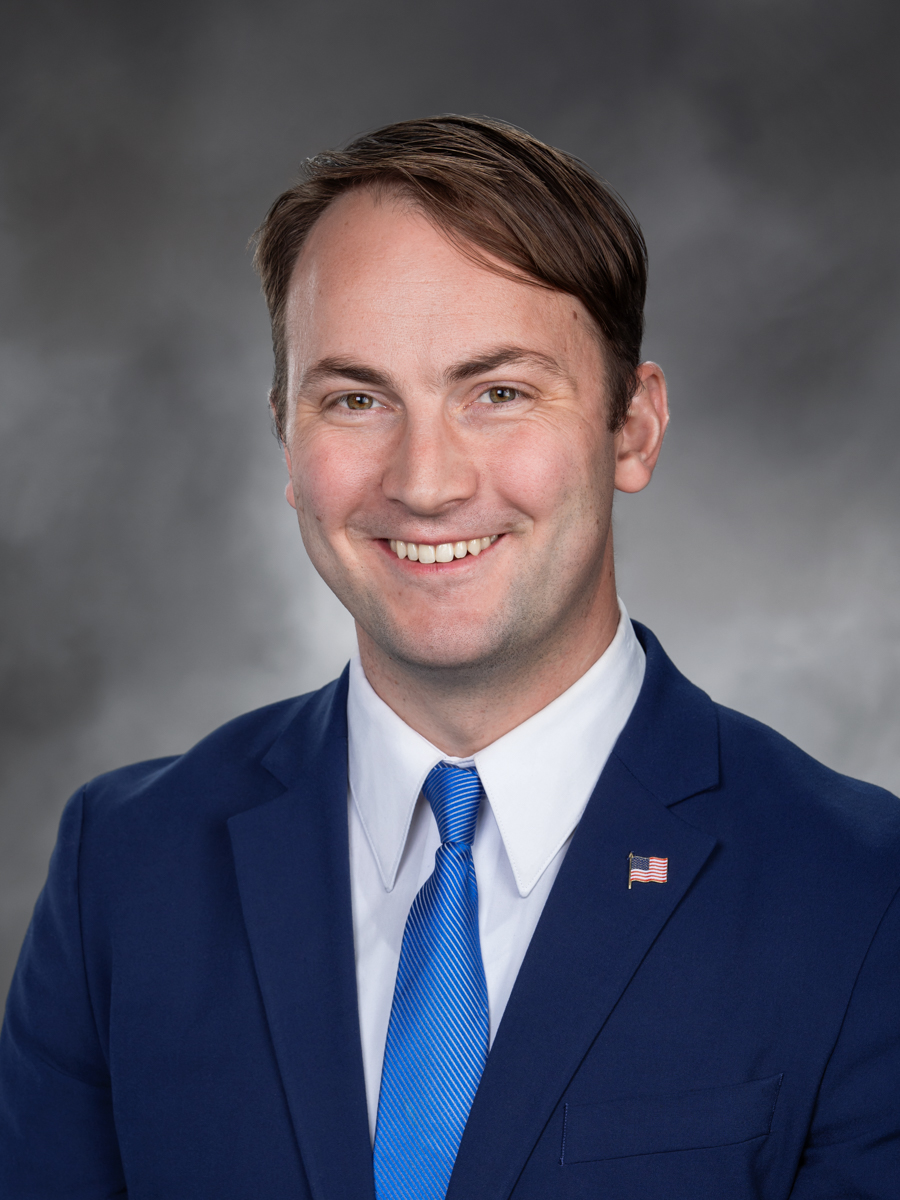
Photo of Adison Richards
D Washington House · District 26 On the 2026 ballot

Rep. Adison Richards

Compare
Total votes
1,201
all sessions
Attendance
100%
5 missed
Near the chamber average
With party
77%
of cast votes
Lower than 100% of chamber peers
Bipartisan score
11%
some cross-party votes
Higher than 98% of chamber peers
Sponsored
121
bills & resolutions
Near the chamber average
Committees
4
assignments
121 bills and resolutions

Sponsored bills

Total
121
Primary
27
Co-sponsor
94
This page
121
matching current filters
Co-sponsor HB 2598
In committee · Washington House · Co-sponsor
Improving statewide coordination in support of anadromous fish recovery.

Maddy summaryHB 2598 establishes a Salmon Advisory Commission to improve coordination between Washington state agencies and tribal governments on salmon recovery efforts. The commission will identify gaps in recovery work, review monitoring data, and recommend actions to the governor and legislature. This bill amends existing salmon recovery laws to require state agencies to collaborate through this new body, without reallocating current programs or responsibilities. It directly affects state fish and wildlife agencies, tribal co-managers, and organizations implementing salmon habitat restoration projects.

In committee Feb 4, 2026 1 co-sponsor
Primary HB 2310
In committee · Washington House · Lead sponsor
Concerning criminal classification and penalties for sexually motivated assault in the fourth degree.

Maddy summaryHB 2310 changes sentencing for certain fourth-degree assaults by elevating them to a class C felony when the assault is found to be sexually motivated and the perpetrator has two or more prior convictions for sex offenses within the past decade. It directly affects individuals who commit sexually motivated fourth-degree assaults and have prior adult convictions for offenses like rape, child molestation, or assault with sexual motivation. The bill adds a new provision requiring a "finding of sexual motivation" under existing law (RCW 9.94A.835) to trigger the felony classification, replacing prior domestic violence-based triggers for similar cases. This targets repeat offenders with a history of sex-related crimes, making the sentencing more severe for new sexually motivated assaults in these specific circumstances.

In committee Feb 4, 2026 0 co-sponsors
Co-sponsor HB 2240
In committee · Washington House · Co-sponsor
Concerning the delivery, execution, acceptance, and provisions of individual storage space rental agreements and modifying the use of individual storage spaces after notice of termination or nonrenewal of rental agreements.

Maddy summaryHB 2240 requires self-storage facilities in Washington to provide written rental agreements that clearly explain renters' rights regarding liens and property disposal. It sets a 14-day grace period for unpaid rent before liens can be placed on stored items and mandates 25 days' notice before termination, with a 5-day window for renters to remove belongings after notice. The bill also allows electronic agreement delivery, requires owners to send agreements via email and mail if an address is provided, and specifies that renters must provide an alternative contact address for notices. These changes directly affect renters and self-storage facility operators by clarifying notice requirements and lien procedures under state law.

In committee Feb 4, 2026 1 co-sponsor
Primary HB 2198
In committee · Washington House · Lead sponsor
Improving regulatory efficiency by integrating executive order 25-03, concerning permitting and licensing processes, into chapter 43.42A RCW.

Maddy summaryHB 2198 integrates Executive Order 25-03 into state law to streamline permitting and licensing processes. It requires state agencies (like the Department of Licensing and Department of Health) to track and publicly report key metrics - including application completion times, decision timelines, pending applications, and backlog counts - annually. This law directly affects businesses and individuals applying for state-issued permits, licenses, or certifications (e.g., occupational licenses, environmental approvals) by making processing times more transparent. The goal is to help applicants plan better, reduce delays, and enable agencies to improve efficiency through data-driven decisions.

In committee Feb 4, 2026 0 co-sponsors
Co-sponsor HB 2220
In committee · Washington House · Co-sponsor
Concerning state oversight and accountability of the criminal justice training commission.

Maddy summaryHB 2220 clarifies and strengthens oversight of Washington's Criminal Justice Training Commission by updating definitions and commission duties. It defines key terms like "certified," "convicted," and "finding" to standardize disciplinary processes for law enforcement and corrections personnel. The bill requires the Commission to conduct training, handle complaints, grant/deny certification, and establish standards for all criminal justice personnel, including tribal officers. These changes aim to improve accountability, public trust, and consistent application of rules across agencies. The bill directly affects law enforcement officers, corrections staff, and tribal police officers who must meet Commission certification standards.

In committee Feb 4, 2026 1 co-sponsor
Co-sponsor HB 2146
In committee · Washington House · Co-sponsor
Combating sexual exploitation of minors.

Maddy summaryHB 2146 defines and strengthens criminal penalties for sexual exploitation of minors in Washington State. It makes it a crime for anyone to force a minor into sexually explicit conduct for photos or live performances (section 1a), aid or invite minors into such situations (1b), or for parents/guardians to permit it (1c). The bill upgrades this offense to a class B felony under state law, increasing penalties. It directly affects minors who may be exploited, perpetrators of such acts, and caregivers who fail to protect minors. The law focuses on specific, concrete prohibitions rather than broader policy changes.

In committee Feb 4, 2026 1 co-sponsor
Co-sponsor HB 2135
In committee · Washington House · Co-sponsor
Modifying and extending the adaptive housing retail sales and use tax preference for disabled veterans.

Maddy summaryHB 2135 extends and modifies a tax exemption for disabled veterans who use federal grants to adapt their homes. It raises the maximum tax refund per project from $2,500 to $5,000 and increases the annual state funding cap from $125,000 to $250,000, with future adjustments tied to Seattle-area inflation starting in 2028. The bill applies exclusively to veterans who received U.S. Department of Veterans Affairs grants for specially adapted housing or special housing adaptations. It expires on January 1, 2039, and requires the state to track usage to ensure funds stay within annual limits.

In committee Feb 3, 2026 1 co-sponsor
Co-sponsor HB 2141
In committee · Washington House · Co-sponsor
Concerning building codes.

Maddy summaryHB 2141 freezes new building code updates for 10 years after the 2024 adoption cycle, preventing the state council from initiating or implementing further code editions until 2034. After 2036, substantive code updates would occur no more than every six years, rather than the previous three-year cycle. The bill directly affects the State Building Code Council, local governments implementing codes, and construction professionals by altering the timeline for adopting new safety and accessibility standards. Key provisions include prohibiting local code amendments during the freeze period and requiring emergency code changes only for public health/safety emergencies or federal compliance.

In committee Feb 3, 2026 1 co-sponsor
Co-sponsor HB 1622
Passed · Washington House · Co-sponsor
Allowing bargaining over matters related to the use of artificial intelligence.

Maddy summaryHouse Bill 1622 allows public sector employees in Washington state to collectively bargain with their employers over the use of artificial intelligence (AI) in the workplace. The bill amends existing state law to remove the "use of technology" from a list of management rights that are typically not subject to negotiation for employees in higher education and other state agencies. It defines artificial intelligence as machine learning and related technologies that enable computer systems to perform tasks like computer vision or natural language processing. This change empowers unions and public employers to negotiate agreements on the implementation and utilization of AI technologies.

Passed Feb 3, 2026 1 co-sponsor
Primary HB 2601
In committee · Washington House · Lead sponsor
Addressing motorcycle weight fees.

Maddy summaryHB 2601 establishes a new tiered fee structure for motorcycle registrations in Washington State, charging $15 for all motorcycles (regardless of weight) and increasing fees for heavier models (e.g., $35 for 4,000 pounds, $65 for 6,000 pounds, and $96 for 16,000 pounds or more). Motor homes will pay a flat $75 fee instead of the motorcycle-based fee. The state will use manufacturer-provided weight data to determine vehicle weight, and all fees will fund transportation projects. This new structure takes effect July 1, 2027, and expires January 1, 2029, after which a revised fee schedule becomes active.

In committee Feb 2, 2026 0 co-sponsors
Showing 31 to 40 of 121 bills
Previous 1 3 4 5 13 Next