

Maddy summaryHB 1717 creates a local sales and use tax remittance program for affordable housing projects in Washington. It allows cities and counties to adopt programs where developers of qualifying projects (with at least 50% units for low-income households at 30-38% of income for 40 years) can defer paying local sales taxes on construction costs. Developers must apply to local governments, meet affordability requirements, and complete projects within three years (extendable to five total), with local authorities setting application rules and oversight. The program directly affects nonprofit and for-profit housing developers, public housing authorities, and low-income households in qualifying projects.
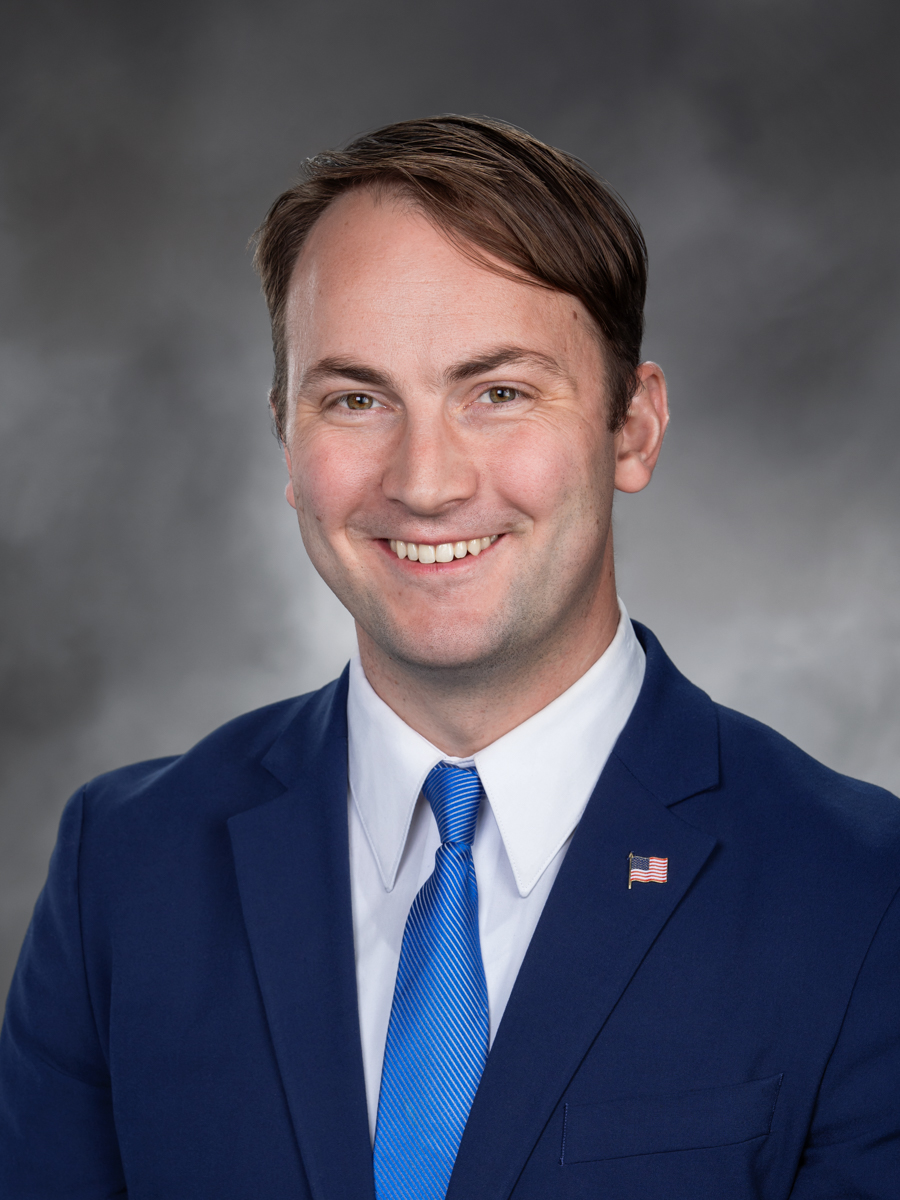
Rep. Adison Richards
Sponsored bills
Maddy summaryHB 2088 creates a multi-state licensure compact for dietitians, allowing licensed professionals to practice across participating states without obtaining separate licenses in each location. The bill establishes a "compact privilege" that recognizes a dietitian's home-state license as valid in other member states, eliminating the need for duplicate licensing. It directly affects licensed dietitians (especially those relocating, including military members and spouses), patients seeking care across state lines, and participating states' regulatory systems. Key mechanisms include standardized requirements for practice, shared data systems for disciplinary information, and provisions to protect public health while reducing administrative burdens on both professionals and states.
Maddy summaryHB 2347 repeals the luxury aircraft tax by eliminating four specific statutes (RCW 82.48A.010 to 82.48A.040) that imposed a tax on aircraft valued over $500,000, including a use tax exception and administrative requirements. This repeal would remove the tax obligation for owners of high-value aircraft who would have been subject to the tax under the 2025 law. The bill also amends RCW 82.32.145 to adjust rules for holding responsible individuals liable for unpaid trust fund taxes, but this change is unrelated to the luxury aircraft tax. The bill has been prefaced and referred to the House Transportation Committee for further review.
Maddy summaryThis bill gives Washington state agencies and local governments authority to remove abandoned or hazardous vessels (like those sunk, obstructing waterways, or endangering property) after a 7-day notice period. It directly affects vessel owners who leave boats unattended and local entities managing aquatic lands. Key provisions require authorities to prioritize environmentally sound disposal, sell vessels at auction if possible, and use sale proceeds first to cover removal costs, environmental damages, and administrative fees before addressing liens. The law also establishes clear procedures for owners to contest removal decisions or costs through hearings.
Maddy summaryThis bill is a commemorative resolution that celebrates the 50th anniversary of the Individuals with Disabilities Education Act, a federal law ensuring students with disabilities receive appropriate public education. It does not create new laws or change existing policies but serves to honor the law's impact and encourage public recognition of its contributions. The resolution acknowledges the role of families, educators, and advocates in supporting students with disabilities across Washington state. It expresses the legislature's commitment to maintaining equitable educational practices and inclusive opportunities for all learners.
Maddy summaryThis bill is a House Resolution that expresses the Washington State House of Representatives' support for economic relationships between Washington, Mexico, and Canada. It does not create new laws or change policies but serves as a symbolic statement acknowledging the importance of trade ties that support nearly one million jobs in Washington. The resolution highlights how these trade connections benefit various sectors including aerospace, agriculture, technology, and manufacturing across the state. It is a non-binding declaration intended to recognize existing economic partnerships rather than implement specific regulatory changes.
Maddy summaryHR 4700 designates March 9 as "Billy Frank Jr. Day" to honor the late Nisqually Tribe leader who dedicated his life to protecting tribal treaty fishing rights and environmental conservation. The resolution commemorates his pivotal role in landmark legal cases securing tribal fishing rights and his decades-long efforts to foster collaboration on salmon habitat restoration and natural resource management. It recognizes his legacy of consensus-building between tribes, state authorities, and diverse stakeholders to uphold treaty obligations and protect Washington's ecosystems. The resolution does not create new policy but serves as a symbolic tribute to his advocacy.
Maddy summaryThis is a commemorative resolution (HR 4686), not a substantive bill. It formally honors Robert Steven Masko, a former Pierce County undersheriff who served 37 years with the Pierce County Sheriff's Department before retiring. The resolution recognizes his decades of public service in law enforcement, community leadership (including roles on the Fircrest City Council and as a youth sports coach), and dedication to community projects like Masko Park. It extends condolences to his family and community, acknowledging his legacy of integrity and service. The resolution was adopted by the Washington State House of Representatives on February 20, 2026.
Maddy summaryThis resolution (HR 4692) acknowledges the 84th anniversary of Executive Order 9066, which led to the forced relocation and internment of over 120,000 Japanese Americans during WWII, including 12,000 from Washington State. It recognizes Japanese American veterans, incarcerees, and civil rights activists from Washington, and urges reflection on the principle "with liberty and justice for all," without creating new policies or requiring government action.
Maddy summaryHB 2401 establishes the Washington State Boys and Men Commission to address systemic challenges faced by boys and men, particularly those who are boys of color, in rural areas, identifying as LGBTQ+, or socioeconomically disadvantaged. The commission will identify needs, recommend policy changes, and coordinate with state agencies on issues like mental health access, education pathways, and vocational opportunities. Crucially, the commission’s creation is contingent on securing non-state funding (grants or private contributions) sufficient to cover operational costs through December 2029, with the Office of Financial Management required to identify funding needs by June 2026. It will consist of nine appointed members (including tribal representation and a majority identifying as male) and operate under an executive director appointed by the governor. The commission’s duties include serving as a policy information hub and producing biennial reports with recommendations to the legislature and governor.