

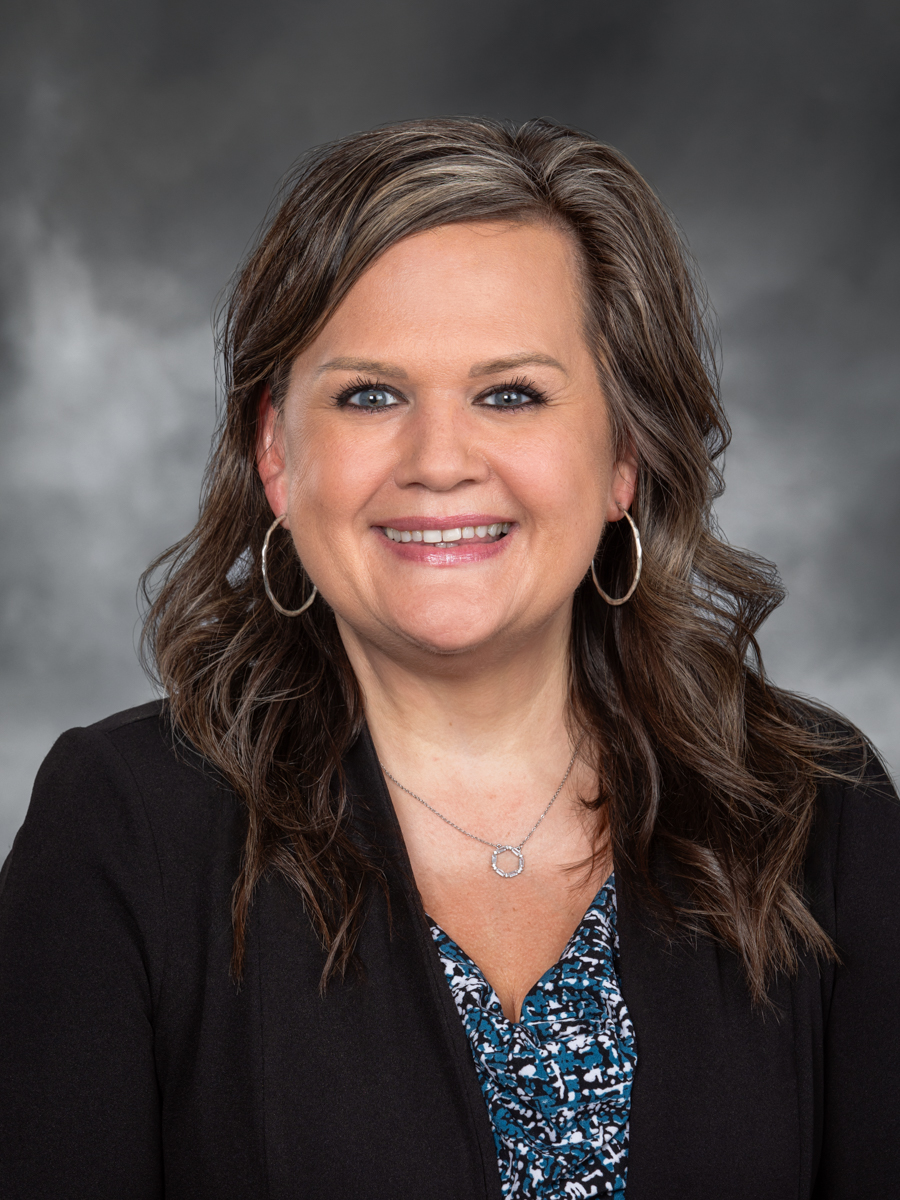
Photo of Tarra Simmons
D Washington House · District 23 On the 2026 ballot

Rep. Tarra Simmons

Compare
Total votes
3,509
all sessions
Attendance
98%
84 missed
Lower than 90% of chamber peers
With party
99%
of cast votes
Near the chamber average
Bipartisan score
0%
crosses aisle rarely
Near the chamber average
Sponsored
1,039
bills & resolutions
Higher than 91% of chamber peers
Committees
4
assignments
1,039 bills and resolutions

Sponsored bills

Total
1,039
Primary
63
Co-sponsor
976
This page
1,039
matching current filters
Co-sponsor HB 1113
Passed · Washington House · Co-sponsor
Concerning accountability and access to services for individuals charged with a misdemeanor.

Maddy summaryHB 1113, known as the public SAFE-T Act, creates a pathway for individuals charged with certain simple or gross misdemeanors in Washington state to have their charges dismissed. Under this bill, a court may agree to dismiss a misdemeanor charge if the defendant waives their right to a speedy trial and substantially complies with court-ordered conditions and programs for up to 12 months. Full restitution is a required condition for dismissal, although inability to pay due to indigence is not a barrier if progress is made. However, the bill explicitly excludes a wide range of specific offenses, such as domestic violence, DUI-related charges, and certain assault or firearm offenses, from this dismissal process.

Passed Jan 12, 2026 1 co-sponsor
Primary HB 1243
In committee · Washington House · Lead sponsor
Addressing the burden of unintentional overpayments on older adults and adults with disabilities served by the department of social and health services.

Maddy summaryHB 1243 modifies Washington State's rules for collecting overpayments from older adults and adults with disabilities who receive benefits through the Department of Social and Health Services (DSHS). It extends the time DSHS can collect unintentional overpayments from 6 to 10 years (unless court action is taken) and creates a new rule allowing DSHS to waive all collection efforts for specific programs starting July 1, 2025. The bill directly affects clients in the aged, blind, or disabled assistance program (RCW 74.62.030) and those receiving services under chapters 74.39, 74.39A, and 71A.12. Key provisions include allowing DSHS to waive collections when equitable estoppel applies and requiring the department to adopt rules for these waivers.

In committee Jan 12, 2026 0 co-sponsors
Co-sponsor HB 1158
In committee · Washington House · Co-sponsor
Improving community inclusion services for individuals with developmental disabilities.

Maddy summaryHB 1158 requires Washington's Department of Social and Health Services to contract directly with service providers for community inclusion services supporting individuals with developmental disabilities. It establishes new standards: services must occur in integrated community settings, allow group interactions (not just one-on-one care), limit billing for administrative tasks to 15 minutes per client weekly, and ensure service hours remain stable even if bundled with other services. The bill specifically defines "community inclusion services" to include skill development, community engagement, and relationship-building opportunities in typical community environments. These changes directly affect people with developmental disabilities receiving state-funded community services and the providers delivering them.

In committee Jan 12, 2026 1 co-sponsor
Co-sponsor HB 1433
In committee · Washington House · Co-sponsor
Concerning access to psychedelic substances.

Maddy summaryHB 1433 would establish a regulated system in Washington for adults 21+ to access psychedelic substances for therapeutic use under licensed professionals. It directs the Department of Health to license facilitators and service centers, and the Liquor & Cannabis Board to oversee manufacturers and testing, requiring sessions in controlled environments with trained guides. The bill emphasizes reducing costs to improve equity, particularly for historically disadvantaged communities, while explicitly stating it does not require insurance coverage or override federal law. This would create a legal framework for safe, supervised use and research, pending legislative approval.

In committee Jan 12, 2026 1 co-sponsor
Co-sponsor HB 1739
In committee · Washington House · Co-sponsor
Regulating the use of self-service checkout stations.

Maddy summaryHB 1739 regulates self-service checkout stations in Washington state grocery stores over 15,000 square feet. It requires stores to offer at least one manual checkout station for every customer when self-service is available, limit self-service transactions to 15 items (with visible signage), and ensure one employee monitors no more than two self-service stations at a time while relieved from other duties. Stores must also include self-service checkout in workplace hazard analysis for safety programs. The law exempts discount warehouses selling primarily bulk items and imposes daily civil penalties of $100 (capped at $10,000) for violations.

In committee Jan 12, 2026 1 co-sponsor
Co-sponsor HB 1298
In committee · Washington House · Co-sponsor
Concerning student athlete insurance.

Maddy summaryHB 1298 requires public four-year universities in Washington to provide and pay for insurance coverage for student athletes (both current and former athletes eligible for post-eligibility health care under athletic association rules). This insurance specifically covers athletics-related injuries and illnesses, including emergency evacuation and repatriation costs. The bill mandates that institutions, not students, bear the full cost of this coverage. It directly affects student athletes at public universities participating in intercollegiate sports and their post-eligibility health care access.

In committee Jan 12, 2026 1 co-sponsor
Co-sponsor HB 1262
In committee · Washington House · Co-sponsor
Updating the governor's interagency coordinating council on health disparities.

Maddy summaryHB 1262 would rename Washington's Governor's Interagency Council on Health Disparities to the "Council for Health Justice and Equity" and update its membership requirements to include representatives from state commissions (such as the Commission on African American Affairs and the Governor's Office of Indian Affairs) and key departments (including Health, Social and Health Services, and Commerce). The bill specifies that the council must include six public members reflecting diversity in race, ethnicity, and gender, while maintaining its role in coordinating state efforts to address health disparities. This is a procedural update to existing law, not a new policy or funding measure, and it was referred to committee but did not advance in 2025.

In committee Jan 12, 2026 1 co-sponsor
Co-sponsor HB 1200
In committee · Washington House · Co-sponsor
Authorizing payment for parental caregivers of minor children with developmental disabilities.

Maddy summaryThis bill would allow parents to be paid for providing specialized care to their minor children (under 18) with developmental disabilities. It requires the state to seek federal approval to pay parents for "extraordinary care" - defined as care beyond typical parenting duties needed to prevent institutionalization. If approved, parents would qualify for payment under specific rules, including meeting training requirements like other caregivers. The bill applies only to children in certain high-need assessment categories and does not affect existing services for adults or non-disabled individuals.

In committee Jan 12, 2026 1 co-sponsor
Co-sponsor HB 1285
Passed · Washington House · Co-sponsor
Making financial education instruction a graduation requirement in public schools.

Maddy summaryHB 1285 establishes financial education instruction as a graduation requirement for public high school students in Washington state. Beginning in the 2027-28 school year, all high schools must provide instruction in the state financial education learning standards. Starting with the graduating class of 2031, students will be required to meet these standards to graduate. The bill also tasks the Office of the Superintendent of Public Instruction with making instructional materials available and outlines monitoring responsibilities for the State Board of Education.

Passed Jan 12, 2026 1 co-sponsor
Co-sponsor HB 1274
In committee · Washington House · Co-sponsor
Concerning retroactively applying the requirement to exclude certain juvenile convictions from an offender score regardless of the date of the offense.

Maddy summaryHB 1274 retroactively removes certain juvenile convictions from sentencing calculations for people incarcerated under sentences imposed before July 23, 2023. It allows eligible individuals - currently incarcerated with a release date on or after July 1, 2026 - to petition for resentencing if they have served specific percentages of their sentence (e.g., 80% by 2026, 60% by 2026, 40% by 2027, or any time after 2028). The bill requires courts to grant resentencing unless the petitioner has serious disciplinary violations, lacks rehabilitation evidence, or poses a high recidivism risk. This applies specifically to those impacted by prior juvenile convictions that were counted in adult sentencing under outdated rules, disproportionately affecting Black, Indigenous, and People of Color.

In committee Jan 12, 2026 1 co-sponsor
Showing 241 to 250 of 1,039 bills
Previous 1 … 24 25 26 … 104 Next