

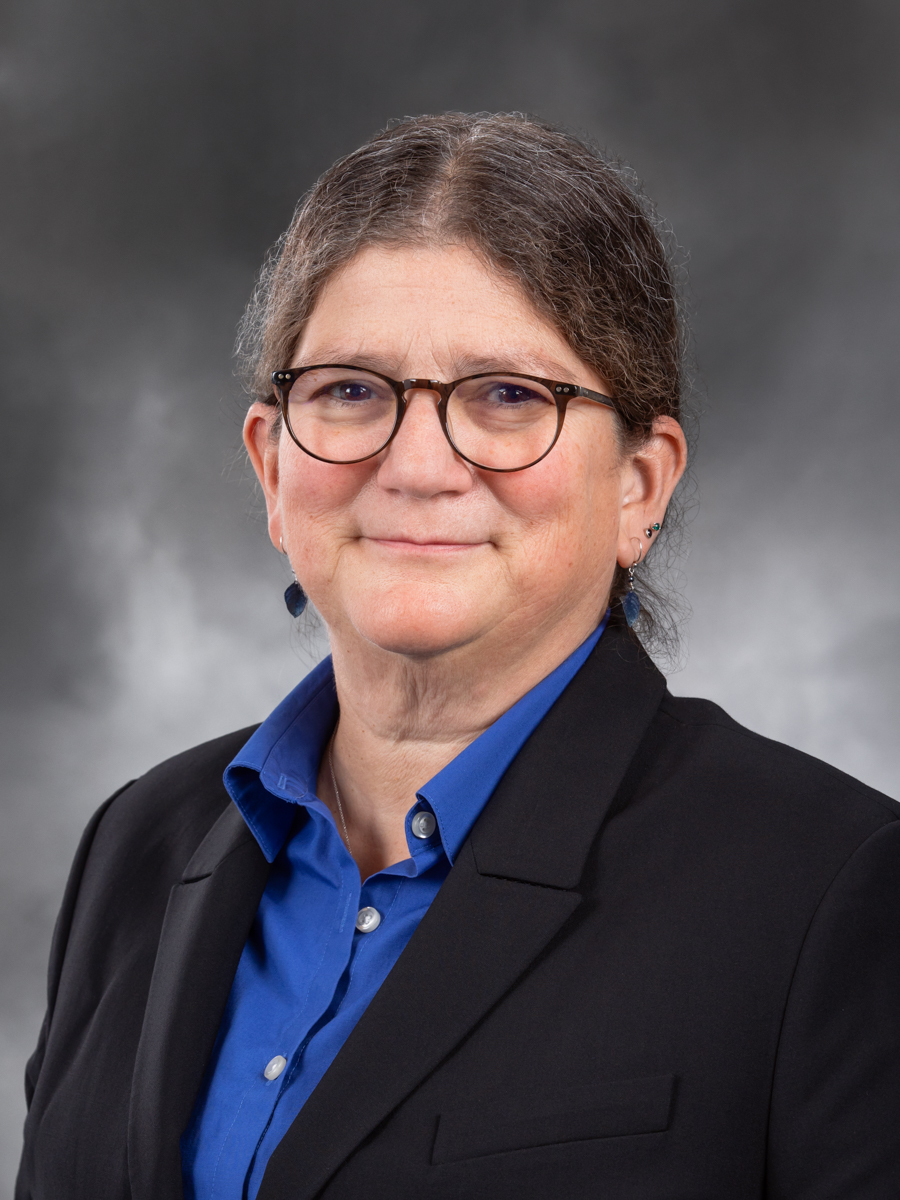
Photo of Lisa Parshley
D Washington House · District 22 On the 2026 ballot

Rep. Lisa Parshley

Compare
Total votes
1,201
all sessions
Attendance
100%
of floor votes
Higher than 88% of chamber peers
With party
99%
of cast votes
Near the chamber average
Bipartisan score
0%
crosses aisle rarely
Near the chamber average
Sponsored
657
bills & resolutions
Higher than 98% of chamber peers
Committees
4
assignments
657 bills and resolutions

Sponsored bills

Total
657
Primary
42
Co-sponsor
615
This page
657
matching current filters
Primary HB 2559
In committee · Washington House · Lead sponsor
Providing a local government option for the funding of essential affordable housing programs.

Maddy summaryHB 2559 allows Washington counties, cities, and towns to impose a local 4% tax on short-term rental lodging (like Airbnb stays) to fund affordable housing programs. The tax revenue must go to a dedicated state account and can be used for acquiring, rehabilitating, or constructing affordable housing, rental assistance, or related support services like job training. Local governments must report annually on how funds are spent and cannot implement the tax before April 2027. This bill directly affects short-term rental operators (who pay the tax) and local governments (which can choose to adopt the tax and manage housing funds).

In committee Feb 3, 2026 0 co-sponsors
Co-sponsor HB 2530
In committee · Washington House · Co-sponsor
Changing the deadline for forming a public facilities district for regional aquatics and sports facilities.

Maddy summaryHB 2530 changes the deadline for local governments to form a new public facilities district specifically for regional aquatics and sports facilities. It affects cities, towns, or counties that want to create joint districts under existing rules (subsections 35.57.010(1)(f) and (e)). The bill amends state law to replace the current deadline of July 1, 2026, with a new date (not specified in the provided text), ensuring districts can be established before this revised date. This change directly impacts communities planning to develop shared recreational infrastructure.

In committee Feb 3, 2026 1 co-sponsor
Co-sponsor HB 2425
In committee · Washington House · Co-sponsor
Concerning nursing delegation.

Maddy summaryHB 2425 clarifies when registered nurses in Washington can delegate tasks to certified nursing assistants or home care aides. It allows delegation of "simple care tasks" like blood pressure monitoring or insulin device setup in community-based or in-home settings, but prohibits delegation of medication administration (except specific insulin monitoring), sterile procedures, or tasks requiring nursing judgment. Nurses must verify staff competency, evaluate patient stability, and supervise delegated tasks, with strict limits on what can be delegated based on patient condition. The bill applies directly to nurses, nursing assistants under Chapter 18.88A, and home care aides under Chapter 18.88B in non-acute care settings.

In committee Feb 3, 2026 1 co-sponsor
Co-sponsor HB 2437
In committee · Washington House · Co-sponsor
Establishing fee authority for accreditation services provided to opioid treatment programs by the department of health.

Maddy summaryHB 2437 allows Washington's Department of Health to establish fees for accrediting opioid treatment programs, which must cover the department's costs for this service. The bill directs the department to set initial and renewal fees after gaining federal approval to accredit such programs under federal rules (42 C.F.R. Part 8). These fees will be used to offset expenses, with the department permitted to draw from opioid abatement settlement funds to cover costs. The bill directly affects opioid treatment programs seeking federal accreditation and the department managing the process.

In committee Feb 3, 2026 1 co-sponsor
Co-sponsor HB 2267
In committee · Washington House · Co-sponsor
Concerning urban forest management ordinances.

Maddy summaryHB 2267 requires Washington's Department of Commerce to create voluntary model ordinances for local governments to manage urban tree canopy. It directs cities and counties to prioritize avoiding tree removal (especially for single-family homes), minimizing impacts when removal is needed, and compensating through replanting or tree banks for larger developments (two+ homes). The model includes incentives like density bonuses, reduced parking requirements, or lower lot size rules to encourage developers to retain trees without limiting housing. Local governments can choose to adopt these models, which also provide guidance on scientific tree selection, cost estimates for maintenance, and measuring benefits like stormwater reduction. The bill does not mandate adoption but aims to standardize tree protection while balancing development needs.

In committee Feb 3, 2026 1 co-sponsor
Primary HB 1622
Passed · Washington House · Lead sponsor
Allowing bargaining over matters related to the use of artificial intelligence.

Maddy summaryHouse Bill 1622 allows public sector employees in Washington state to collectively bargain with their employers over the use of artificial intelligence (AI) in the workplace. The bill amends existing state law to remove the "use of technology" from a list of management rights that are typically not subject to negotiation for employees in higher education and other state agencies. It defines artificial intelligence as machine learning and related technologies that enable computer systems to perform tasks like computer vision or natural language processing. This change empowers unions and public employers to negotiate agreements on the implementation and utilization of AI technologies.

Passed Feb 3, 2026 0 co-sponsors
Primary HB 2715
In committee · Washington House · Lead sponsor
Concerning moneys available to a port district allocated for the purchase of zero and near zero emission cargo handling equipment.

Maddy summaryHB 2715 allows Washington port districts and port development authorities to use public funds to purchase zero- or near-zero emission cargo handling equipment and supporting infrastructure for their own use or for tenants/lessees. It specifically prohibits using these funds for fully automated marine container handling equipment (defined as remotely operated systems with minimal human control). The bill applies directly to port districts, their authorities, and their tenants, aiming to promote cleaner port operations while restricting fully automated systems. The policy change expires on December 31, 2031.

In committee Feb 2, 2026 0 co-sponsors
Co-sponsor HB 2716
In committee · Washington House · Co-sponsor
Restoring the public utility tax credit for low-income assistance.

Maddy summaryHB 2716 restores a tax credit for electric and gas utilities that provide low-income energy assistance, directly affecting these utilities and the low-income households they serve through energy assistance programs. Utilities can claim a 50% tax credit on qualifying contributions (money given to low-income energy assistance programs) and billing discounts (reduced bills for eligible customers) if their spending exceeds 125% of their 2000 levels. The credit is capped at $2.5 million statewide annually, requires annual applications with specific documentation, and expires unused. The bill aims to support existing low-income energy assistance programs by incentivizing utility contributions.

In committee Feb 2, 2026 1 co-sponsor
Co-sponsor HB 2490
In committee · Washington House · Co-sponsor
Providing an alternative condition for extraordinary medical placement for incarcerated individuals.

Maddy summaryThis bill modifies Washington State's rules for when incarcerated individuals can leave prison for medical reasons. It allows the Department of Corrections to authorize extraordinary medical placement for inmates who have permanent or degenerative conditions, are expected to die within six months, or have serious medical needs that cannot be met in prison, provided they are assessed as low risk and the move would save state money. The bill excludes death row inmates, those sentenced to life without parole, and persistent offenders from this program. It also requires electronic monitoring for those granted medical placement unless it would harm their health or interfere with medical equipment.

In committee Feb 2, 2026 1 co-sponsor
Co-sponsor HB 2587
In committee · Washington House · Co-sponsor
Establishing a pilot program to advance funds to nonprofits to support grant performance.

Maddy summaryThis bill establishes a temporary pilot program allowing Washington state agencies to advance up to 25% of a grant (capped at $200,000) to eligible public benefit nonprofits. It directly affects nonprofits that received state grants for public health, safety, welfare, or state benefit programs within six months, have a budget under $5 million, and have operated for at least three years with satisfactory past performance. The advance funds must be repaid from future grant payments, require a binding contract, and are limited to one-time use. The program expires June 30, 2029, and requires a 2028 report evaluating its effectiveness and recommending future action.

In committee Feb 2, 2026 1 co-sponsor
Showing 191 to 200 of 657 bills
Previous 1 … 19 20 21 … 66 Next