

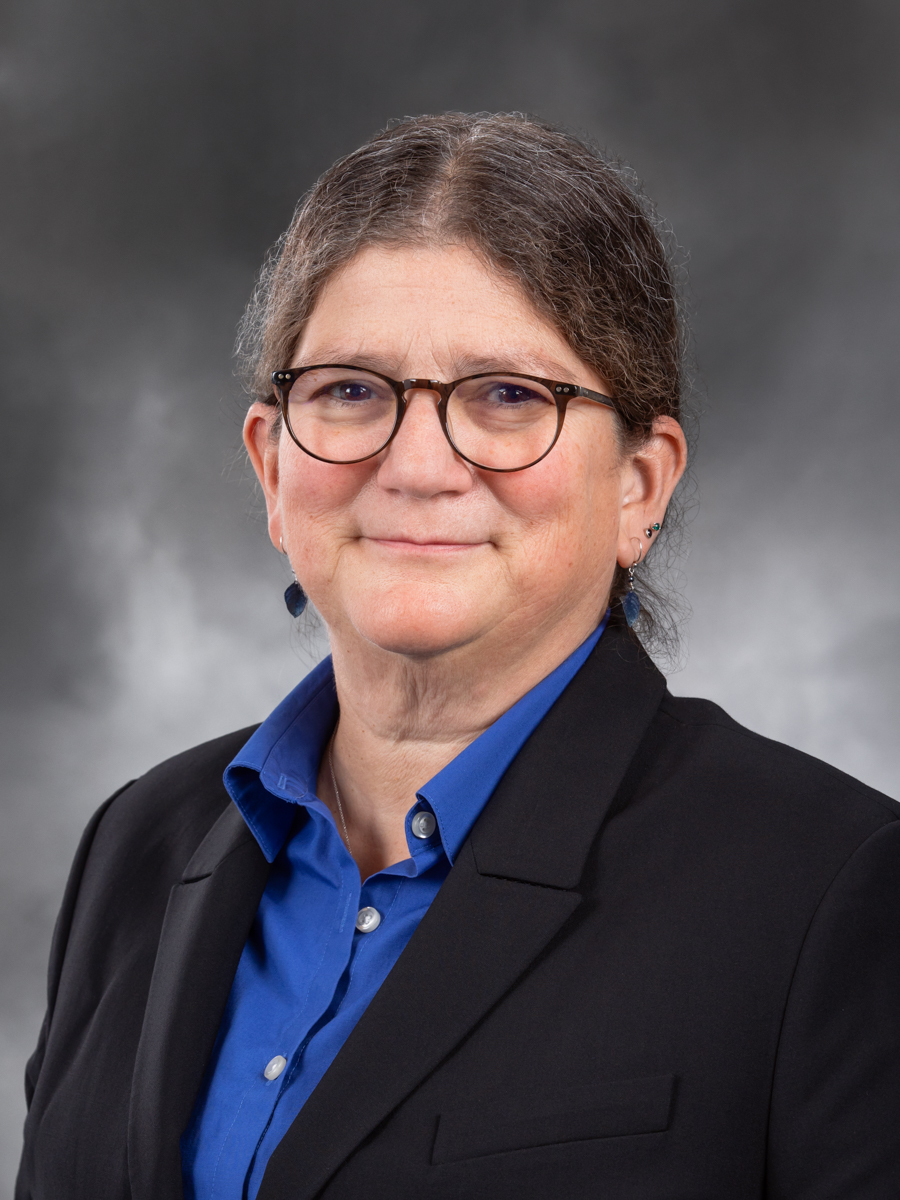
Photo of Lisa Parshley
D Washington House · District 22 On the 2026 ballot

Rep. Lisa Parshley

Compare
Total votes
1,201
all sessions
Attendance
100%
of floor votes
Higher than 88% of chamber peers
With party
99%
of cast votes
Near the chamber average
Bipartisan score
0%
crosses aisle rarely
Near the chamber average
Sponsored
657
bills & resolutions
Higher than 98% of chamber peers
Committees
4
assignments
657 bills and resolutions

Sponsored bills

Total
657
Primary
42
Co-sponsor
615
This page
657
matching current filters
Co-sponsor HB 2741
In committee · Washington House · Co-sponsor
Concerning the electric transmission system.

Maddy summaryHB 2741 creates the Washington Electric Transmission Authority to expand and upgrade the state's power grid infrastructure. The authority will identify priority transmission corridors by October 2027 and coordinate projects to improve reliability during extreme weather, connect renewable energy resources, and support Washington's carbon neutrality goals by 2030. It establishes a 10-member board with diverse expertise (including utilities, tribes, clean energy, and community representatives) to oversee the authority and ensure projects address grid capacity needs. The bill directly affects utilities, local communities, and state agencies responsible for managing transmission projects and meeting clean energy targets.

In committee Feb 25, 2026 1 co-sponsor
Co-sponsor HB 2617
In committee · Washington House · Co-sponsor
Enhancing higher education procedures.

Maddy summaryHB 2617 eliminates Washington's current "fund split" funding method, which forces public colleges and universities to use tuition revenue for mandatory costs like faculty salaries and benefits. Instead, it requires the state to cover these costs directly, freeing tuition revenue to improve educational quality and student services. The bill also mandates a study by the Washington State Institute for Public Policy to define essential student services (such as counseling, tutoring, and career support) and determine their required funding levels, with a report due by December 2026. This aims to address structural underfunding that has reduced program offerings, increased class sizes, and strained institutional budgets.

In committee Feb 25, 2026 1 co-sponsor
Co-sponsor HB 2671
In committee · Washington House · Co-sponsor
Concerning state financial aid.

Maddy summaryHB 2671 amends Washington state's financial aid program to update the calculation of the "Maximum Washington College Grant" for students at public and qualifying private colleges. It sets specific grant amounts for different institution types (public two- or four-year schools, private non-profits, for-profits, and apprenticeships), with most amounts increasing annually based on Washington's wage growth rate. For private institutions, starting in 2026-27, grants will equal 50% of the average award for public research institutions. This directly affects students demonstrating financial need enrolled at eligible Washington higher education institutions, including community colleges, universities, and approved apprenticeship programs. The bill defines key terms like "financial need" and "institution" to clarify eligibility and funding rules.

In committee Feb 25, 2026 1 co-sponsor
Co-sponsor HB 2070
In committee · Washington House · Co-sponsor
Providing state funding parity for Western Washington University.

Maddy summaryHB 2070 establishes a formula to provide state funding parity for Western Washington University (WWU) by addressing its historically lowest per-student funding among Washington's public universities. Starting with the 2029-2031 budget cycle, the bill requires the legislature to calculate a funding ratio based on carryforward budget levels and full-time equivalent students; if WWU has the lowest ratio, it will receive supplemental funding to match the next-highest regional university. This directly affects WWU students and the university by reducing tuition costs and aligning its funding with peers, as WWU has consistently received less per-student funding despite strong enrollment and graduation rates. The bill aims to support Washington's workforce goals, noting 70% of family-wage jobs require a bachelor's degree and 300,000 additional degree-holders are needed by 2035.

In committee Feb 25, 2026 1 co-sponsor
Co-sponsor HR 4696
Passed · Washington House · Co-sponsor
Celebrating Kimchi Day.

Maddy summaryThis House Resolution designates November 22nd as "Kimchi Day" to symbolically recognize kimchi's cultural significance and its role in Washington state. It highlights kimchi's 2,000-year Korean history, UNESCO recognition of its preparation process ("Kimjang"), and the contributions of Washington's large Korean American community. The resolution has no binding effect and serves as a ceremonial acknowledgment, not a policy change. It aligns with South Korea's existing "National Kimchi Day" observed on the same date.

Passed Feb 24, 2026 1 co-sponsor
Primary HB 2382
In committee · Washington House · Lead sponsor
Concerning excise taxes on cigarettes, vapor products, and tobacco products.

Maddy summaryHB 2382 adds a $0.10 tax per cigarette and updates tax rates for vapor and tobacco products. It directs new tax revenue to three specific accounts: the first $10 million yearly funds emergency medical services (like stroke and heart attack care), the next $2 million supports tobacco enforcement efforts, and 10% of remaining revenue after 2028 goes to public health services. This affects cigarette manufacturers, vapor product sellers, and tobacco retailers who pay the taxes. The bill also modifies vapor product tax rates to 95% of sales price and adjusts tobacco tax calculations for certain products.

In committee Feb 24, 2026 0 co-sponsors
Co-sponsor HB 1873
In committee · Washington House · Co-sponsor
Increasing access to the working connections child care program for graduate and professional students.

Maddy summaryHB 1873 expands Washington State’s Working Connections Child Care program to include graduate and professional students enrolled full-time at higher education institutions. It sets eligibility at household income of 85% or less of the state median income (adjusted for family size), requires children to be under 13 or under 19 with a verified special need, and waives copayments where federal law allows (capping at $15). The bill also clarifies that two-parent households cannot be denied care based on the other parent’s availability and ensures graduate students qualify for full-time child care assistance under the program. These changes apply immediately upon enactment, with income thresholds and copayment rules adjusted to align with existing program tiers.

In committee Feb 24, 2026 1 co-sponsor
Co-sponsor HJM 4017
In committee · Washington House · Co-sponsor
Supporting the Iranian people’s pursuit of democracy and accountable governance.

Maddy summaryThis Washington state joint memorial (HJM 4017) urges the U.S. federal government to take specific actions regarding Iran, directly affecting U.S. agencies and policymakers. It requests the U.S. refrain from military intervention, strengthen targeted sanctions against Iranian officials violating human rights, minimize harm from broad sanctions on civilians, and support Iranian democracy movements through diplomatic and humanitarian means. The resolution emphasizes prioritizing Iranian-led democratic processes and includes nine specific policy requests, such as expanding internet access and halting deportations to Iran. As a symbolic state resolution - not a binding law - it has no legal effect but formally expresses Washington’s position to federal authorities.

In committee Feb 23, 2026 1 co-sponsor
Co-sponsor HB 2713
In committee · Washington House · Co-sponsor
Imposing a business and occupation tax surcharge on the operators of private detention facilities.

Maddy summaryHB 2713 would impose a 1% surcharge on the taxable income from operating private detention facilities in Washington State, effective July 1, 2026. It directly affects operators of such facilities that generate over $1 million in annual Washington gross receipts. The surcharge applies to the portion of income specifically tied to running these facilities, in addition to existing business taxes. This policy change would increase tax obligations for qualifying private detention facility operators without altering the definition of the facilities themselves.

In committee Feb 20, 2026 1 co-sponsor
Co-sponsor HB 2730
In committee · Washington House · Co-sponsor
Clarifying the metric for judging the effectiveness of aerospace tax preferences.

Maddy summaryHB 2730 clarifies how Washington state will evaluate whether tax incentives for the aerospace industry remain effective. It requires the Joint Legislative Audit and Review Committee to annually assess aerospace employment in Washington compared to other states using a five-year average of employment data starting in 2029. If Washington’s share of aerospace jobs stays the same or grows relative to other states, the tax incentives will automatically extend until 2040. The bill directly affects aerospace companies receiving tax preferences by tying their continued eligibility to measurable workforce outcomes. It amends a 2013 provision to establish this specific employment-based metric for evaluating the incentives' success.

In committee Feb 20, 2026 1 co-sponsor
Showing 101 to 110 of 657 bills
Previous 1 … 10 11 12 … 66 Next