

Maddy summaryHB 2668 requires the Washington Department of Fish and Wildlife to relocate the Bob Oke game farm - a pheasant rearing facility in Lewis County - from its current site to a new location that won’t risk contaminating municipal or residential drinking water supplies. The bill mandates the department to identify a suitable alternate site by December 2026, conduct environmental assessments to avoid groundwater contamination, and develop a relocation plan with cost estimates and timelines for state budget consideration. It also requires remediation of the current site to stop nitrate leaching from manure, restore groundwater quality, and prepare the land for future use, with funding requests submitted in upcoming state budget cycles. The measure directly affects the department, local water utilities, and residents relying on wells in the Fords Prairie area.
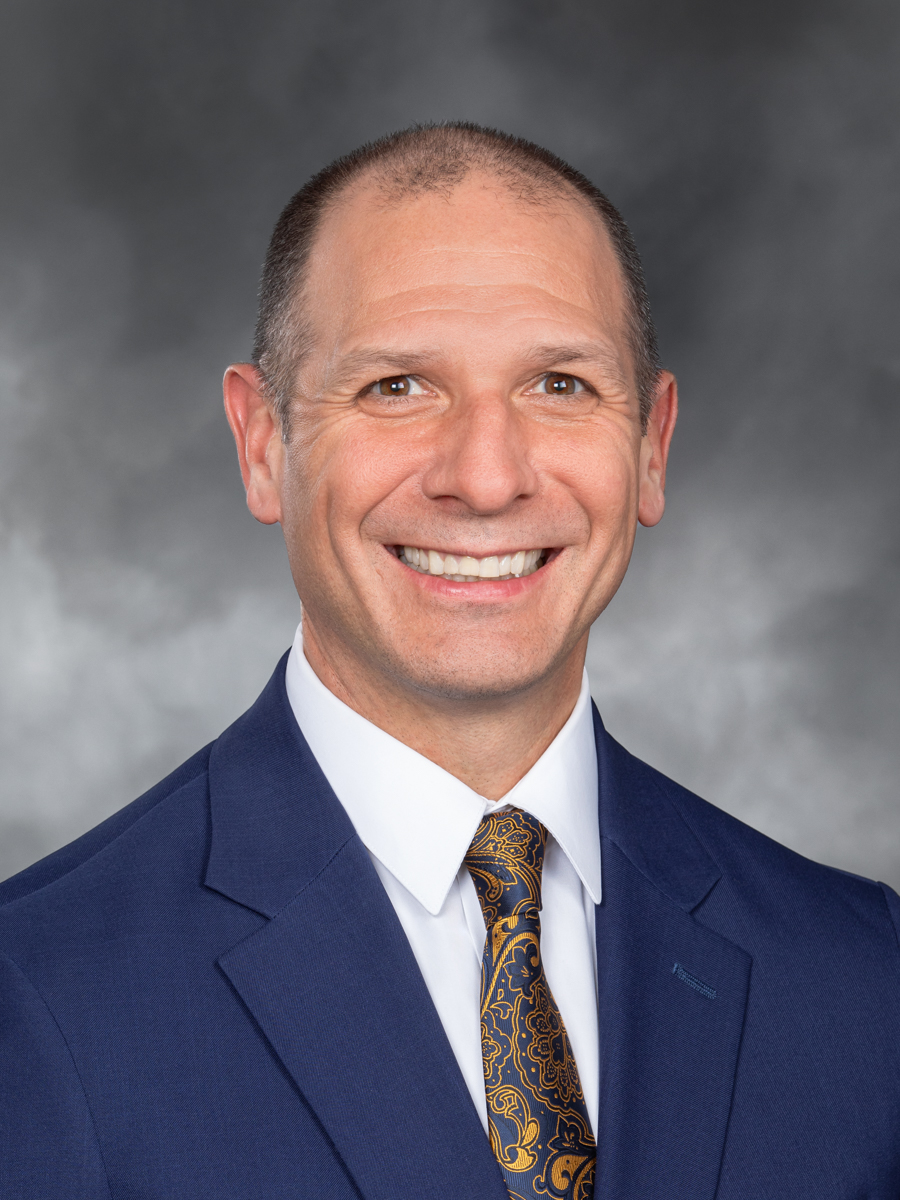
Rep. Peter Abbarno
Sponsored bills
Maddy summaryHB 2430 increases Washington's crime victim penalty assessment to $1,000 for felony/gross misdemeanor convictions and $500 for misdemeanors, while creating a waiver for indigent defendants. It allows courts to impose additional surcharges (up to $50,000) on defendants with "substantial financial resources" (household income over 200% of area median income) based on offense severity. The collected funds must be deposited into a county fund exclusively supporting comprehensive victim services, including testimony assistance and restitution help, with strict requirements for program eligibility and administration. This affects all convicted adults (except specific motor vehicle crimes), counties managing the funds, and local victim support programs. The bill also requires cities to contribute a portion of non-parking revenue to this fund.
Maddy summaryHB 2218 establishes a state-approved network of healthcare providers for workers' compensation cases in Washington. It requires injured workers to choose a provider within 15 miles of home for initial care (with non-network visits limited to emergencies), prohibits employers from directing workers to specific clinics, and sets quality standards for network inclusion (e.g., malpractice insurance, licensing status). The bill creates a second tier of providers recognized for using advanced occupational health practices, with financial incentives for meeting these standards. This directly affects injured workers, healthcare providers seeking to treat workers' compensation cases, and employers managing claims.
Maddy summaryHB 2135 extends and modifies a tax exemption for disabled veterans who use federal grants to adapt their homes. It raises the maximum tax refund per project from $2,500 to $5,000 and increases the annual state funding cap from $125,000 to $250,000, with future adjustments tied to Seattle-area inflation starting in 2028. The bill applies exclusively to veterans who received U.S. Department of Veterans Affairs grants for specially adapted housing or special housing adaptations. It expires on January 1, 2039, and requires the state to track usage to ensure funds stay within annual limits.
Maddy summaryHB 2715 allows Washington port districts and port development authorities to use public funds to purchase zero- or near-zero emission cargo handling equipment and supporting infrastructure for their own use or for tenants/lessees. It specifically prohibits using these funds for fully automated marine container handling equipment (defined as remotely operated systems with minimal human control). The bill applies directly to port districts, their authorities, and their tenants, aiming to promote cleaner port operations while restricting fully automated systems. The policy change expires on December 31, 2031.
Maddy summaryHB 2690 clarifies that Washington electric utilities must provide low-income energy assistance specifically for electricity costs, not for other energy sources like natural gas or heating oil. The bill simplifies existing rules by removing duplicative administrative requirements and preventing utilities from covering non-electric energy expenses. It aims to reduce costs for utilities and ratepayers while preserving current assistance programs like weatherization and bill discounts. The law does not expand existing requirements or create new assistance programs, only clarifying how current obligations apply.
Maddy summaryHouse Resolution 4675, adopted on January 28, 2026, is a ceremonial resolution expressing the Washington State House of Representatives' gratitude to the Washington National Guard for their service. It specifically acknowledges the Guard's roles in emergency response (including flood operations and search-and-rescue missions), disaster recovery efforts (like adapting from the Oso landslide), and national defense support (such as aerial refueling capabilities). The resolution directs copies to the Adjutant General, Governor, and other officials but does not create new laws or alter policies. It directly honors National Guard members, their families, and employers without imposing any financial or operational requirements.
Maddy summaryHB 2318 adjusts eligibility requirements for quality improvement awards within Washington's Early Achievers program, which rates child care and early learning programs. The bill specifies that award recipients must serve at least 5% of enrolled children receiving state subsidies, Early Childhood Education and Assistance Programs (EEAP), or Head Start funding. It maintains the program's five-tiered rating system, requires free initial ratings for participants, and mandates public reporting of ratings on a parent-friendly website. The bill also preserves provisions for professional development pathways and voluntary participation for non-subsidized providers, while keeping school-age care exempt. This change directly affects licensed child care centers, family home providers, and early learning programs receiving state funding.
Maddy summaryThis is a ceremonial House resolution (not a policy bill) introduced on January 19, 2026, by multiple Washington State Representatives. It formally recognizes Dr. Martin Luther King Jr.'s life, legacy of nonviolent activism, and contributions to civil rights, including his role in the Civil Rights Act of 1964 and Voting Rights Act of 1965. The resolution expresses the House's commitment to upholding Dr. King's ideals of equality, justice, and opportunity for all. As a symbolic gesture, it does not create new laws, allocate funds, or affect any specific individuals or groups.
Maddy summaryThis is a ceremonial House Resolution (not a bill with policy changes), adopted on January 16, 2026. It formally recognizes Washington's joint operating agencies (JOAs) for their role in developing clean energy infrastructure, including renewable sources like solar, wind, and hydroelectric power, as well as new projects like small modular reactors. The resolution highlights JOAs' contributions to reducing greenhouse gas emissions, ensuring affordable energy access, and supporting economic growth in Washington State. It does not create new laws, allocate funds, or impose requirements - its sole purpose is to acknowledge these agencies' historical and ongoing work.