

Maddy summaryHJM 4014 is a procedural memorial requesting the U.S. Department of Justice investigate alleged fraud in Washington state's child care subsidy programs. It cites reported issues including hundreds of millions in un-auditable payments, whistleblower claims of self-dealing in community reinvestment programs, and misleading practices in minority-focused debt relief. The memorial specifically asks the DOJ to examine the Attorney General's handling of fraud allegations, potential public records violations, and whether systemic issues undermine federal oversight. This is a formal request to federal authorities, not a legislative change affecting Washington residents or programs directly.
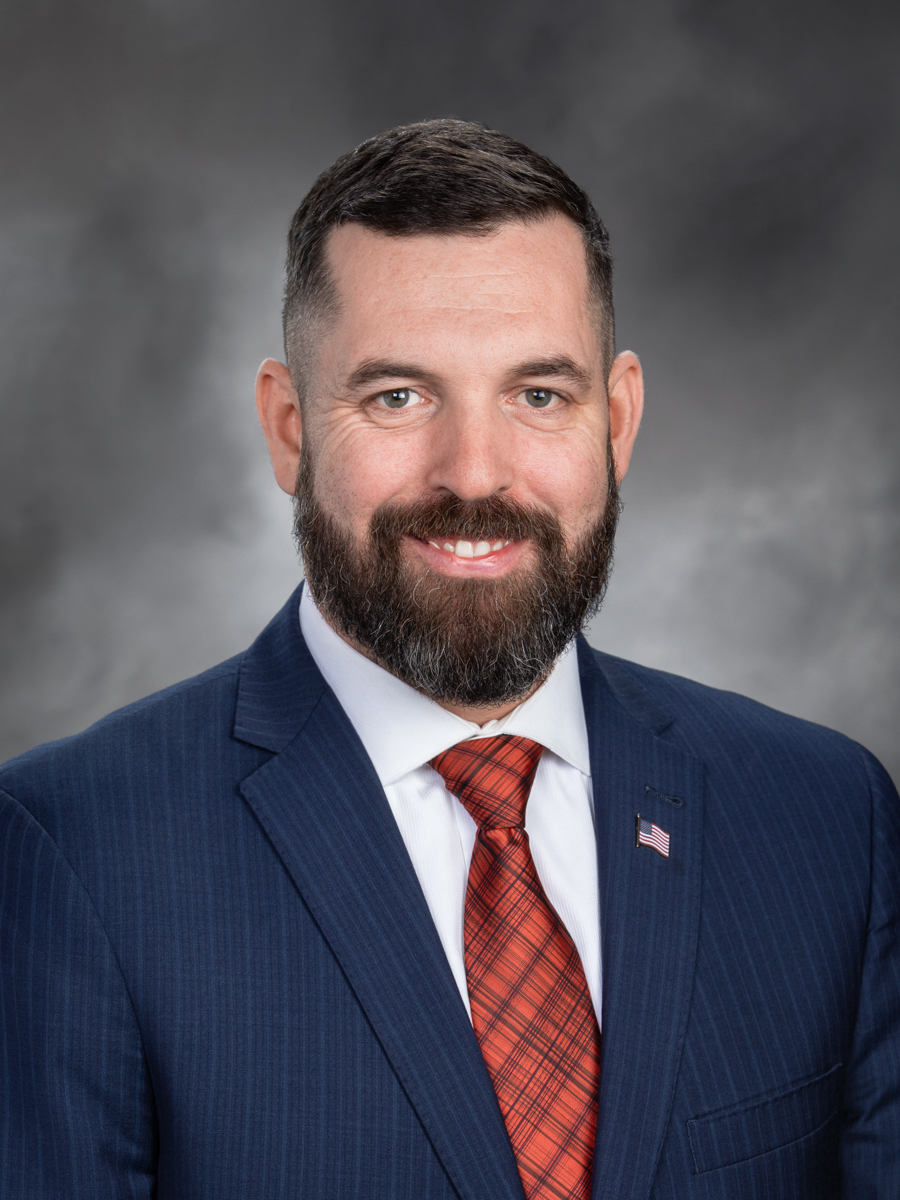
Rep. Matt Marshall
Sponsored bills
Maddy summaryHB 2209 amends Washington State's sentencing guidelines to add mandatory additional prison time for certain theft, robbery, and stolen property offenses when a firearm or deadly weapon is used. It requires judges to add 5 years for class A felonies, 3 years for class B felonies, or 18 months for class C felonies involving firearms, with similar but shorter additions for deadly weapons (not firearms). These enhancements must be served consecutively to other sentences and are mandatory, with limited exceptions for specific weapon-related crimes. The bill is currently in committee review and has not yet been enacted into law.
Maddy summaryHouse Resolution 4675, adopted on January 28, 2026, is a ceremonial resolution expressing the Washington State House of Representatives' gratitude to the Washington National Guard for their service. It specifically acknowledges the Guard's roles in emergency response (including flood operations and search-and-rescue missions), disaster recovery efforts (like adapting from the Oso landslide), and national defense support (such as aerial refueling capabilities). The resolution directs copies to the Adjutant General, Governor, and other officials but does not create new laws or alter policies. It directly honors National Guard members, their families, and employers without imposing any financial or operational requirements.
Maddy summaryHB 2261 requires health care professionals who interact directly with patients to clearly display their full credentials (including degree titles like "MD" or "DO") on visible identification badges during all patient encounters. It also mandates that any advertisement for health care services must specify the provider's exact credential type. The bill aims to prevent patient confusion about provider qualifications, particularly regarding titles like "doctor" that might imply a medical degree without clarification. This applies to all licensed health care providers in direct patient care settings but excludes those in non-patient care roles. The law seeks to improve transparency and trust by ensuring patients understand their care team's qualifications.
Maddy summaryHB 2286 creates an alternative pathway to social worker licensure in Washington for applicants seeking a Licensed Independent Clinical Social Worker (LICSW) license. It allows candidates to fulfill the standard 3,000-hour supervised experience requirement through "enhanced supervision" instead of passing the typical exam, provided they receive an attestation of competence from an approved supervisor. This change directly affects social work professionals completing their supervised experience, particularly those who may face barriers to taking the standard exam. The bill modifies existing licensing rules to specify that enhanced supervision must include at least 1,000 hours of direct client contact and detailed supervision requirements, including 100 hours of direct supervision by a qualified mental health practitioner.
Maddy summaryHJM 4013 is a joint memorial urging Governor Ferguson to opt Washington state into a federal tax-credit scholarship program for K-12 education. It would direct approximately $732 million annually in unused federal funds to Washington students from working-class and middle-class families (household income ≤300% of area median income) through tax credits for donors. The program requires no state funding, imposes no budget obligation, and mandates scholarship organizations to spend at least 90% of funds on student expenses like tutoring and technology while meeting strict federal accountability standards. Failure to opt in would prevent Washington families from accessing these federal resources, which would instead benefit students in states that have joined the program.
Maddy summaryHB 2628 requires the state budget outlook work group to update Washington's official budget outlook quarterly to reflect the most recent revenue forecasts, in addition to annual updates in January (based on the governor's proposed budget) and November (to account for fiscal year adjustments). The bill mandates that these updates include detailed projections of state revenues and expenditures, key budget drivers, and clear explanations of the assumptions used. It directly affects the budget work group and all state agencies responsible for providing budget data. This ensures the legislature and governor have current, accurate budget information for decision-making.
Maddy summaryHB 2591 requires legislative sponsors to gather at least 1,000 signatures from registered Washington voters supporting a bill before it can be filed with the office of the code reviser. This applies to all bills, resolutions, or memorials introduced by state legislators, directly affecting those who propose new legislation. The key mechanism mandates this signature threshold to ensure proposed bills have a minimum level of public support before entering the legislative process. The bill also establishes civil penalties of up to $10,000 for violations of related anti-influence provisions, including a citizen lawsuit option for alleged "trading in special influence." This procedural requirement aims to reduce duplicative filings and enhance transparency in the legislative workflow.
Maddy summaryThis is a ceremonial House resolution (not a policy bill) introduced on January 19, 2026, by multiple Washington State Representatives. It formally recognizes Dr. Martin Luther King Jr.'s life, legacy of nonviolent activism, and contributions to civil rights, including his role in the Civil Rights Act of 1964 and Voting Rights Act of 1965. The resolution expresses the House's commitment to upholding Dr. King's ideals of equality, justice, and opportunity for all. As a symbolic gesture, it does not create new laws, allocate funds, or affect any specific individuals or groups.
Maddy summaryThis is a ceremonial House Resolution (not a bill with policy changes), adopted on January 16, 2026. It formally recognizes Washington's joint operating agencies (JOAs) for their role in developing clean energy infrastructure, including renewable sources like solar, wind, and hydroelectric power, as well as new projects like small modular reactors. The resolution highlights JOAs' contributions to reducing greenhouse gas emissions, ensuring affordable energy access, and supporting economic growth in Washington State. It does not create new laws, allocate funds, or impose requirements - its sole purpose is to acknowledge these agencies' historical and ongoing work.