

Maddy summaryHB 1872 expands exemptions from certain firearm restrictions for specific groups in Washington State. It exempts current and retired peace officers, military personnel, veterans, shooting sports instructors, and concealed pistol license holders from background check waiting periods after they’ve already passed background checks. The bill also creates new exemptions for these groups regarding restrictions on "excess capacity magazines" and "assault weapons" under existing law. These changes directly affect the named groups by reducing regulatory barriers for firearm access and use while maintaining existing background checks. The bill does not change the definition of "assault weapon" but clarifies exemptions for authorized individuals under the new provisions.
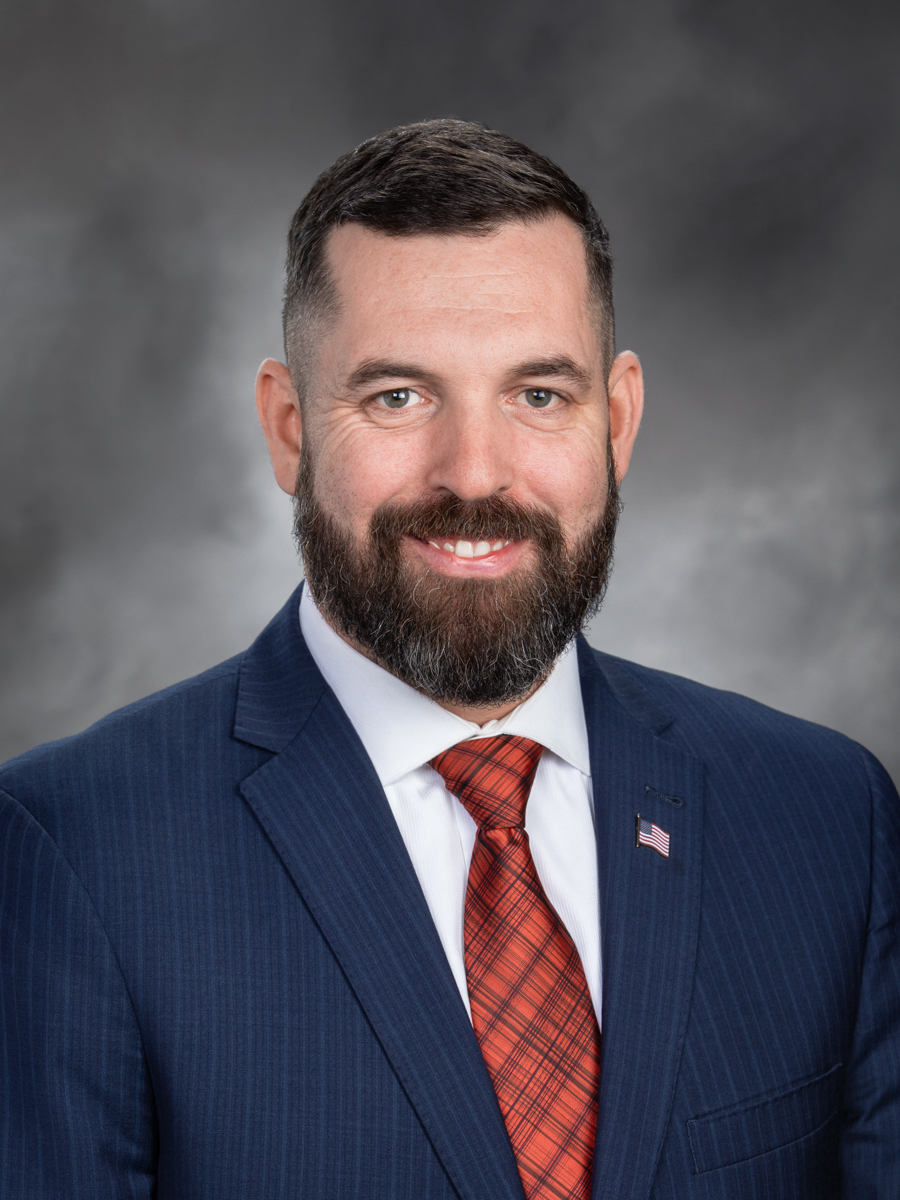
Rep. Matt Marshall
Sponsored bills
Maddy summaryHB 1022 creates a pilot program providing no-interest down payment and closing cost loans (up to $25,000) to essential workers in Washington state who meet income limits. It directly affects firefighters, nurses, police officers, emergency medical technicians, mental health professionals, social workers, child care providers, and veterans with household income below 100% of the state median. Loans require no repayment until the home is sold, rented, or refinanced, and the program is capped at $15 million in funding through June 2027. The bill mandates reporting on program outcomes to the legislature by 2026 and 2027.
Maddy summaryHB 1117 repeals Washington State's adoption of California's motor vehicle emissions standards, which had caused registration barriers for vehicles meeting federal standards. The bill directly affects vehicle owners who previously needed 407,541 exemptions to register their vehicles and government agencies managing registrations. Key provisions require the Department of Licensing to register previously prohibited vehicles (if they meet state requirements) and direct the Department of Ecology to repeal all rules implementing California standards. This eliminates administrative burdens on both the public and government, allowing vehicles to be registered without exemptions under federal standards. The bill takes immediate effect as an emergency measure.
Maddy summaryHouse Bill 2085 proposes dividing Washington state into two autonomous regions: the Puget Sound region and the Columbia region, affecting all state residents. It establishes a joint legislative task force, composed of legislative leaders, to develop a plan for this division. This task force will create two regional committees to evaluate and recommend strategies for the creation of each autonomous region. The bill intends for this division to be achieved through a constitutional amendment, with each region having its own governors, legislators, and judges, while Washington remains a single state for federal elections.
Maddy summaryHB 1016 creates a 20% tax credit for Washington employers hiring qualified veterans or spouses of active-duty military members, up to $3,000 per employee annually. To qualify, employees must work full-time (35+ hours/week) for two consecutive quarters, and employers must claim credits electronically. The credit is capped at $5 million total per fiscal year across both this bill and a related provision, with credits expiring for tax years after 2036. This directly affects employers in Washington who hire eligible military-affiliated workers, aiming to incentivize veteran/military family employment through tax relief.
Maddy summaryHB 2036 prohibits individuals convicted of violent offenses involving a firearm from earning early release credits under Washington's sentencing laws. It directly affects people serving sentences for violent crimes where a firearm was used or involved, as defined by existing law. The bill amends RCW 9.94A.729 to explicitly deny all "good time credits or earned release time" for sentences tied to such offenses. This change modifies current early release eligibility rules, ensuring offenders convicted of firearm-related violent crimes cannot reduce their sentences through earned credits. The policy focuses on restricting sentence reductions for specific high-risk offenses, not altering general sentencing guidelines.
Maddy summaryHB 1033 allows counties in Washington to create and enforce their own licensing and regulatory rules for child care centers and family home providers, beginning July 1, 2026. Counties must meet specific minimum requirements covering facility safety, staff qualifications, child well-being, and record-keeping before adopting local rules. Once implemented, counties - not the state department - will handle licensing and regulation for these providers, with counties required to report quarterly to the state about their rules and licensed providers. The state department will no longer regulate these providers or bear liability for their operations, though it will provide technical assistance and ensure locally licensed providers can access state child care subsidy programs.
Maddy summaryHB 1027 prohibits housing inmates convicted of sex offenses against victims of the same biological sex as the facility's primary population in certain correctional facilities. Specifically, an inmate cannot be placed in a facility primarily housing people of a different biological sex than their own if they were previously convicted of a sex offense (under RCW 9.94A.030) against a victim whose biological sex matches those primarily housed in that facility. The bill directly affects inmates with specific sex offense convictions who would otherwise be housed in facilities based on the facility's primary population. This policy change mandates facility placement based on the victim's biological sex in the offense, rather than the inmate's gender identity.
Maddy summaryHB 1852 requires cities, counties, and code cities in Washington to receive fair market value (or equivalent compensation) when transferring or selling real property to non-government entities or individuals. The bill applies to all local government-owned real property transfers, ensuring such transactions cannot occur at below-market rates without justification. It exempts state forestlands, federally granted educational lands, and properties subject to bond covenants. This policy change directly affects local governments' ability to dispose of surplus public land, mandating fair compensation to prevent undervalued sales.
Maddy summaryHB 1585 requires Washington counties to verify that registered voters have proof of U.S. citizenship by July 1, 2025. It directs county election offices to check if voters have submitted acceptable documentation (like a passport, naturalization certificate, or specific certified U.S. birth certificate) and to send notices if they lack it. Voters without proof face registration cancellation 14 days before the 2025 general election unless they provide documentation. The law expires January 1, 2027, and explicitly rejects birth certificates from Puerto Rico issued before July 2010 and Washington wallet-sized birth registrations as valid proof.