

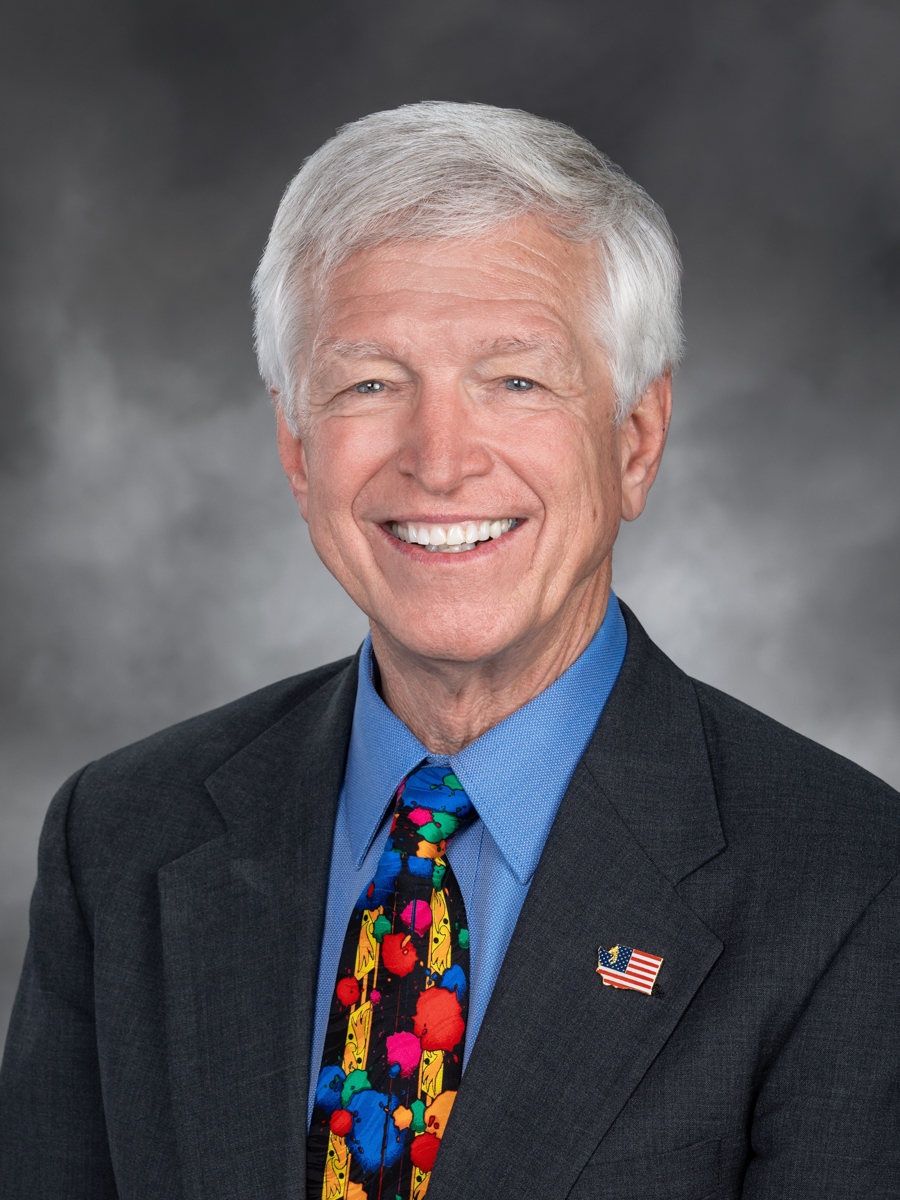
Photo of John Ley
R Washington House · District 18 On the 2026 ballot

Rep. John Ley

Compare
Total votes
1,201
all sessions
Attendance
100%
4 missed
Near the chamber average
With party
95%
of cast votes
Near the chamber average
Bipartisan score
2%
crosses aisle rarely
Near the chamber average
Sponsored
117
bills & resolutions
Near the chamber average
Committees
5
assignments
117 bills and resolutions

Sponsored bills

Total
117
Primary
13
Co-sponsor
104
This page
117
matching current filters
Co-sponsor HB 1087
In committee · Washington House · Co-sponsor
Expanding the crime of endangerment with a controlled substance to include fentanyl and other high-potency synthetic opioids.

Maddy summaryHB 1087 expands Washington's "endangerment with a controlled substance" law to include fentanyl and other high-potency synthetic opioids, in addition to methamphetamine. It directly affects individuals who knowingly expose dependent children or adults to these substances. The bill amends the law to specifically list fentanyl (and its salts/isomers) and other defined high-potency synthetic opioids as covered substances, making such exposure a class B felony. This change explicitly excludes cases where substances are administered under a valid prescription, as outlined in chapter 69.50 RCW.

In committee Jan 12, 2026 1 co-sponsor
Co-sponsor HB 1797
In committee · Washington House · Co-sponsor
Concerning cooperation by the department of children, youth, and families with law enforcement.

Maddy summaryHB 1797 requires Washington's Department of Children, Youth, and Families (DCYF) to cooperate with all law enforcement officers during criminal investigations, including responding to requests to search facilities like child care centers. The bill mandates this cooperation as defined under state law, specifically covering investigations into criminal activity. It directly affects DCYF staff and law enforcement agencies by establishing a clear obligation to assist during searches of institutions regulated under RCW 13.40.020. This is a procedural policy change focused on interagency coordination, not new funding or penalties.

In committee Jan 12, 2026 1 co-sponsor
Co-sponsor HB 1374
In committee · Washington House · Co-sponsor
Reducing the state sales and use tax rate.

Maddy summaryHB 1374 reduces Washington State's general sales and use tax rate from 6.5% to 6% for most retail transactions, effective October 1, 2025. It directly affects consumers and businesses selling tangible goods, digital products, and most services that were previously taxed at 6.5%. The bill amends RCW 82.08.020 to lower the standard rate, while maintaining separate taxes for car rentals (5.9%) and motor vehicles (0.3%). The change applies to all retail sales covered under the current tax code, excluding specific exemptions like farm vehicles and off-road equipment.

In committee Jan 12, 2026 1 co-sponsor
Co-sponsor HB 1405
In committee · Washington House · Co-sponsor
Reducing the requirements of complete streets obligations for transportation projects.

Maddy summaryHB 1405 reduces requirements for "complete streets" in Washington state transportation projects by exempting smaller projects and routine maintenance from previously mandated pedestrian, bicycle, and transit infrastructure. Specifically, it excludes projects under $500,000, chip sealing, repairs, and repaving from needing sidewalks, bike lanes, or accessibility features. The bill also adds an exception allowing the transportation department to skip these requirements if facilities don’t exist for "justifiable reasons," such as safety concerns or unreasonable costs. This change applies to state highway projects starting design after July 1, 2022, while maintaining existing obligations for larger projects.

In committee Jan 12, 2026 1 co-sponsor
Primary HB 1869
In committee · Washington House · Lead sponsor
Prohibiting the expenditure of Washington state funds for any capital costs of a transit agency created pursuant to the laws of an adjacent state.

Maddy summaryHB 1869 prohibits Washington state funds from covering capital costs - such as construction, transit vehicle purchases, or major equipment - for transit agencies created under the laws of neighboring states (e.g., Oregon or Idaho). It directly affects regional transit agencies operating across state lines, restricting state funding for capital projects but not ongoing operational expenses. The law, effective July 1, 2025, ensures Washington taxpayers’ money cannot subsidize infrastructure built by out-of-state transit entities.

In committee Jan 12, 2026 0 co-sponsors
Co-sponsor HB 2029
In committee · Washington House · Co-sponsor
Concerning recognition of legal personhood by a governmental entity.

Maddy summaryHB 2029 prohibits Washington state governmental entities (including courts, the legislature, and agencies) from granting or recognizing legal personhood to non-human entities. The bill specifically bans this for artificial intelligence, inanimate objects, bodies of water, land, real property, atmospheric gases, astronomical objects, weather, plants, nonhuman animals, and other non-human taxonomic groups. Legal personhood - defined as the rights and obligations of a natural person under state law - is explicitly barred from being extended to these categories. This bill directly affects how state agencies and courts may legally treat non-human entities, preventing them from being granted personhood status. The law takes effect immediately upon enactment.

In committee Jan 12, 2026 1 co-sponsor
Co-sponsor HB 1969
Passed · Washington House · Co-sponsor
Concerning the law enforcement aviation support grant program.

Maddy summaryHB 1969 establishes a law enforcement aviation support grant program to provide financial assistance to local law enforcement rotary wing aviation support units. The Department will implement this program, identifying eligible units that offer aviation support to any jurisdiction in the state without charging them. Fifty percent of appropriated funds will be equally distributed to these recognized units for maintenance and operational costs, including pilot, crew, and aircraft expenses. Remaining funds will reimburse these units for search and rescue mission costs, with any final leftover amounts going to the Washington State Patrol's aviation section. These funds are intended to supplement, not replace, existing local funding.

Passed Jan 12, 2026 1 co-sponsor
Co-sponsor HB 1375
In committee · Washington House · Co-sponsor
Adjusting the estate tax exclusion amount for inflation.

Maddy summaryHB 1375 adjusts Washington's estate tax exclusion amount annually for inflation, directly affecting Washington residents whose estates exceed the exclusion threshold. Starting August 1, 2025, the exclusion amount (currently $2,959,000) will automatically increase each year based on the Seattle-area consumer price index, calculated by multiplying the base amount by (1 + inflation percentage) and rounding to the nearest $1,000. This change ensures the exclusion keeps pace with rising costs, preventing unintended tax increases for estates of decedents dying in 2026 and beyond. The bill takes effect August 1, 2025, and applies to Washington residents' taxable estates.

In committee Jan 12, 2026 1 co-sponsor
Co-sponsor HB 2059
In committee · Washington House · Co-sponsor
Requiring certain disclosures from private entities that receive state funding.

Maddy summaryHB 2059 requires private organizations receiving state grants (like nonprofits, corporations, or associations) to publicly disclose specific financial and operational details within five business days of receiving funding. This includes employee wages, board member compensation, political contributions made over the last four election cycles, lobbyist contracts, and a detailed spending report for the grant money. State agencies must verify compliance, and noncompliant entities face losing the grant funds and must repay the full amount. The bill applies broadly to all state and local agencies awarding grants but excludes routine procurement of goods or services.

In committee Jan 12, 2026 1 co-sponsor
Co-sponsor HB 1407
In committee · Washington House · Co-sponsor
Concerning offenses involving graffiti or other damage to property.

Maddy summaryHB 1407 requires courts to order offenders convicted of third-degree malicious mischief or graffiti-related crimes to complete 40 hours of community restitution - such as cleaning graffiti from public spaces or repairing damaged property - instead of (or in addition to) fines or jail time. It directly affects individuals convicted of unauthorized property defacement, including gang-related tagging, in Washington state. The bill defines "graffiti" as unauthorized painting, spraying, or marking on public or private property and specifies that restitution must be performed through approved community programs. This change aims to provide offenders with direct accountability by repairing the harm they caused, rather than paying fines that don’t address the damage. The law amends existing statutes to formalize this sentencing option for specific property damage offenses.

In committee Jan 12, 2026 1 co-sponsor
Showing 71 to 80 of 117 bills
Previous 1 7 8 9 12 Next