

Maddy summaryHB 1898 modifies Washington state's truck and trailer length limits on public highways. It increases the maximum permitted length for three-axle flatbed trucks carrying empty loads or agricultural products from 75 to 85 feet, while maintaining existing limits for most other vehicles (e.g., standard trucks capped at 40 feet, tractor-trailers at 53 feet). The bill also creates new exceptions for manufacturer/distributor inventory transport (up to 82 feet for two trailers under 26,000 pounds) and emergency utility repairs (with safety lighting requirements). These changes directly affect commercial trucking companies, agricultural haulers, and utility providers transporting oversized loads.
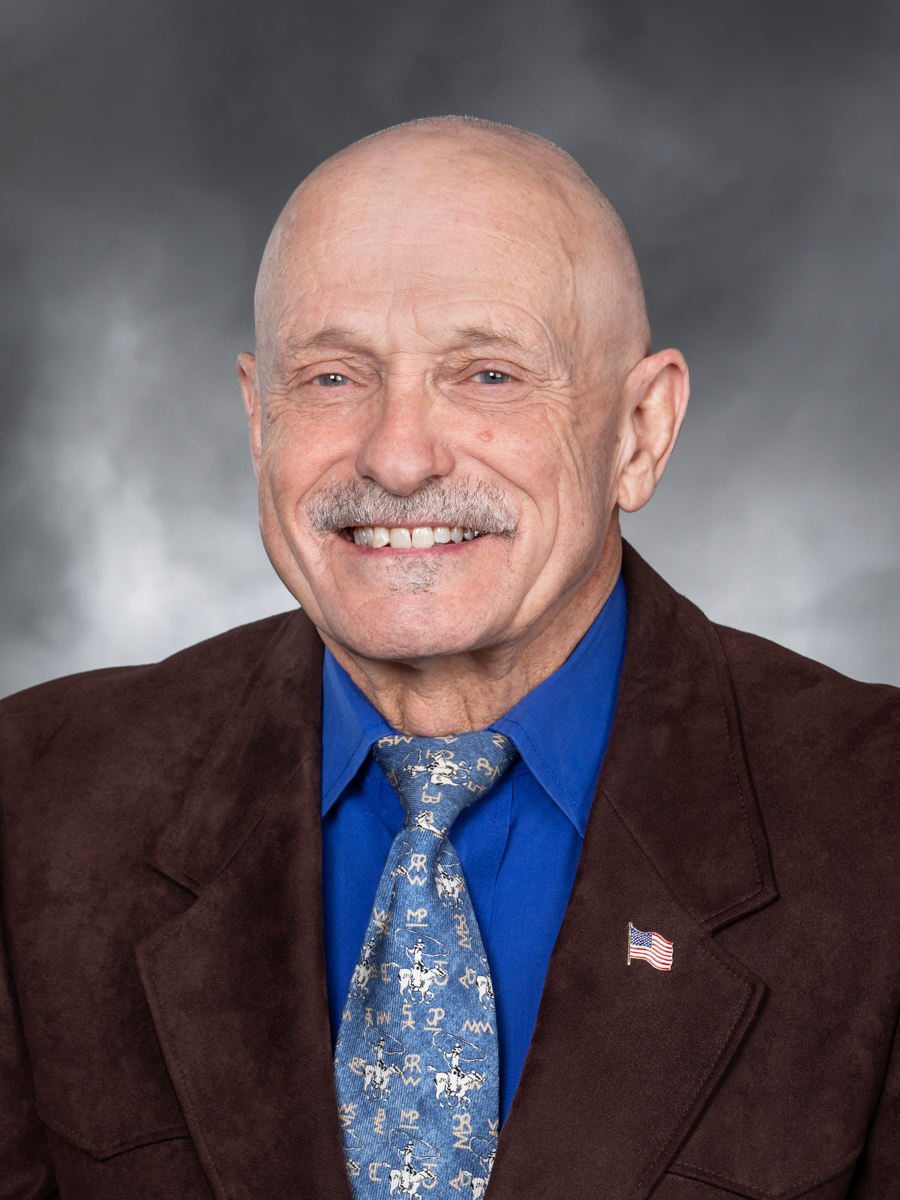
Rep. Tom Dent
Sponsored bills
Maddy summaryHB 1707 requires the state noxious weed control board to consult a work group - including agricultural producers and a board member - before listing agricultural crops as noxious weeds. The bill amends state law to mandate that the board consider scientific data on invasive risks and existing economic benefits of crops, and to provide a formal review process for proposed listings. This directly affects farmers and agricultural producers by ensuring their input is formally integrated into decisions about crop listings. The law creates a structured procedure where the board must wait for work group recommendations before taking action on agricultural crop designations.
Maddy summaryThis bill is a ceremonial resolution (HR 4691) adopted by the Washington State House of Representatives on February 16, 2026. It formally commends the contributions of U.S. presidents, specifically highlighting George Washington and Abraham Lincoln's roles in establishing freedom and ending slavery, and recognizes the third Monday in February as Presidents' Day. The resolution does not create new laws or affect any individuals or policies; it solely expresses the House's symbolic honor for presidential legacies. It directly affects no one but serves as a formal statement of recognition by the state legislature.
Maddy summaryThis is a ceremonial resolution (not substantive legislation) passed by the Washington state House of Representatives. It formally congratulates the Seattle Seahawks football team for winning the 2025 NFL regular season, NFC West Division championship, and Super Bowl 60. The resolution specifically recognizes their 14-3 record, defensive dominance, key player achievements (including MVP Kenneth Walker III), and community contributions. It has no legal effect beyond expressing the House's recognition and appreciation to the team organization.
Maddy summaryHB 2584 exempts Washington farmers with annual gross sales or harvested value under $2 million from sales and use taxes on qualifying farm equipment costing $10,000 or more used directly for crop production. It covers machinery like tractors, harvesters, and irrigation tools but excludes road vehicles and motorcycles. Farmers must provide exemption certificates to sellers and maintain records, with the exemption expiring October 1, 2036. This policy reduces tax burdens for small and medium-sized farms to support agricultural competitiveness.
Maddy summaryThis bill prohibits licensed mental health professionals in Washington from using artificial intelligence to independently make therapeutic decisions, directly interact with clients, generate treatment plans, or detect client emotions. It allows AI use only for administrative tasks like scheduling or billing, and for supplementary support like note-taking only with explicit written consent from the client. The legislation defines specific categories of permitted versus prohibited AI use to maintain human oversight in therapy and psychotherapy services. Violations of these rules could result in professional discipline for licensed practitioners. The bill aims to protect consumers from unregulated AI tools while preserving appropriate AI assistance under professional supervision.
Maddy summaryHB 2131 allows vessel owners in Washington to voluntarily donate $1 or more during vessel registration to fund sea lion management. The donations, which can be declined, are deposited into a new "sea lion predation control account" specifically for controlling sea lions that prey on salmon in the lower Columbia River. Funds in this account may only be used for salmon preservation efforts targeting pinniped (sea lion) populations and cannot replace existing state agency funding for this purpose. The bill creates this funding mechanism at registration time without changing vessel registration fees or requirements.
Maddy summaryHB 2620 invalidates a 2025 forest buffer rule adopted by Washington's Forest Practices Board and requires the Board to restart the rulemaking process for riparian buffers around nonfish streams. The bill mandates the Board to develop a measurable economic viability standard for the timber industry by January 2027, ensuring rules consider impacts on small landowners and operational mills. It also requires the Board to reevaluate scientific studies used in the prior rulemaking, ensuring longer-term monitoring and actual evidence of aquatic resource impacts before adopting new standards. This legislation directly affects the Forest Practices Board, timber industry stakeholders, and rural communities dependent on forest revenue.
Maddy summaryHB 2601 establishes a new tiered fee structure for motorcycle registrations in Washington State, charging $15 for all motorcycles (regardless of weight) and increasing fees for heavier models (e.g., $35 for 4,000 pounds, $65 for 6,000 pounds, and $96 for 16,000 pounds or more). Motor homes will pay a flat $75 fee instead of the motorcycle-based fee. The state will use manufacturer-provided weight data to determine vehicle weight, and all fees will fund transportation projects. This new structure takes effect July 1, 2027, and expires January 1, 2029, after which a revised fee schedule becomes active.
Maddy summaryHB 2357 establishes a formal Washington Division of Civil Air Patrol within the state's Military Department, integrating existing volunteer members of the Washington Wing of the federally chartered Civil Air Patrol. This division, led by the Washington Wing's commanding officer, will operate under state authority and can be activated by the governor for state service. It authorizes the division to formally cooperate with state agencies, tribes, and local governments on specific missions like disaster relief, search and rescue, and cadet training, with reimbursement for expenses. The bill clarifies it does not alter the federal Civil Air Patrol's operations or existing relationships with the U.S. government.