

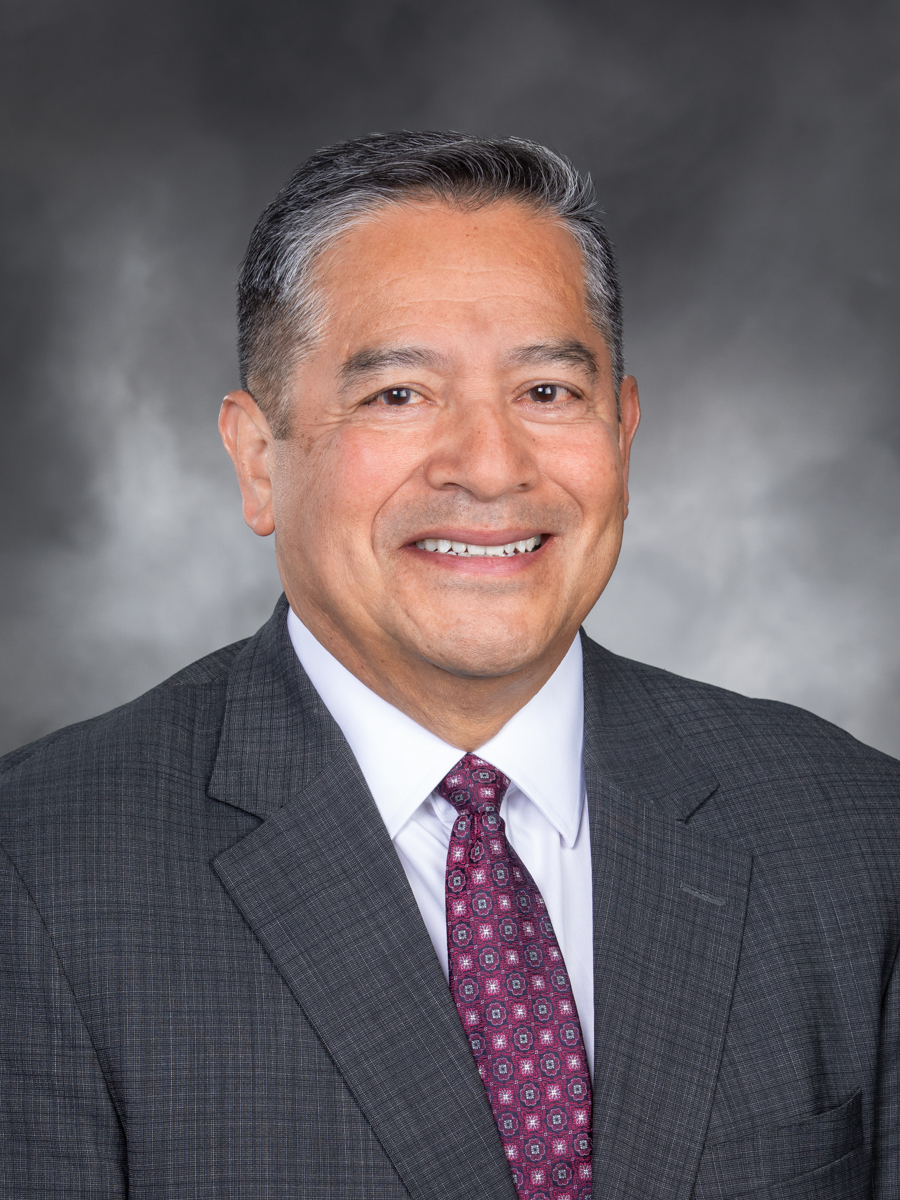
Photo of Alex Ybarra
R Washington House · District 13

Rep. Alex Ybarra

Compare
Total votes
4,956
all sessions
Attendance
100%
12 missed
Near the chamber average
With party
94%
of cast votes
Near the chamber average
Bipartisan score
3%
crosses aisle rarely
Near the chamber average
Sponsored
283
bills & resolutions
Lower than 92% of chamber peers
Committees
6
assignments
283 bills and resolutions

Sponsored bills

Total
283
Primary
23
Co-sponsor
260
This page
283
matching current filters
Co-sponsor HB 1058
In committee · Washington House · Co-sponsor
Providing incentives to improve freight railroad infrastructure.

Maddy summaryHB 1058 creates tax credits for eligible railroads to fund infrastructure improvements. It directly affects small regional railroads (class II/III), public entities like ports/cities, and industrial property owners with rail spurs in Washington. The bill provides a 50% tax credit on qualified expenses for maintenance, new rail development, or modernization projects (e.g., track upgrades, bridges, safety equipment), with annual limits of $500,000 per taxpayer and a total $8 million statewide cap. Credits can be carried forward for up to five years or transferred to other eligible taxpayers.

In committee Jan 12, 2026 1 co-sponsor
Co-sponsor HB 1699
In committee · Washington House · Co-sponsor
Defending equity in interscholastic sports.

Maddy summaryHB 1699 (Defending equity in interscholastic sports) requires Washington public school districts to verify a student’s biological sex through a healthcare provider’s statement (based on reproductive anatomy, genetics, or testosterone levels) before allowing biologically male students to participate in female-identified sports. It permits schools to prohibit biologically male students from competing in sports with separate male/female classifications, while mandating equal resources (equipment, facilities, coaching, etc.) for all gender-segregated teams. The bill amends existing laws (RCW 28A.600.200 and 28A.640.020) to align with these provisions and requires the superintendent to develop guidelines eliminating sex discrimination in school activities. It directly affects public school students, athletic programs, and district policies governing interscholastic sports participation.

In committee Jan 12, 2026 1 co-sponsor
Co-sponsor HB 1712
In committee · Washington House · Co-sponsor
Allowing the use of electricity generated by qualified biomass facilities in the Pacific Northwest to meet renewable resource requirements.

Maddy summaryHB 1712 amends Washington state law to allow utilities to count electricity from qualified biomass facilities in the Pacific Northwest toward their renewable energy requirements under the Energy Independence Act. The bill defines "qualified biomass energy" as electricity generated from specific organic sources like wood byproducts, agricultural waste, and dedicated energy crops - excluding treated wood or municipal waste - provided the facility began operations before March 31, 1999, and is located in the Pacific Northwest. This change directly affects utilities required to meet renewable portfolio standards, expanding their eligible resource options. By including qualified biomass energy as a valid renewable source, the bill provides utilities with additional compliance pathways for state-mandated renewable energy goals.

In committee Jan 12, 2026 1 co-sponsor
Co-sponsor HB 1037
In committee · Washington House · Co-sponsor
Concerning public facilities district formation.

Maddy summaryHB 1037 amends Washington state law to expand how cities, towns, and counties can form public facilities districts (PFDs) for projects like regional centers. It allows single cities/towns in counties under 1 million population to create PFDs, and adds new options for joint operations between contiguous cities/towns and counties (or school districts), with a deadline of July 1, 2026, for certain new districts. The bill details governance rules, requiring boards with appointed members (including representation from local organizations like chambers of commerce) serving four-year terms. It directly affects local governments in smaller-county areas seeking to collaborate on public infrastructure projects.

In committee Jan 12, 2026 1 co-sponsor
Co-sponsor HB 1777
In committee · Washington House · Co-sponsor
Concerning the requirements and process for approving and registering apprenticeship programs.

Maddy summaryHB 1777 streamlines the state approval process for apprenticeship programs that already have federal approval, directly affecting program sponsors (including tribal and nontribal organizations) and employers seeking to expand training opportunities. It requires the apprenticeship council to expedite reviews of federally-approved programs by limiting state-specific scrutiny to unique requirements, while reforming competitor objections: objections must be filed within 30 days of provisional approval, and frivolous objections can trigger penalties like attorney fee payments or $10,000 fines. The bill also mandates annual reports comparing Washington’s program approval rates to federal standards and other states, including details on pending applications and denial reasons. These changes aim to reduce current delays - where 4 of 17 2024 applications remained pending after federal approval - without altering apprenticeship content or creating new training slots.

In committee Jan 12, 2026 1 co-sponsor
Co-sponsor HB 1182
In committee · Washington House · Co-sponsor
Granting interest arbitration to certain parks and recreation commission employees.

Maddy summaryHB 1182 grants certain parks and recreation commission employees the right to use interest arbitration - a formal dispute resolution process - to settle disagreements over wages, hours, and working conditions when negotiations stall. It directly affects non-confidential park and recreation staff (excluding internal auditors) in Washington state, specifically those covered under chapter 41.06 RCW. The bill requires employers and unions to begin negotiations at least five months before the state budget is submitted, and if unresolved after 60 days, either party can request mediation or appoint an arbitrator by mutual agreement from a federal list. The arbitrator must consider factors like the agency’s budget, similar state employee pay, and retention needs, with decisions becoming binding unless appealed under existing law.

In committee Jan 12, 2026 1 co-sponsor
Co-sponsor HB 1406
In committee · Washington House · Co-sponsor
Concerning associate development organizations.

Maddy summaryHB 1406 requires associate development organizations (regional economic development groups) contracting with Washington’s Department of Commerce to submit detailed annual reports tracking employment impact, business services, and funding use. These reports must include metrics like net employment changes, small business outcomes, and regional economic data, all input into a shared web system. The bill establishes performance targets for these organizations, with consequences for failure - including remediation plans and potential one-year funding termination - to ensure accountability. It also adjusts funding allocations, providing urban organizations up to $300,000 annually (90 cents per capita) and rural organizations up to $40,000 plus matching funds. The bill directly affects regional economic development groups receiving state contracts, focusing on measurable outcomes rather than program creation.

In committee Jan 12, 2026 1 co-sponsor
Co-sponsor HB 2036
In committee · Washington House · Co-sponsor
Concerning persons convicted of violent offenses with a firearm.

Maddy summaryHB 2036 prohibits individuals convicted of violent offenses involving a firearm from earning early release credits under Washington's sentencing laws. It directly affects people serving sentences for violent crimes where a firearm was used or involved, as defined by existing law. The bill amends RCW 9.94A.729 to explicitly deny all "good time credits or earned release time" for sentences tied to such offenses. This change modifies current early release eligibility rules, ensuring offenders convicted of firearm-related violent crimes cannot reduce their sentences through earned credits. The policy focuses on restricting sentence reductions for specific high-risk offenses, not altering general sentencing guidelines.

In committee Jan 12, 2026 1 co-sponsor
Co-sponsor HB 1804
In committee · Washington House · Co-sponsor
Improving accessibility of community solar projects in Washington state.

Maddy summaryHB 1804 amends Washington state law to make community solar projects more accessible, particularly for low-income households and smaller projects. It clarifies definitions (like "community solar company" and "project participant"), sets a maximum system size of 1,000 kilowatts, and requires projects to have at least two subscribers or one low-income service provider. Key provisions include reserving $50 million in incentives for projects under 199 kilowatts and adding labor standards - such as prevailing wages and apprenticeship requirements - for larger projects (199-999 kW). The bill directly affects community solar administrators, low-income service providers, and solar construction workers, while ensuring electric utilities can interconnect these projects.

In committee Jan 12, 2026 1 co-sponsor
Co-sponsor HB 1534
In committee · Washington House · Co-sponsor
Enhancing the regulation of tobacco products, alternative nicotine products, and vapor products.

Maddy summaryHB 1534 raises the minimum age to purchase tobacco, alternative nicotine, and vapor products from 18 to 21 in Washington State. It requires retailers to verify customers' ages using specific photo ID with signature (e.g., driver's licenses, tribal ID cards) and imposes stricter penalties for sales to minors. Violations now carry fines starting at $1,500 for first offenses and up to $15,000 for repeated violations, with license suspensions or revocations for repeated breaches. The bill directly affects retailers selling these products, targeting underage access through enhanced enforcement mechanisms.

In committee Jan 12, 2026 1 co-sponsor
Showing 41 to 50 of 283 bills
Previous 1 … 4 5 6 … 29 Next