

Maddy summaryHB 1663 aims to improve youth mental health in Washington schools by expanding the school social worker workforce. It requires educational service districts to coordinate with mental health agencies and universities to create in-school placements for social workers and trainees, directly addressing Washington's current ratio of one social worker per 3,798 students (compared to the recommended 1:250). The bill amends state law to clarify school social workers' roles in crisis intervention, trauma care, behavioral support, and collaboration with families and schools. These changes are designed to reduce student absenteeism, support students with mental health needs, and strengthen school-based mental health services for all K-12 students.
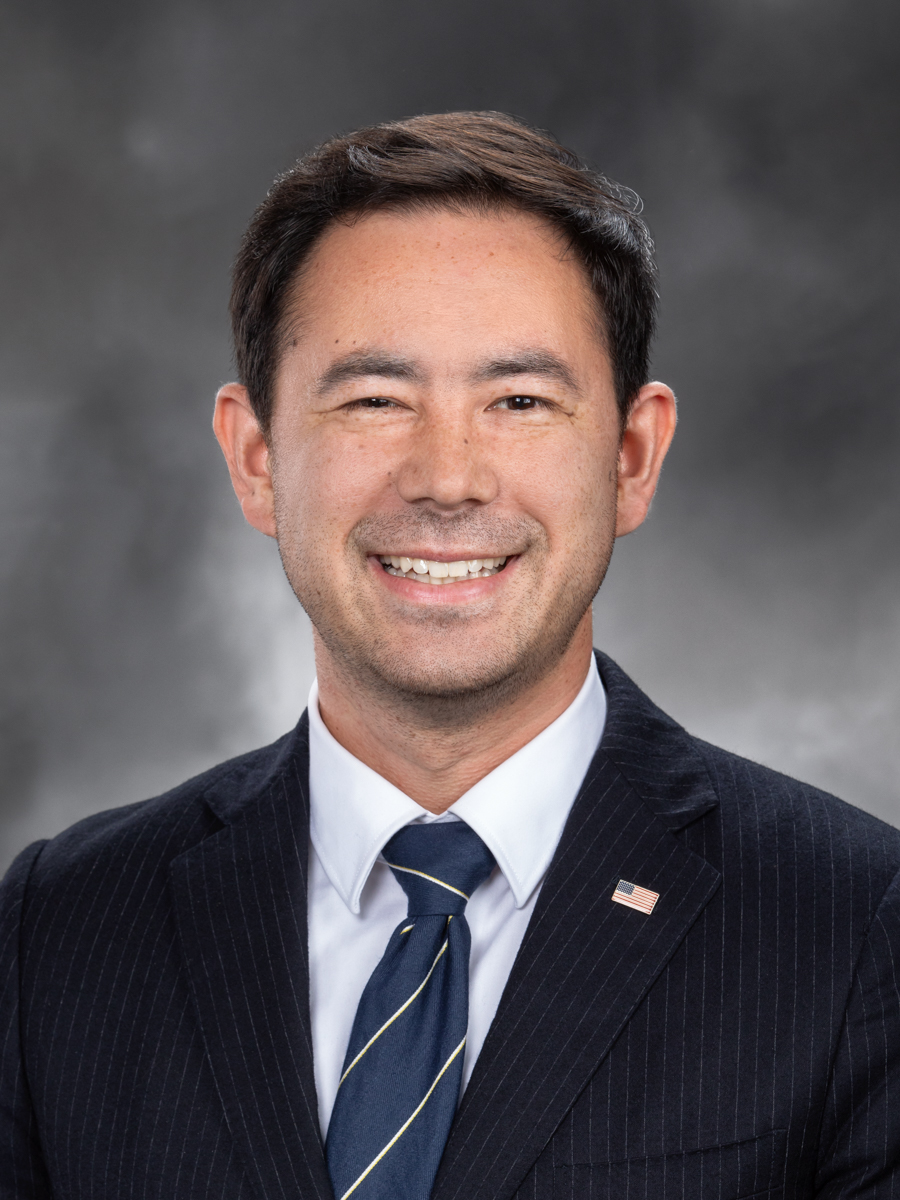
Rep. Clyde Shavers
Sponsored bills
Maddy summaryHB 1401 creates a new "Nautical Northwest" special license plate option for Washington state vehicle owners. The bill adds this plate to the existing list of special plates, with a $40 initial fee and $30 annual renewal fee, as specified in RCW 46.68.420. The plate would display a Northwest maritime scene, allowing vehicle owners to choose it instead of standard plates. This is a procedural change adding a new voluntary license plate option, not a new tax or regulation.
Maddy summaryHB 1714 allows small businesses with 20 or fewer employees to form joint self-insurance programs for property damage and liability claims, pooling resources to cover risks traditionally managed through commercial insurance. It requires state approval for all such programs, mandates reporting to the state risk manager, and designates the state risk manager as the legal representative for all lawsuits against the program. Participants must establish reserve funds and comply with specific operational standards, while excluding businesses already self-insuring or part of other regulated risk pools. This bill creates a new regulatory framework for small business risk pooling under Washington state law.
Maddy summaryHB 1166 establishes the "Providing Effective Education for Reentry Success Act" in Washington State, directly affecting incarcerated individuals by expanding their access to postsecondary education and digital tools. The bill requires correctional facilities to provide broadband internet access, allow incarcerated people to own personal laptops with WiFi, and ensure timely access to educational websites (within two weeks of request). It mandates that facilities collaborate on digital inclusion efforts and prohibits restrictions on online learning for responsible users, defining "digital equity" to include activities like taking online exams, accessing library resources, and applying for financial aid. The law aims to support rehabilitation and successful reentry through structured educational pathways and digital literacy opportunities.
Maddy summaryHB 1280 amends Washington's school funding formula to require a 23:1 student-to-teacher ratio for career and technical education (CTE) programs in middle and high schools. This specifically affects sixth-grade students in middle school CTE programs by establishing a funding standard for class sizes. School districts receiving state basic education funds must allocate resources to maintain this ratio for CTE instruction. The bill modifies existing funding rules under RCW 28A.150.260 to include CTE class size requirements in the allocation formula. It does not mandate new CTE programs but sets parameters for funding existing or expanded middle school CTE offerings.
Maddy summaryHB 1016 creates a 20% tax credit for Washington employers hiring qualified veterans or spouses of active-duty military members, up to $3,000 per employee annually. To qualify, employees must work full-time (35+ hours/week) for two consecutive quarters, and employers must claim credits electronically. The credit is capped at $5 million total per fiscal year across both this bill and a related provision, with credits expiring for tax years after 2036. This directly affects employers in Washington who hire eligible military-affiliated workers, aiming to incentivize veteran/military family employment through tax relief.
Maddy summaryHB 1004 increases Washington State's personal property tax exemption from $15,000 to $50,000 for individual taxpayers. It directly affects residents owning personal property (like furniture, jewelry, or equipment) valued under $50,000, excluding private vehicles and mobile homes. To claim the exemption, taxpayers must attest under penalty of perjury that their total personal property value is below $50,000 and they are claiming only one exemption statewide. The bill amends existing tax code sections to reflect this change and requires county assessors to verify claims. The exemption would take effect January 1, 2026, contingent on voter approval of a related constitutional amendment.
Maddy summaryHB 1751 exempts required course materials (like textbooks and digital resources) from Washington state sales and use taxes for students enrolled at public colleges and universities. It requires students to show valid enrollment proof at approved vendors (campus bookstores or institution-designated online sellers) to qualify for the exemption. Public institutions must inform students about this tax break via their websites and course syllabi. The bill directly affects all students at Washington’s public higher education institutions by reducing out-of-pocket costs for essential learning materials, which the legislature notes are increasingly unaffordable (65% of students skip buying textbooks due to cost).
Maddy summaryHB 1040 allows people eligible for Washington’s property tax exemption programs (for seniors or disabled residents) to exclude up to $6,000 annually in rental income from their primary residence when calculating income eligibility for the exemption. This applies only to long-term rentals (not short-term rentals like Airbnb, which must still be reported as taxable income). The bill amends existing tax code to include rental income as part of "combined disposable income" calculations, adjusting how income thresholds are applied. It directly affects low-income homeowners in qualifying exemption programs who rent out space in their primary home.
Maddy summaryHB 1021 ensures military-connected students can stay in their current school through the end of the school year (or graduation for grades 9-12) if a parent’s active duty transfer requires a move. It allows schools to accept enrollment applications conditionally using temporary military housing (like on-base billeting) as proof of residency, finalizing enrollment once documentation is provided. The bill also clarifies that school districts aren’t required to provide transportation for these students unless mandated by law. This directly affects children of active-duty military parents and their school districts across Washington State.