This resolution authorizes (1) Bailey McCue, and any other employee of former Senator Cory Gardner's office from whom relevant evidence may be necessary, to testify and produce documents in the case of United States v. Wornick (except concerning matters for which a privilege should be asserted); and (2) the Senate Legal Counsel to represent the Senator and any employees of his former office in connection with the case.
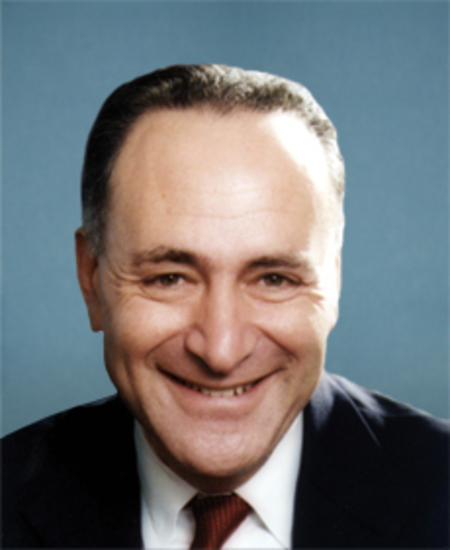
Sen. Charles E. Schumer
Sponsored bills
COVID - 19 Hate Crimes Act This bill requires a designated officer or employee of the Department of Justice (DOJ) to facilitate the expedited review of hate crimes and reports of hate crimes. DOJ must issue guidance for state, local, and tribal law enforcement agencies on establishing online hate crime reporting processes, collecting data disaggregated by protected characteristic (e.g., race or national origin), and expanding education campaigns. Additionally, DOJ and the Department of Health and Human Services must issue guidance aimed at raising awareness of hate crimes during the COVID-19 (i.e., coronavirus disease 2019) pandemic. The bill establishes grants for states to create state-run hate crimes reporting hotlines. It also authorizes grants for states and local governments to implement the National Incident-Based Reporting System and to conduct law enforcement activities or crime reduction programs to prevent, address, or respond to hate crimes. Finally, in the case of an individual convicted of a hate crime offense and placed on supervised release, the bill allows a court to order that the individual participate in educational classes or community service as a condition of supervised release.
This resolution urges the United Kingdom (UK) and the European Union (EU) to support peace on the island of Ireland and the principles, objectives, and commitments of the Good Friday Agreement. The resolution also expresses support for subsequent agreements relating to the relationship between Northern Ireland and the Republic of Ireland, including the agreement concerning the UK's withdrawal from the EU. (The island of Ireland is divided between Northern Ireland, which is part of the UK, and the Republic of Ireland, an EU member state.)
Citizenship for Essential Workers Act This bill establishes a mechanism for eligible aliens who worked as essential workers during the declared COVID-19 (i.e., coronavirus disease 2019) public health emergency to apply for and obtain permanent resident status. The bill also narrows certain grounds for deportability and inadmissibility. To be eligible for permanent resident status under this bill, an alien must have earned income at any point during the COVID-19 emergency period doing work deemed essential by the Department of Homeland Security (DHS) or a state or local government. An alien may also be eligible if that alien is a parent, spouse, or child of (1) an eligible alien who died from COVID-19, or (2) a member of the Armed Forces. Certain aliens shall be ineligible, such as an alien who was a refugee on January 1, 2021. To obtain permanent resident status under this bill, an applying alien must satisfy additional requirements, including by passing a background check. Furthermore, the bill repeals provisions providing for three-year bars and permanent bars to admission into the United States. (Generally, these bars apply to aliens who were previously removed or unlawfully present in the United States.) The bill also narrows the scope of certain crime-based grounds for inadmissibility or deportability, such as by redefining the term conviction to exclude expunged convictions. The Department of Justice or DHS may waive certain grounds of inadmissibility or deportability (1) for humanitarian purposes, (2) to ensure family unity, or (3) for the public interest.
End the Limo Loophole Act This bill revises the definition of commercial motor vehicle to include vehicles that are designed to transport 9 or more passengers including the driver (currently, at least 16 passengers including the driver) and requires the Federal Motor Carrier Safety Administration to finalize a rulemaking to require states to implement an annual inspection program for commercial passenger-carrying vehicles.
Take Unsafe Limos Off the Road Act This bill directs the Department of Transportation to award grants to states that have enacted and are enforcing laws that require the impoundment or immobilization of stretch limousines if such limousines are found to have certain defects upon inspection.
Safety, Accountability, and Federal Enforcement of Limos Act of 2021 or the SAFE Limos Act This bill sets out requirements to improve the safety of limousines. Within two years of the bill's enactment, the Department of Transportation (DOT) must apply to newly manufactured limousines specified motor vehicle safety standards related to the installation of seat belts and other occupant crash protections. In addition, DOT must report on the feasibility, benefits, and costs of retrofitting limousines to meet those standards. DOT must also develop additional motor vehicle safety standards to improve limousine safety. This includes standards related to (1) side impact protection, roof crush resistance, and other aspects of crashworthiness; (2) evacuation in the event the exit in the passenger compartment is blocked; and (3) the use of event data recorders. Additionally, the bill requires that individuals who remodel new limousines submit to DOT and annually update a plan for mitigating limousine safety risks. The plan must include, among other topics, verification that the remodeled limousines meet applicable safety standards. Further, individuals who modify used vehicles into limousines must certify that the modified vehicles meet such standards. The bill also requires limousine operators to disclose the date of, results of, and any corrective action needed to pass the most recent vehicle inspection. The Federal Trade Commissions shall enforce the disclosure requirements.

Home Lead Safety Tax Credit Act of 2021 This bill allows owners of eligible dwelling units a new tax credit through 2024 for 50% of the lead hazard reduction activity costs for each such unit, up to an aggregate of $4,000 per unit. An eligible dwelling unit is any unit located in the United States that was placed in service before 1978. The bill (1) specifies the types of lead hazard reduction activity costs eligible for the credit, including risk assessment and abatement costs; and (2) limits the amount of the credit in any taxable year to $3,000 for specified abatement measures and $1,000 for interim lead control measures.
Fair Care for Vietnam Veterans Act of 2021 This bill provides a presumption of service-connection for hypertension and monoclonal gammopathy of undetermined significance (MGUS) for veterans who served in Vietnam between January 9, 1962, and May 7, 1975. Under a presumption of service-connection, specific conditions diagnosed in certain veterans are presumed to have been caused by the circumstances of their military service. Health care benefits and disability compensation may then be awarded.
This resolution makes temporary appointments to the Senate Select Committee on Ethics with respect to specified matters before the committee. Specifically, the bill replaces Senator Chris Coons and Senator James Lankford with Senator Ben Ray Luján and Senator John Boozman with respect to these matters, and it provides that Senator Brian Schatz and Senator James Risch shall act as chairman and vice chairman, respectively, for these matters only.