

Maddy summaryS 3627, the Pregnant Students’ Rights Act, requires colleges and universities participating in federal student aid programs to provide clear information about pregnancy-related resources and accommodations to all enrolled students. The bill mandates annual email notifications, inclusion in student handbooks and orientations, and availability at health centers and websites, detailing campus/community resources, available accommodations, and how to file Title IX complaints. It specifically covers students planning to or currently pregnant who wish to carry a baby to term. The law focuses solely on disseminating existing information and does not create new rights or accommodations. (Bill text amended under Section 485 of the Higher Education Act.)
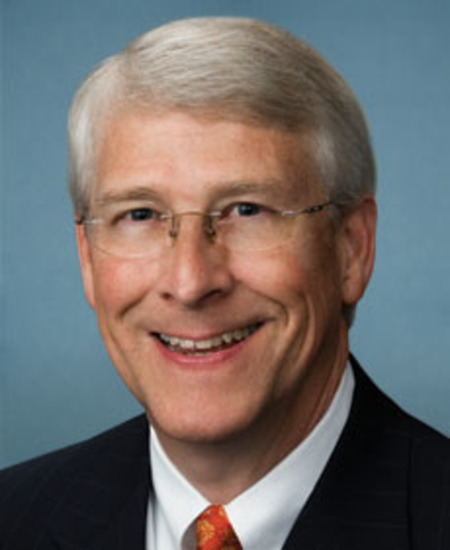
Sen. Roger F. Wicker
Sponsored bills
Maddy summarySRES 585 is a commemorative resolution honoring Ben Nighthorse Campbell, a former U.S. Senator from Colorado and the first Native American to chair the Senate Committee on Indian Affairs. It recognizes his military service, Olympic judo career, legislative work (including authoring the National Museum of the American Indian Act), and advocacy for tribal communities. The resolution has no policy impact - it formally expresses the Senate’s respect for his legacy, requests transmission to his family, and directs a moment of silence. It directly affects Campbell’s legacy and family, not any current policy or population. (Note: This is a procedural resolution, not a bill with legislative provisions.)
Maddy summaryThis bill creates a voluntary "limited accreditation" option for adoption service providers who only offer specific services: child background studies, home studies for prospective adoptive parents, or post-placement reports. It adds this new category to the existing accreditation system under the Intercountry Adoption Act of 2000, allowing providers to seek limited accreditation for one or more of these targeted services instead of full accreditation. The bill explicitly states this limited accreditation is optional and does not require providers to obtain it, nor does it change the definition of "adoption service" or existing requirements. It aims to expand provider options without mandating new accreditation for existing services.
Maddy summaryThis bill declares that the constitutional right to life applies to all human beings from the moment of conception, including fertilization. It states that Congress intends to implement this right under its powers in Article I and the 14th Amendment. The bill explicitly clarifies it does not require prosecuting women for pregnancy outcomes, ban in vitro fertilization, or restrict birth control methods. It defines "human person" to include individuals at all life stages starting at conception.
Maddy summaryS 3672, the NASA Talent Exchange Program Act, creates a temporary exchange program between NASA and private sector entities. It allows NASA employees to be assigned to private companies (for up to 2 years, renewable to 4 years) and private sector employees to be assigned to NASA, subject to written agreements, employee consent, and specific terms. Key provisions require NASA employees returning to the private sector to serve in federal roles for twice the assignment period, prohibit misuse of sensitive information, and mandate annual reports to Congress on participation and outcomes. The program aims to enhance skills in areas like cybersecurity while maintaining strict conflict-of-interest safeguards and prohibiting private entities from billing the government for assigned employees' pay.
Maddy summaryThis is a Senate resolution (SRES 573), not a legislative bill, expressing the Senate's position on U.S. leadership in religious freedom. It reaffirms the U.S. commitment to promoting religious freedom globally, encourages the Secretary of State to use diplomatic tools to address foreign violations, and supports existing roles like the Ambassador-at-Large for International Religious Freedom. The resolution does not create new laws or change policies but serves as a symbolic statement urging continued U.S. engagement on this issue. It directly affects U.S. diplomatic efforts and messaging toward countries with religious freedom concerns, such as China and Nicaragua, as cited in the resolution's background.
Maddy summaryThe SUCCESS for BEAD Act (S 3565) modifies how leftover funds from the federal BEAD broadband program can be used. It requires eligible entities to establish a competitive subgrant program using remaining funds for public safety (including Next Generation 9-1-1 systems), workforce development in telecommunications and AI sectors, and AI-supportive infrastructure projects. The bill specifies priorities for underserved areas, military installations, and cybersecurity, while including a public challenge process to prevent overbuilding of fiber infrastructure. It also establishes requirements for coordination with emergency communications centers for Next Generation 9-1-1 implementation.
Maddy summaryThis bill requires the VA to provide telehealth services, mail-order pharmacy benefits, and mandatory beneficiary travel payments to veterans residing in the Freely Associated States (including Palau, the Marshall Islands, and Micronesia) within one year of enactment. It mandates quarterly reporting to Congress on implementation progress and associated costs. The law directly affects veterans in these Pacific Island nations by expanding access to critical healthcare and travel support services previously not uniformly guaranteed.
Secure Rural Schools Reauthorization Act of 2025 This act extends and modifies the Secure Rural Schools (SRS) program, under which states and counties containing certain federal land may receive payments from the Forest Service or the Bureau of Land Management (BLM) for schools, roads, and certain other municipal services. The act modifies the SRS program, including by extending payments made to states and counties containing federal land through FY2026, providing lapsed payments for FY2024 and FY2025, extending the authority of counties to initiate projects using such funds through FY2028, and extending the authority to initiate projects proposed by resource advisory committees through FY2028.
Maddy summaryThis Senate resolution recognizes community care - treatment outside VA facilities - as essential for meeting veterans' health needs. It affirms that community care complements, rather than replaces, VA health services, as established by the 2018 VA MISSION Act. The resolution urges the VA to fully implement the MISSION Act to ensure veterans receive timely care through community providers when VA facilities cannot meet their needs. It does not create new programs or funding but formally supports existing community care access as a key part of veteran healthcare.