

Maddy summaryThis bill redesignates the existing National Parks and Public Land Legacy Restoration Fund as the America's Legacy Restoration Fund to address deferred maintenance on federal lands. It directs revenue from recreation fees and a portion of energy development income into the fund, which must be used primarily for repairing critical infrastructure like roads, trails, and buildings managed by agencies such as the National Park Service and the Forest Service. The legislation establishes strict rules requiring that most funds go toward non-transportation projects, mandates transparency through public dashboards tracking project status, and sets aside a small percentage for matching private donations. Additionally, the bill increases entrance fees for foreign visitors to ensure they contribute to the fund, while prohibiting the use of these specific funds for land acquisition or employee bonuses.
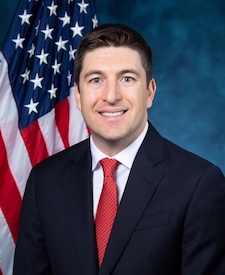
Rep. Bryan Steil
Sponsored bills
Maddy summaryThis bill, titled the Protecting Americans' Retirement Savings From Politics Act, aims to reform how companies disclose information to investors and how proxy advisory firms operate. It requires companies to only disclose information they determine is material to investment decisions, creates a new advisory committee for public companies, and mandates registration for proxy advisory firms with strict rules on conflicts of interest and voting recommendations. The legislation also requires institutional investors to report how they use proxy advisory firm recommendations and prohibits automated voting without independent review. Additionally, it clarifies that investment advice should prioritize financial returns over non-financial factors unless customers provide informed consent to consider other factors.
Maddy summaryThe Unleashing AI Innovation in Financial Services Act establishes "AI Innovation Labs" within major financial regulatory agencies to enable financial institutions to test AI-driven financial products and services with temporary regulatory flexibility. Financial institutions can apply for approval to operate AI test projects under alternative compliance strategies that must demonstrate public benefit, risk management, and consumer protection while avoiding systemic risks. Regulators must review applications within 120 days (extendable to 240 days), and approved projects operate under the alternative strategy for a defined period with annual reporting requirements. The bill creates a structured framework for innovation in financial services while maintaining oversight through defined application processes and regulatory reporting.
Maddy summaryThe REAL Butter Act requires food manufacturers to clearly label products made from lab-created milkfat as "lab-created butter" on their packaging. This rule applies to any item marketed as butter that uses non-agricultural sources for its milkfat instead of traditional dairy. The law defines these products specifically as those that do not meet the existing federal standard of identity for butter. By mandating this specific wording on labels, the bill aims to ensure consumers can easily distinguish between traditional butter and synthesized alternatives.
Medal of Sacrifice Act of 2025 This act directs the President to issue a medal of sacrifice for eligible law enforcement officers and first responders who are killed in the line of duty. The act also directs the President to establish a commission on the medal of sacrifice and appoint its members. The act sets forth responsibilities of the commission, including to advise on the design of the medal and determine how the medal will be presented. Under the act, eligible law enforcement officers and first responders include federal, state, local, tribal, or territorial law enforcement officers or first responders who are not subject to an official act of wrongdoing (e.g., a determination that the officer or first responder acted outside the scope of their duties or in a manner that was not in accordance with official policies or procedures). A law enforcement officer or first responder who is subject to an official act of wrongdoing is generally not eligible for the medal of sacrifice. However, in the case of such an officer or first responder, the act requires the commission to investigate the circumstances surrounding the officer or first responder's cause of death and issue a final determination on their eligibility.
Maddy summaryThis bill modifies federal rules to allow adults with disabilities aged 18 and older to work for employers at wages below the standard minimum rate, whereas the previous law restricted this option to individuals under 24. It requires these employers to make documented efforts to find suitable jobs for their employees at regular intervals and permits the use of subminimum wages only if state agencies fail to provide necessary job counseling and referrals. Additionally, the bill mandates that employers must provide copies of these job search records to the individuals they employ. These changes aim to expand employment opportunities for adults with disabilities while maintaining specific oversight to ensure they are not denied access to regular competitive employment.
Maddy summaryHR 6260 amends federal law to clarify that fraud involving bail arrangements falls under existing fraud statutes. Specifically, it adds "including the posting of monetary bail, criminal bail bonds, and Federal immigration bail bonds" to a section of Title 18, U.S. Code. This change directly affects federal prosecutors and courts handling cases where individuals commit fraud related to securing bail. The bill does not create new penalties but ensures these bail-related fraud activities are explicitly covered under current legal definitions. It has no direct impact on the public or defendants beyond clarifying prosecutorial authority.
Maddy summaryThis resolution formally designates May 14, 2026, as "National Scam Survivor Day" to raise awareness about the rising prevalence of fraud in the United States. The bill highlights statistics showing significant financial losses and increased scam reports across various groups, including seniors, veterans, and young adults. It encourages public education on scam prevention and acknowledges the efforts of federal and local law enforcement in combating these crimes. The measure serves as a symbolic gesture to recognize victims and promote collaboration among government, private, and nonprofit organizations to support survivors and prevent future incidents.
Maddy summaryThis bill, known as the Preventing Foreign Interference in American Elections Act, tightens existing rules to stop foreign entities from funding U.S. election activities. It explicitly bans foreign donations used for voter registration, ballot collection, voter ID efforts, get-out-the-vote campaigns, communications targeting specific political parties, and the administration of elections. The legislation also prohibits anyone from knowingly helping a foreign entity violate these donation bans and expands the definition of a contribution to include indirect payments made through intermediaries. To enforce these rules, the bill requires political committees and independent spenders to certify under penalty of perjury that their activities comply with the new restrictions, while limiting the scope of investigations by the Federal Election Commission. Additionally, the act protects the privacy of donors to tax-exempt organizations by restricting federal agencies from collecting or releasing donor identification information, with specific exceptions for the IRS, the Senate and House leadership, the FEC, and court orders.
Maddy summaryThe FLEX Act amends the Elementary and Secondary Education Act to increase funding for high-quality charter schools. It raises required funding reserves for program expansion (from 12.5% to 15% and 22.5% to 25%) and mandates at least 30% of funds be reserved for charter school facilities, national activities, and program support. The bill explicitly allows funding for "addition or expansion of programs" at existing charter schools (e.g., new academic programs or personalized learning) and permits single-sex educational services. It also clarifies that funds can cover facility operations, renovations, and student transportation needs. This directly affects charter schools, state education entities administering grants, and charter management organizations receiving federal support.